Annapurna Base Camp Trek Difficulty: An Honest Complete Guide (2026)
You begin the Annapurna Base Camp Trek with energy and excitement in your step. Camera in hand, boots zipped, and delighted. The first hour is a joy, eyes and mouth open wide, taking in the rhododendron groves and rice terraces. Then the stone staircases begin.
You start to walk uphill, climbing not ten, not fifty, but more than a hundred stone steps. Slowly, your breath starts to feel strained, your pace starts to slow down, and the backpack starts to feel a little heavier than it did an hour ago. That’s when you realize Annapurna Base Camp Trek difficulty hits you in a most subtle way.
So, how difficult is Annapurna Base Camp Trek? To be honest, this trek in Nepal is a moderately difficult trek that can challenge you in different ways than you expect. There are no ropes, no technical climbs, and no extreme and exposed sections. Yet ABC Trek will gradually test your stamina, endurance, and fitness.
This guide will give you a complete breakdown of the ABC trek difficulty in a practical and honest manner, as well as an insight into trekking in Nepal difficulty. Let us be your clear Annapurna trekking guide before you get on the trail.
Key Facts: ABC Trek in Brief
| Factor | Detail |
| Difficulty Level | Moderate |
| Maximum Altitude | 4,130m (13,550 ft) |
| Trek Duration | 7–12 days |
| Daily Walking Hours | 5-7 hours |
| Total Distance | ~115 km (round trip) |
| Beginner-Friendly? | Yes, with proper preparation |
| Technical Skills Required | None |
| Best Seasons | Spring (March–May), Autumn (Sep–Nov) |
What Makes the Annapurna Base Camp Trek Difficult?
There's no one single reason why the ABC trek is considered difficult; it's a combination of altitude, distance, the daily grind, and the terrain that takes its toll. Let's look at those in more detail.
1. Altitude: The Biggest Challenge
The final destination of the trek is Annapurna Base Camp at an altitude of 4,130 metres (13,550 feet). This is much lower than Everest Base Camp Trek (5,364m), but it's still high enough for altitude sickness.
The Annapurna Base Camp Trek oxygen level drops significantly with altitude. Breathing at 4,000+ metres, you only receive 40% the amount of oxygen you would at sea level. The Annapurna Base Camp oxygen level will be. As a result, even a fit person might experience shortness of breath, headaches, insomnia, and/or appetite loss. This is known as Acute Mountain Sickness (AMS), and it can strike anybody, even the fit and healthy.
This prone zone begins at a height of Deurali (3,230m), and worsens around Machhapuchhre Base Camp (3,700m) and ABC itself. The rule of thumb is to climb gradually and descend if you feel unwell. Make sure you allow your body to acclimate properly with the dropping oxygen level and the Annapurna Base Camp elevation gain.
AMS symptoms to be wary of:
- A headache that is persistent and not alleviated by drinking water and/or rest
- Nausea or vomiting
- Dizziness or loss of coordination
- Feeling weak from the amount of walking you have done
Shortness of breath at rest
2. Trek Duration and Daily Distance
The average time for the ABC trek is 7-12 days, depending on your itinerary, fitness, and speed. The average distance walked is 10-18 km per day, which doesn't sound bad until you consider the altitude gain and the type of terrain.
You're not walking on a level surface. You are alternating between uphill and downhill, on rocky trails, river crossings, and through the jungle. What most people don't expect is the sheer fatigue of walking 6 hours (or more) a day for a week or more.
3. The Famous Stone Staircases
If you ask any trekker who has done ABC, the first two minutes of conversation will be about the stone steps. The trek from the Himalaya to Deurali alone involves more than 1500 stone steps. They are not the kind of steps you would find in your backyard; they are steep, wobbly, and endless. A major portion of Annapurna base camp difficulty level is increased by the stone staircases you have to tackle during the trek.
Stone steps are challenging for knees and hip flexors, especially when descending. They are often tougher on the return journey. Trekking poles are recommended on this trail, but they are essential for the descent.
4. Terrain Variety and Seasonal Conditions
The ABC trail winds through diverse terrain: subtropical forest, bamboo, high alpine meadows, and finally the glacial moraines around the Annapurna Sanctuary. Each has its own type of footing.
- Below 2,500m: Wet, muddy during monsoon, can be slippery
- 2,500m - 3,500m: Stony paths, river crossing with suspension bridges
- 3,500m-4,000m: Ice and snow are possible in autumn and spring
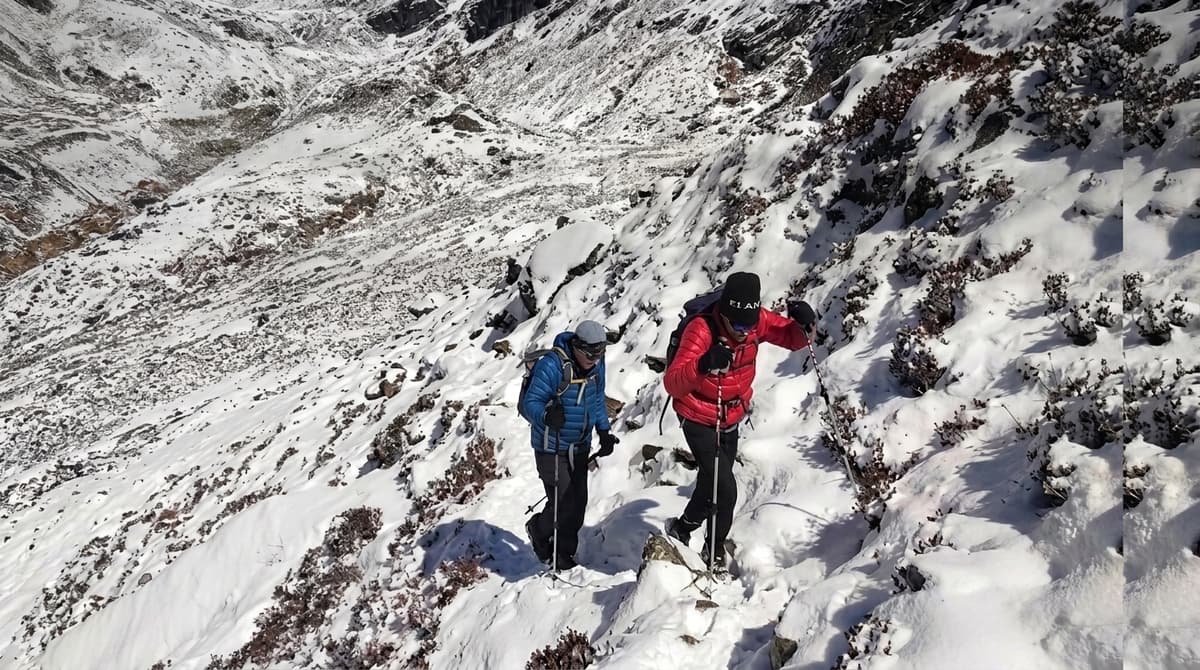
- High-elevation trails between Deurali and ABC can be icy in winter (December to February), needing microspikes or crampons and adding to the challenge and danger.
5. Weather and Temperature Swings
Even in the peak season, nighttime temperatures at Annapurna Base Camp can be as low as -10°C to -15°C. Days are warmer due to the sun's reflection on the snow, but cool quickly after sunset. This requires appropriate clothing and equipment; a warm sleeping bag, down jacket, and moisture-wicking layers are essential.
ABC Trek Difficulty by Season
- Spring (March-May) - Best Overall Balance. This is peak trekking for a reason. The weather is warm - rhododendrons in full bloom, and trails are generally stable. It's easier to adjust to the altitude. Some crowding on teahouse nights.
- Best Season: Autumn (September - November) Clear skies, great views, and good weather - autumn is the most popular time. The trails can be busy, especially at Ghorepani and MBC. Difficulty remains moderate.
- Winter (December - February) - More Difficult and Remote Snow (above 3,000m) occurs frequently and can close the trail between Deurali and ABC. There are fewer teahouses and rescue possibilities. Best for well-equipped and experienced trekkers.
- Monsoon (June - August) - Not Recommended The wet season makes trails slippery and leeches, landslides and swollen rivers are common. Visibility is poor due to the cloud. Increases in difficulty due to trail conditions. Is not suitable for beginners
Day To Day Annapurna Base Camp Trek Difficulty Guide
Now you know how various factors influence Annapurna Base Camp difficulty, let's find out what each day is like on the ABC Trail.
Nayapul to Ghandruk
Maximum Altitude: 1940m
Elevation Gain: + 870 m
Trekking Hours: 3 to 4 hours
Key Difficulty: Gradual uphill, first day leg strain
Key Highlights: Gurung culture, terrance fields, and charming villages
Ghandruk to Chhomrong
Maximum Altitude: 2170m
Elevation Gain: +230 m
Trekking Hours: 5 to 6 hours
Key Difficulty: Steep descent + long uphill climb, stone steps
Key Highlights: Annapurna & Machhapuchhre views, forest trails
Chhomrong to Bamboo
Maximum Altitude: 2310m
Elevation Gain: +300 m
Trekking Hours: 4 to 5 hours
Key Difficulty: Continuous stone steps, knee strain, humid forest trail
Key Highlights: Bamboo forests, river valley scenery
Bamboo to Deurali
Maximum Altitude: 3230m
Elevation Gain: +920 m
Trekking Hours: 3 to 4 hours
Key Difficulty: Steady altitude gain, thinner air, uphill sections
Key Highlights: Gorge landscapes, waterfalls, alpine transition
Deurali to ABC
Maximum Altitude: 4130m
Elevation Gain: +900 m
Trekking Hours: 5 to 6 hours
Key Difficulty: High altitude, oxygen drop, cold weather
Key Highlights: Machhapuchhre Base Camp, Annapurna Sanctuary views
ABC to Bamboo
Maximum Altitude: 4130m
Elevation Loss: -1820 m
Trekking Hours: 7 to 8 hours
Key Difficulty: Long descent, knee strain, fatigue
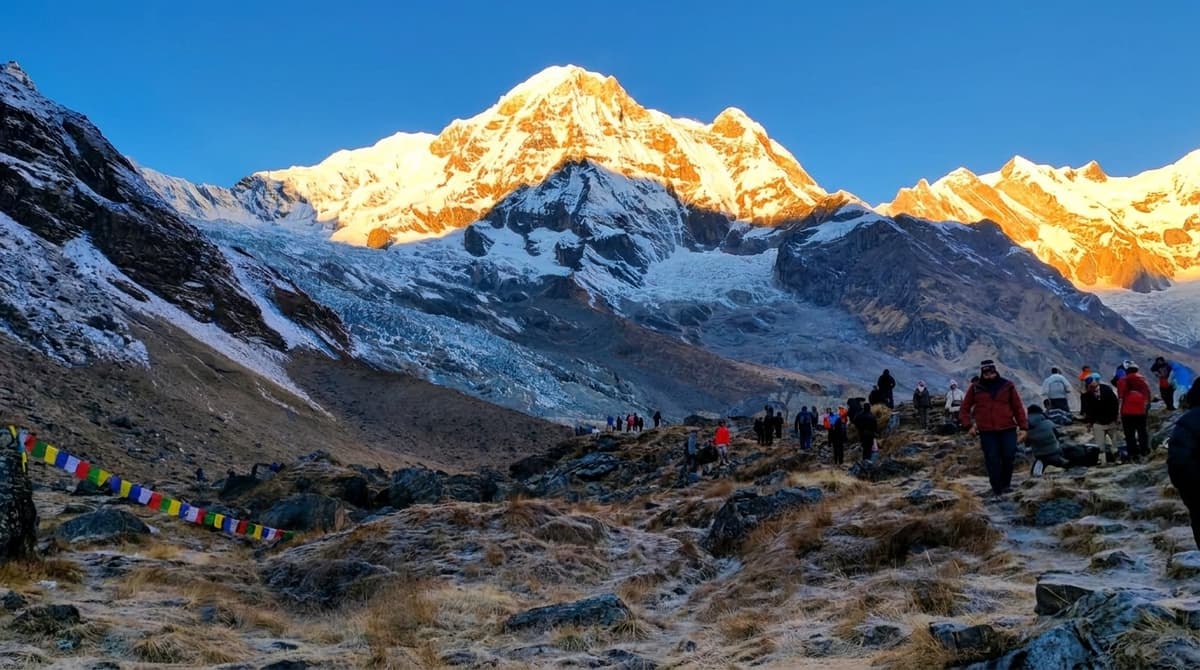
Key Highlights: Sunrise at ABC, dramatic landscape change
Bamboo to Jhinu Danda
Maximum Altitude: 2310m
Elevation Loss: -550 m
Trekking Hours: 5 to 6 hours
Key Difficulty: Mixed ups & downs, post-trek fatigue
Key Highlights: Natural hot springs, riverside relaxation
Jhinu Danda to Nayapul
Maximum Altitude: 1760m
Elevation Loss: -690 m
Trekking Hours: 3 to 4 hours
Key Difficulty: Long downhill, joint strain, fatigue buildup
Key Highlights: Final rural views, trek completion satisfaction
Can Beginners Do Annapurna Base Camp?
Yes, with some caution and expectations.
The ABC trek is considered one of Nepal's most accessible high-altitude treks. It's not a technical climb that requires ropes or other climbing gear, nor is it an expedition requiring prior experience. The route is clearly marked, teahouses (lodges) are within several hours of each other, and you're never alone in the mountains.
But "easy" doesn't mean "simple". First-time trekkers tend to be surprised by a few things. The mind's presence is as necessary as a muscle. Walking 6 hours a day, day in and day out, for 7-10 days, can be mentally exhausting. There are no off days on the typical route. You have to be able to deal with discomfort.
Altitude is not a respecter of physical ability. Even the fittest people can suffer from AMS. First-time trekkers who have never been over 3,000m are embarking on a physiological adventure.
The ABC trek may NOT be suitable for beginners who:
- Have not undertaken any regular exercise for months prior to the trek
- Have untreated heart or lung disease
- Don't wish to employ a guide or porter
- Miscalculate the cold at higher elevations
If you're a beginner seeking more security, consider hiring a licensed guide. An experienced guide will control your walking pace, be alert for signs of altitude sickness, decide on alternative routes, and discuss arrangements for teahouse stays. This turns an overwhelming experience into a well-planned event and tackles most of the Annapurna Base Camp Trek difficulty.
What Fitness Level Do You Need?
You don't have to be a marathon runner, but you do need to have a good level of cardio fitness.
A realistic training schedule for 6-8 weeks prior to your trip:
- Cardio 4 days per week, i.e., hiking, running, cycling, swimming. This is to build up aerobic endurance, not speed.
- Stair work - walk up stairs with a backpack. This mirrors the uphill trail.
- Leg strength - squats, lunges, step-ups to strengthen the knees and hips needed for descending.
- Weekend-long walks - build up to 4-5 hour walks on hilly terrain.
If you can walk for 5-6 hours with a 7-10 kg backpack, you are well prepared for the ABC trekking trail.
Annapurna Base Camp vs Other Treks: Which Trek is Better?
| Trek | Difficulty | Maximum Altitude | Duration |
| Ghorepani Poonhill Trek | Easy–Moderate | 3210 m | 4-5 days |
| Mardi Himal Trek | Moderate | 4500 m | 5-7 days |
| Annapurna Base Camp Trek | Moderate | 4130 m | 7-12 days |
| Manaslu Circuit Trek | Moderate–Hard | 5106 m | 14-17 days |
| Annapurna Circuit Trek | Moderate–Hard | 5416 m | 12-15 days |
| Everest Base Camp Trek | Moderate–Hard | 5364 m | 12-16 days |
ABC is considered to be a moderately difficult trek in Nepal. It's more difficult than the Ghorepani Poon Hill Trek, which people often trek to as a practice trek. But less difficult than Everest Base Camp, in terms of both elevation and difficulty of travel.
Practical Tips to Make the Trek Easier
- Walk at your own pace. This cannot be overstated. There's no rush on this trail. Slow and steady wins the race. Slower walking at altitude will lower your heart rate and decrease the risk of AMS.
- Hydrate constantly. You dehydrate more quickly than you feel thirsty. Drink 3-4 litres a day. Don't drink alcohol above 3,000m as it speeds up dehydration and reduces your body's response to the altitude.
- Pack light. Each additional pound is an extra pound of stairs to climb. Pay a porter (for a modest daily rate) to carry your main bag (up to 10-15 kg), and your trip will be transformed.
- Use trekking poles. Especially important for big descents. They take pressure off your knees, transfer weight to the upper body, and give you support on the rocks.
- Don't skip acclimatization. If you have the time, spend an extra day at either Bamboo (2,310m) or Deurali (3,230m). It takes 24-48 hours for your body to kick into gear and start increasing the number of red blood cells at a higher altitude.
- Eat regularly. Dal bhat (lentils mixed with rice) is served at mountain lodges, and it's a good trekking food. Don't skip meals. You have a reduced appetite at high altitude, but you still need to eat.
Common Mistakes That Make the Trek Harder
- Overpacking. It's almost always the case for first-time trekkers. Spread it out, then take out a third. You will thank me between Chhomrong and Sinuwa.
- Rushing the ascent. Climbing too high, too quickly, is the key cause of AMS. Stick to the rule of thumb of ascending no more than 300-500m per day above 3,000m.
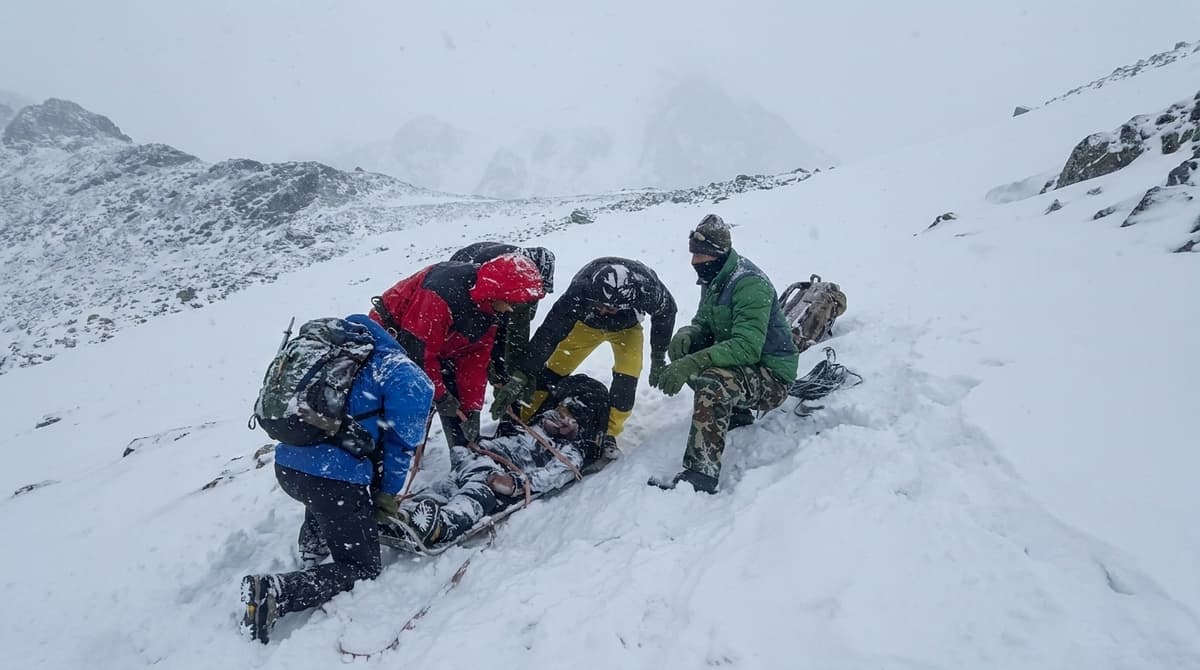
- Ignoring early symptoms. If you have a headache at Machhapuchhre Base Camp, listen to your body. Never press on to ABC if unwell that day. Return if unwell the next morning.
- Using unsuitable shoes. Light and airy trail shoes are suitable for some, but most people need ankle support and waterproof boots, particularly above 3,000m, as there is often wet snow and ice.
Comfort and Lodging on the Trail
The food and accommodation on ABC can be considered comfortable yet simple. Teahouses (locally owned guesthouses) are found along the whole ABC route, offering a bed, blanket, and food. Accommodations are basic: usually a twin bed with a thin mattress, and shared bathrooms. Most tea houses have hot-water showers for a small fee.
Plenty of food, surprisingly good. Dal bhat (lentils & rice) is the mainstay, but most teahouses will also offer pasta, soup, noodles, egg, and local roti. Fares get more basic and costly at higher elevations.
Is Annapurna Base Camp Dangerous?
The Annapurna Base Camp trek is not dangerous, but it does have a moderate level of difficulty. So, is Annapurna Base Camp safe? Yes, it is safe for most trekkers as it is a popular route with teahouse accommodation and is visited by many trekkers, especially during the peak trekking months. But the difficulty level of Annapurna Base Camp trek is primarily due to altitude, the length of the walk, and the unpredictable weather. But significant danger is unlikely if precautions are followed. If you are a beginner trekking at a moderate pace, have good physical condition, and follow acclimatization, you can safely do it and have a great Himalayan adventure without much risk.
Is the Annapurna Base Camp Trek Worth it?
The Annapurna Base Camp Trek is not easy, and that's precisely why it's worth climbing 4,130 metres to get to the base camp. The stone steps, the high altitude, the cold early mornings, the walking, and so much more: it adds up to an adventure that you'll remember long after you've left your boots.
But what's also true is that every year thousands of new trekkers make the journey, including people who have never been to the Himalayas before, people in their 50s and 60s, and people who don't consider themselves fitness fanatics. With a bit of planning, slow and steady steps, and respect for altitude, trekking the ABC is very achievable.
The mountain doesn't care how fast you walk. No matter how hard is Annapurna Base Camp trek or how high is Annapurna Base Camp, you will definitely be rewarded properly with your persistence, planning, and patience
Are you ready to embark on an Annapurna Base Camp Trek?
Trek with Mountain Adventure Trekking Pvt. Ltd. for a safe, comfortable, and hassle-free Himalayan adventure with experienced guides, progressive acclimatization, and all the support you need along the way.
We will create the ideal itinerary according to your level of comfort and ability, whether you are new to trekking or a first-time Nepal trekker. Get in touch now for a worry-free Annapurna Base Camp experience.