Mera Peak vs Island Peak: Which Nepal Trekking Peak Should You Climb?
No one ever reaches the end of their mountaineering journey without stumbling on the same obstacle: a certain time, typically between the pictures of snowcapped summits and the attempts to book flights to Kathmandu, when your mountaineering dreams appear to stall.
The two names that come to mind are Mera Peak and Island Peak. They are both in the Everest region. Both peaks are considered trekking peaks in Nepal.
Both offer perspectives that will help you change your worldview. But deciding on one over the other is surprisingly tough.
This is a near-complete mix-up, and it is understandable. The majority of comparison guides on the web become “spec sheets” instead of guidance.
They give altitude, give them some fees for permits, and you have yourself a done deal. However, numbers do not reveal how it feels to be towing yourself up a glacier at 5 am with a headlamp, or how the effort required can vary from a long-distance hike to a headwall that requires honest guts.
If you are thinking of climbing Mera Peak or Island Peak, and more importantly, which is the one that is perfect for you, then this is the guidebook for you.
Whether this is your first time trekking in Nepal or you have already done Everest Base Camp and are ready to push higher, the choice between these two peaks deserves a proper, honest answer.
Mera Peak vs Island Peak: Quick Comparison Table at a Glance
If you are a beginner with strong fitness, Mera Peak is generally the better choice because it is less technical. If you want a true mountaineering experience involving ropes, crampons, and glacier climbing, Island Peak is the better option.
| Feature | Mera Peak | Island Peak |
| Height | 6,476m | 6,189m |
| Difficulty | Moderate | Moderate–Difficult |
| Technical Climbing | Low | High |
| Best For | Beginners | Experienced Trekkers |
| Duration | 17–21 Days | 15–20 Days |
| Everest Views | Panoramic | Close-up |
| Success Rate | Higher | Slightly Lower |
Why Do Trekkers Compare Mera Peak and Island Peak?
It is a comparison because both are sometimes included in the list of “beginner trekking peaks” in Nepal. However, that is not always the case.
Absolutely, you can do both of them without being a professional mountaineer. However, midsummer level is no longer the same when you venture into 6,000m territory.
The actual reason that trekkers compare them is this:
- They are similar in height
- They are both in the Everest region (directly or nearby)
- They both involve snow and glacier climbing
- They both require physical and mental preparation
- They are often the first Himalayan summit attempt for many trekkers
However, the experience on the ground feels completely different.
One feels like a remote Himalayan expedition. The other feels like a technical introduction to mountaineering in the heart of the Everest region.
Understanding the Difference Between the Two Peaks
Before choosing, it’s important to understand what each peak actually represents in a real trekking experience.
Mera Peak Overview
Mera Peak is the highest trekking peak in Nepal with a height of 6476 meters. It is located in the less commercialized and quieter Hinku Valley, and can only be approached through a longer trek.
The trek to Mera Peak is like entering another world. As you ascend, the forest progressively gives way to alpine areas, the villages begin to dwindle, and the mountains take over the surroundings.
Mera Peak is not really steep, but because of the height, it is extremely difficult.
Many hikers who come for Himalayan climbs will often go and participate in something like the Mardi Himal Trek or the Ghorepani Poon Hill Trek before taking on higher peaks.
Island Peak Overview
Island Peak (Imja Tse) is located in the Everest region, near the Cho Laung valley, and is 6,189 meters high. The route is unlike Mera Peak, in the classic environment of the Everest trek.
This means that the hikes take the trail to the famous villages of Namche Bazaar and Dingboche, before reaching the climbing base.
It's more technical on Island Peak. During the summit push, you will be utilising ropes, crampons and glacier climbing techniques. The last section is steeper and more exposed than Mera Peak.
Many trekkers attempt Island Peak after experiencing the Everest region through routes like the Everest Base Camp Trek or Everest Base Camp Trek with Gokyo.
Here are some of the most popular routes that lead to the Everest region, including Island Peak. Many trekkers make their way to Island Peak after having visited the Everest region on one of these popular treks:
Which Peak Is More Difficult?
Here is where the majority of the confusion starts.
In terms of difficulty, Mera Peak is more of a physical challenge due to its altitude, while Island Peak is more of a technical challenge due to its climbing sections.
If we simplify it:
The endurance and altitude challenge components of Mera Peak can be separated.
- Mera Peak = endurance + altitude challenge
- Island Peak = technical climbing + exposure
Any kind of walking is tiring and slow above 6000m. There are many climbers who don't realize that oxygen is quite thin at that altitude.
That is why preparation guides such as How to Prepare for Trekking in Nepal are of great help to the individual before trying out either of the peaks.
Technical Climbing Comparison
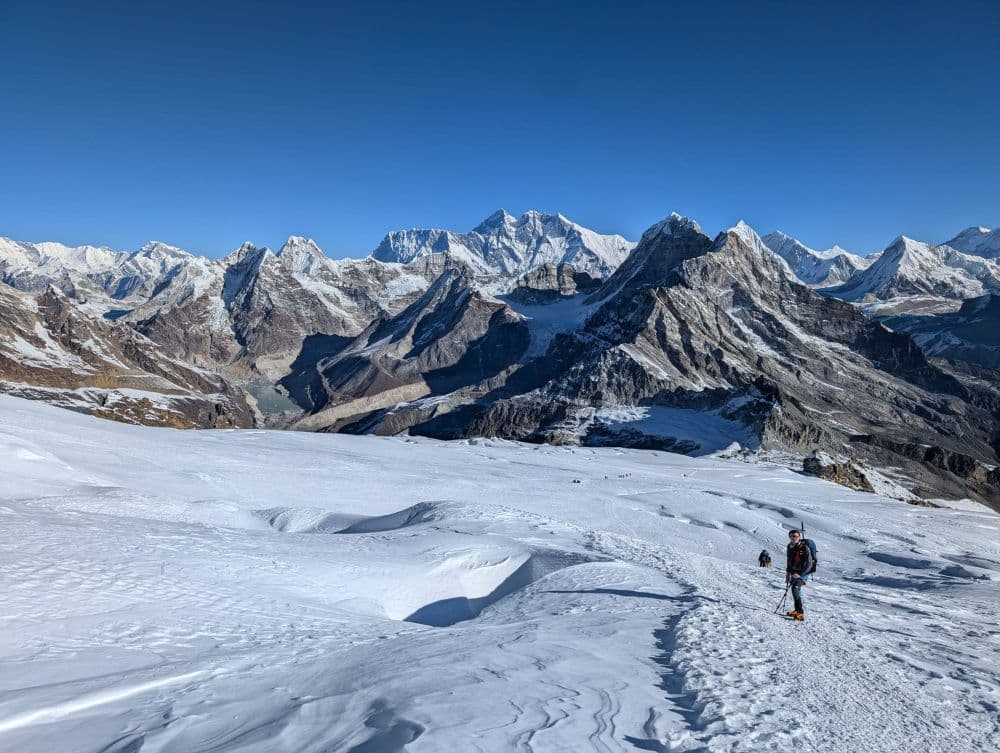
Mera Peak involves mostly snow slopes and glacier walking. Gentler slopes but a long, tiring ascent to the top.
On the other hand, it's like a real mountaineering experience on Island Peak. There are:
- fixed rope sections
- steeper ice walls
- crevasse crossings
- narrow summit ridges
It's at this point that many people who are new to climbing feel not just physically challenged, but mentally challenged as well.
The Nepal Mountaineering Association lists both mountains as trekking peaks, and Island Peak is more technically demanding.
Practical considerations of altitude and acclimatization.The issues of altitude/acclimatization in practice.
Altitude and Acclimatization Challenges
Even fit trekkers have a hard time if they neglect acclimatization. Symptoms above 5,000m include headaches, fatigue, and loss of appetite.
Mera Peak, being higher, will require more careful acclimatization. Island Peak is slightly lower, but very steep with fast ascents.
That is why, for the most part, experienced guides lay great stress on slow ascent and the proper rest days.
For more information, check out this article about Altitude Acclimatization Tips, which is highly recommended.
Which Peak Is Better for Beginners?
Mera Peak is generally better for beginners because it is less technical than Island Peak. However, it is higher in altitude and requires strong endurance.
Island Peak is better for trekkers who want a more technical mountaineering experience with ropes and steeper terrain.
In short:
- Mera Peak = easier climbing, higher altitude
- Island Peak = harder climbing, lower altitude
Expert Guide Recommendation: Mera Peak vs Island Peak
Generally, Mera Peak is considered the first Himalayan peak for a climber to ascend, as it is not as technical as most other peaks in the Himalayas and will give the climber the opportunity to develop his skills in altitude management and endurance.
Island Peak is also a popular second trekking peak, offering not only the introduction of fixed ropes, glacier travel, and steeper sections of the summit, but also a challenging climb for those wanting a taste of a more challenging trek.
Who Should Not Climb Mera Peak or Island Peak?
These climbs may not be suitable if:
- You have never trekked above 4,000m
- You have serious altitude-related health concerns
- You are unable to commit to physical training
- You are looking for a comfortable lodge-based trekking experience
- You have limited time for acclimatization
For such trekkers, routes like Mardi Himal Trek or Everest Base Camp Trek may be better starting points.
Mera Peak vs Island Peak Cost: What Affects the Price?
Several factors affect the overall price:
- Domestic flights
- Climbing permits
- Guide and porter fees
- Accommodation
- Meals
- Climbing gear rental
- Travel insurance
- Emergency evacuation coverage
Many climbers underestimate gear rental and insurance expenses, which can significantly increase the total budget.
Mera Peak vs Island Peak Cost Comparison
Costs depend on itinerary, guide service, permits, and logistics. Mera Peak can sometimes be slightly more expensive due to its remote location and longer trekking route.
Island Peak is often combined with Everest Base Camp routes, making it slightly more flexible in budgeting.
| Factor | Mera Peak | Island Peak |
| Summit Altitude | 6,476m | 6,189m |
| Climbing Permit (Spring) | USD 250–350/person | USD 200–350/person |
| Climbing Permit (Autumn) | USD 125–175/person | USD 125/person |
| Total Package (Guided) | USD 2,500–4,000 | USD 2,500–4,000 |
| Typical Duration | 17–21 days | 15–20 days |
| Technical Difficulty | Low | Moderate |
| Best For | Beginners | Some experience preferred |
Which Peak Has Better Everest Views?
Mera Peak offers one of the most panoramic Himalayan views in Nepal. From the summit, you can see:
- Everest
- Makalu
- Lhotse
- Cho Oyu
- Kanchenjunga
Very few places in the world offer this kind of 360-degree Himalayan skyline. Island Peak offers closer, dramatic views of Everest region giants but not the same wide panoramic effect.
When to Go: Best Seasons for Both Peaks
Spring and autumn are the prime seasons for both Mera Peak and Island Peak, and for very similar reasons: stable weather, clear skies, and reasonable temperatures at altitude.
Spring (March to May) is the most popular time to climb either peak. The days are longer, the views tend to be crystal clear, and the warmer temperatures make the climbing conditions more forgiving. April is widely considered the best single month for either climb.
Autumn (September to November) is equally strong. The monsoon has cleared by September, and the air is washed clean, offering some of the sharpest mountain views you will ever see. October is particularly popular. Crowds can be slightly lower than spring, and permit costs are a bit more affordable.
Winter and monsoon season climbs are possible but not recommended for most people. Winter brings extreme cold and high winds at altitude, while monsoon season (June to August) brings heavy precipitation and poor visibility. If this is your first peak climb, stick to spring or autumn.
Training and Fitness Preparation
You don’t need to be an athlete, but you do need consistency.
Good preparation includes:
- long hikes with elevation gain
- stair climbing
- endurance training
- carrying weighted backpacks
- multi-day trekking practice
Many trekkers also prepare with easier Himalayan routes before attempting peaks.
Safety, Guides, and Climbing Support
Safety is the most important part of Himalayan climbing.
Both peaks require:
- experienced climbing guides
- proper acclimatization schedule
- weather monitoring
- emergency planning
According to the Nepal Tourism Board, hiring licensed guides and following regulated trekking routes is essential for safe high-altitude climbing in Nepal.
Good expedition companies prioritize safety over summit success, and that mindset makes a huge difference.
So Which Peak Should You Actually Choose?
After all of that, here is the practical summary:
Choose Mera Peak if:
- This is your first trekking peak or first time at 6,000 metres
- You have strong endurance fitness but limited technical climbing experience
- You want the most expansive panoramic view from any trekking peak in Nepal
- You are drawn to remote, wild terrain and don't mind basic teahouse conditions
- You want to test yourself with altitude and endurance rather than technical skill
Choose Island Peak if:
- You have already done a high-altitude trek like Everest Base Camp and want a step up
- You are comfortable using crampons and an ice axe, or willing to train before you go
- You want a genuine mountaineering challenge with technical climbing elements
- You prefer a well-developed approach route with good teahouses along the way
- You are interested in eventually climbing bigger, more technical peaks and want the Island Peak experience as preparation
And if you genuinely cannot decide? Many climbers do both over the course of different trips, and there is a strong case that Mera Peak makes the perfect first-peak experience before Island Peak a year or two later.
The progression is logical, each peak builds on what the previous one taught you, and both stay with you for the rest of your life.
Mera Peak vs Island Peak: Pros and Cons Explained
Google loves comparison content with pros and cons.
Mera Peak Pros
- Highest trekking peak in Nepal
- Less technical
- Spectacular panoramic views
- Excellent first Himalayan summit
Mera Peak Cons
- Longer itinerary
- Higher altitude
- Remote logistics
Island Peak Pros
- Technical climbing experience
- Classic Everest region route
- Excellent mountaineering training peak
Island Peak Cons
- More exposed summit section
- Requires rope work
- More mentally demanding
Conclusion
If you want a remote Himalayan adventure with fewer crowds and a higher summit, Mera Peak is a strong choice.
If you want a technical climbing experience in the heart of the Everest region, Island Peak is the better option.
Both are life-changing in different ways.
Most importantly, the right choice depends on your personality:
- Do you want endurance and an altitude challenge? - Mera Peak
- Do you want technical climbing experience? - Island Peak
Either way, both peaks offer something unforgettable — a real Himalayan summit experience.
If you are still exploring Nepal trekking options, you might also enjoy Best Treks in Nepal for Beginners before committing to a climb above 6,000 meters.
Mera Peak vs Island Peak: Final Verdict for 2026 Trekkers
| Choose Mera Peak If | Choose Island Peak If |
| First trekking peak | Some climbing experience |
| Prefer endurance challenge | Prefer technical challenge |
| Want panoramic views | Want mountaineering skills |
| Like remote routes | Like Everest trekking routes |
| Less technical climbing | Rope and glacier climbing |
Frequently Asked Questions
1. Is Island Peak harder than Mera Peak?
Yes, Island Peak is more technical due to steeper climbing sections, ropes, and glacier navigation, while Mera Peak is more endurance-based.
2. Which peak is safer?
Both are safe with proper preparation, guides, and acclimatization. Safety depends more on planning than the mountain itself.
3. Do you need climbing experience?
Not necessarily, but basic fitness and willingness to learn climbing techniques are important.
4. Which peak has better views?
Mera Peak generally offers wide Himalayan panoramas, including multiple 8,000-meter peaks.
5. Is Mera Peak a hike for the novice?
Yes. Mera Peak is one of the easier trekking peaks to climb in Nepal, but fitness and acclimatization are important.
6. Are there any difficulties for beginners ascending Island Peak?
Yes, but ropes and crampons are required, and extensive basic climbing instruction is recommended.
7. Which mountain do you think is more likely to succeed?
Generally, Mera Peak has a higher summit success rate since it is less technical, and weather and altitude still affect the success.
8. Is it possible to climb Mera Peak and Island Peak at the same time?
Yes. For those looking for a more adventurous trek, many expedition companies offer combined treks of Mera Peak and Island Peak.