7 Best Short Treks in the Annapurna Region, Nepal
If you want the absolute best shortest trek in the Annapurna region, book the 4-day Ghorepani Poon Hill trek. It delivers high-altitude panoramic views of two 8,000-meter peaks with only moderate physical effort. However, if your goal is to stand directly inside a glacial basin surrounded by vertical ice, the 6-day Annapurna Base Camp (ABC) trek is the superior choice for a slightly heavier time commitment.
Quick Answer: 7 Short Annapurna Treks at a Glance
| Trek Name | Total Days | Max Altitude | Daily Walking Hours | Difficulty |
| Dhampus–Australian Camp | 2 Days | 2,060m | 3–4 Hours | Very Easy |
| Ghandruk Village Trek | 3 Days | 2,012m | 4–5 Hours | Easy |
| Sikles Village Trek | 4 Days | 1,980m | 4–6 Hours | Easy to Moderate |
| Ghorepani Poon Hill | 4 Days | 3,210m | 5–6 Hours | Moderate |
| Mardi Himal Trek | 5 Days | 4,500m | 5–7 Hours | Moderate |
| ABC Heli-Return Trek | 4 Days | 4,130m | 5–7 Hours | Moderate |
| Annapurna Base Camp | 6 Days | 4,130m | 6–8 Hours | Hard |
The Reality Check: "Short" Does Not Mean "Flat"
Travelers usually arrive in Pokhara, look up at the massive Machhapuchhre (Fishtail) peak dominating the skyline, and immediately want to know how fast they can walk up to it.
Here is the truth about short trekking in Nepal: you are trading distance for elevation.
When you compress a Himalayan itinerary into less than a week, you are usually committing to steep, aggressive daily climbs. A four-hour walking day in the Annapurna region is rarely a casual stroll through a flat forest. It is four hours of climbing uneven stone staircases.
But you don't need a month off work to see the big mountains. Because the trailhead access around Pokhara is so well-developed, you can genuinely leave your hotel after breakfast and be staring at Annapurna South by sunset.
Here is the breakdown of the 7 best short routes, who they actually make sense for, and what your daily walking hours will actually look like.
1. Ghorepani Poon Hill Trek (4 Days)
The Classic First-Timer Route
This is the undisputed king of short treks in Nepal. You walk through dense rhododendron forests, stay in established Gurung villages, and wake up before dawn on day three to climb Poon Hill (3,210m). The sunrise view spans the entire Annapurna and Dhaulagiri ranges.
- Daily Walking Hours: 5 to 6 hours.
- The Catch: It is crowded. Because it is the best, everyone knows about it. If you want silence and isolation, this is not your trail. If you want guaranteed views and comfortable teahouses, it is unbeatable.
2. Mardi Himal Trek (5 Days)
The Ridgeline Alternative
While Poon Hill keeps you mostly in the valleys and forests until the viewpoint, the Mardi Himal trek puts you up on a high ridgeline and keeps you there. You walk along the spine of the mountain directly toward Machhapuchhre. The views are continuous, and you get much closer to the high alpine environment without needing ten days to do it.
- Daily Walking Hours: 5 to 7 hours.
- The Catch: You push to 4,500 meters at the upper viewpoint. Altitude sickness becomes a real variable here, whereas it is almost non-existent on Poon Hill.
3. Annapurna Base Camp Short Trek (6 Days)
The Fast-Paced Alpine Push
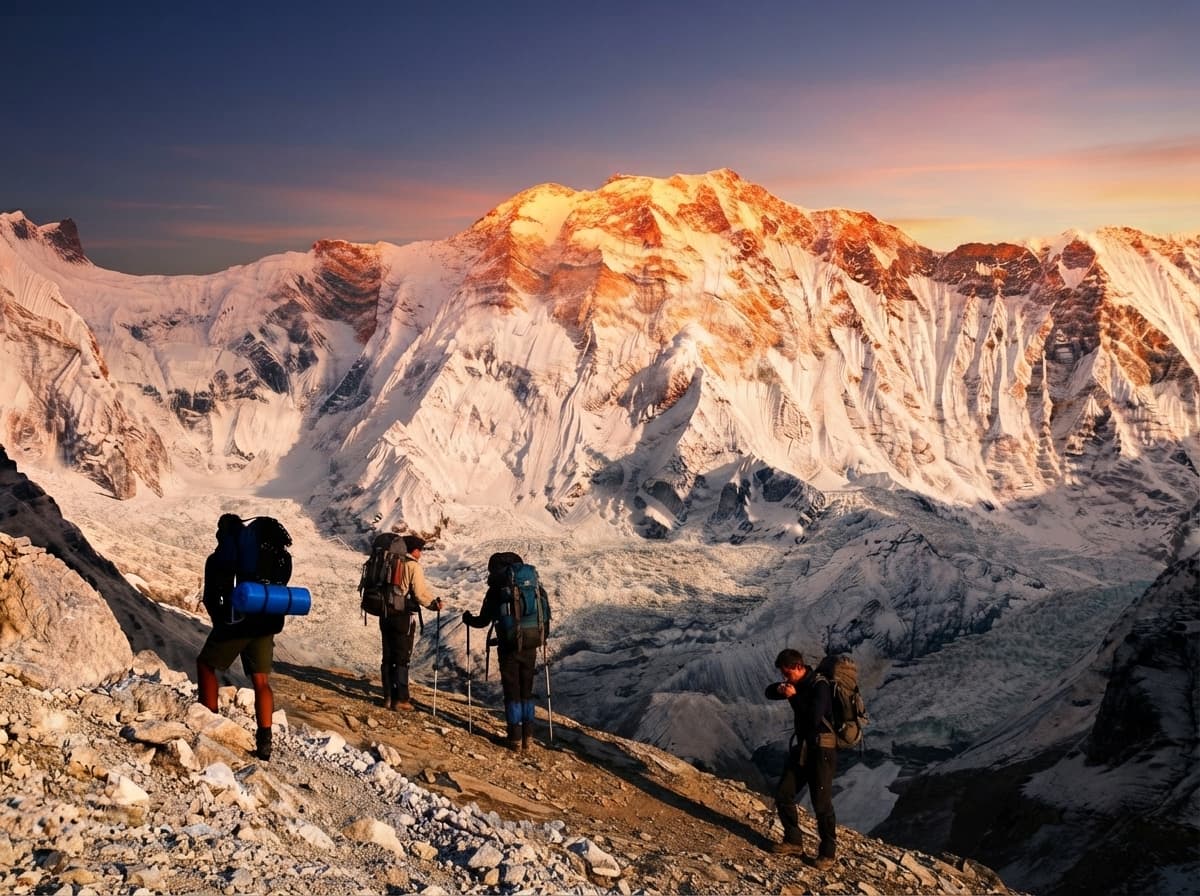
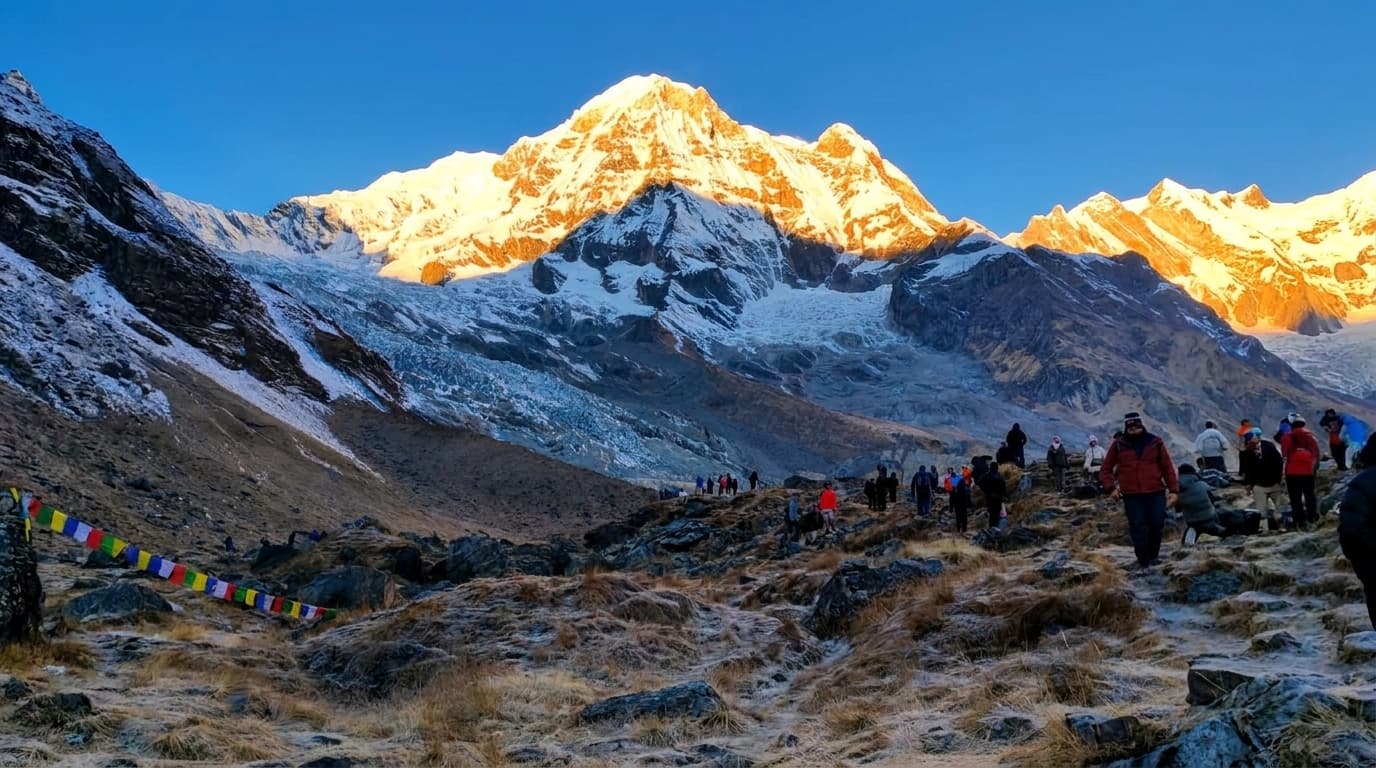
The standard ABC trek takes 10 to 12 days. The 6-day version follows the exact same trail up the Modi Khola river gorge and into the Annapurna Sanctuary, you just walk much faster and longer every day to do it. Standing at base camp (4,130m) with 360 degrees of vertical ice walls surrounding you is a radically different experience than looking at the mountains from a distance.
- Daily Walking Hours: 6 to 8 hours.
- The Catch: This is a physically punishing schedule. You are walking uphill for three days straight, touching the base camp, and immediately turning around to hammer your knees on the descent.
4. 4-Day ABC Trek with Helicopter Return
The Ultimate Shortcut
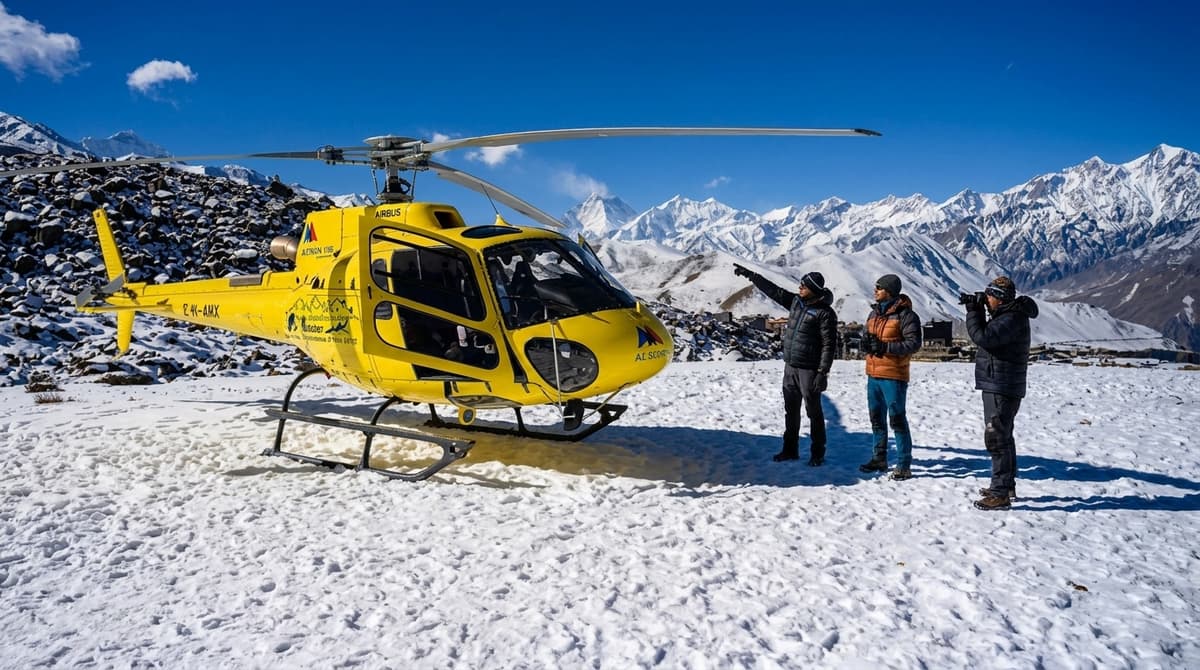
If you want the Annapurna Base Camp experience but refuse to punish your joints on the way down, you buy your way out of the descent. You spend three days walking up the gorge to base camp. On morning four, you wake up, take your photos among the glaciers, and a helicopter picks you up and drops you back in Pokhara 20 minutes later.
- Daily Walking Hours: 5 to 7 hours (ascent only).
- The Catch: Cost. Adding a commercial helicopter flight significantly spikes the price tag of a standard short trek.
5. Ghandruk Village Trek (3 Days)
The Cultural Heavyweight
If your goal is to experience local Nepali mountain culture with a heavy dose of scenery, head to Ghandruk. This is the largest Gurung settlement in the region. The stone-roofed houses sit directly beneath Annapurna South. It is a lower-altitude trek, meaning you won't suffer in the thin air, and the teahouse food is exceptional.
- Daily Walking Hours: 4 to 5 hours.
- The Catch: It is short and low. You are looking up at the mountains, not standing inside them.
6. Sikles Village Trek (4 Days)
The Off-the-Radar Escape
Most tourists walk west out of Pokhara toward Poon Hill or ABC. If you walk east instead, you hit Sikles. It is a massive, incredibly well-preserved Gurung village that sees a fraction of the international foot traffic. You get authentic village life, dense forest trails, and massive, in-your-face views of Annapurna II and Lamjung Himal.
- Daily Walking Hours: 4 to 6 hours.
- The Catch: The teahouse infrastructure is more basic. Don't expect fancy bakeries or reliable Wi-Fi like you get on the main ABC trail.
7. Dhampus–Australian Camp Trek (2 Days)
The Weekend Fix
If you literally only have one night to spare outside of Pokhara, this is where you go. You drive to Phedi, walk up a steep hill for a few hours, and suddenly the entire Annapurna range is spread out in front of you at Australian Camp.
- Daily Walking Hours: 3 to 4 hours.
- The Catch: It is barely a trek. It is a long day hike with an overnight stay at a viewpoint.
Physical Preparation: What "Easy" Actually Means Here
A lot of generic travel blogs classify these short treks as "easy." You need to understand what that word means in the context of the Himalayas.
"Easy" means there is no technical mountaineering. You do not need ice axes, ropes, or climbing experience. It does not mean you won't be sweating through your shirt and questioning your life choices on day two.
Here is what you actually need to physically prepare for:
1. The Stone Stairs The Annapurna Conservation Area Project (ACAP) maintains the trails well, which means they have built thousands of uneven stone steps into the mountainsides. The climb from Tikhedhunga to Ulleri on the Poon Hill route is roughly 3,300 continuous stone stairs. You cannot train for this by running on a flat treadmill. You need to prepare your calves and your knees. Get on a stair-stepper machine, or find a local hill and walk up and down it with a loaded backpack.
2. Walking Back-to-Back Days Anyone can walk for five hours on a Saturday. The real test is waking up on Sunday, putting cold boots back on, and doing it again. And then doing it again on Monday. Your physical prep should involve walking on tired legs. Go for a long hike on a Saturday, and force yourself to do another one on Sunday morning.
3. Break In Your Boots Do not fly to Kathmandu, buy a brand-new pair of trekking boots in Thamel, and start walking the next day. You will lose your toenails. Buy your boots a month in advance and wear them to the grocery store, to the office, and on your training hikes.
Frequently Asked Questions
Do I need to worry about altitude sickness on a short trek?
It depends entirely on the route. If you are doing Ghandruk (2,012m) or Australian Camp (2,060m), no. Altitude sickness generally doesn't trigger below 2,500 meters. If you are doing Mardi Himal (4,500m) or Annapurna Base Camp (4,130m), yes. You are pushing high enough to feel the thin air, and you need to stay hydrated and listen to your body.
Can I do these short treks during the monsoon?
You can, but you probably shouldn't. From June through August, the Annapurna region gets hammered by rain. The stone stairs turn slick, the trails fill with leeches, and thick clouds usually block the exact mountain views you flew to Nepal to see. Stick to spring (March–May) or autumn (September–November).
Do I need a guide for a 3-day trek?
By law, yes. Nepal recently updated its trekking regulations, making it mandatory for all foreign trekkers to hire a licensed guide, even on short, well-marked routes like Poon Hill. Aside from the legal requirement, a good guide handles your teahouse bookings, adjusts the daily walking hours to match your pace, and ensures you don't get lost if the weather suddenly turns.
The Bottom Line
You don't need a month in the wilderness to justify a flight to Nepal.
If you want the best shortest trek in the Annapurna region, figure out exactly what your legs are willing to tolerate. If you want a comfortable, high-reward loop, book Poon Hill. If you want to push your physical limits for a massive payoff, aim for the 6-day Base Camp run.
Don't let the short timelines fool you — these mountains demand respect regardless of how many days you spend on them. If you are ready to lock in your dates, check the itinerary and daily walking breakdowns for our 4-Day Ghorepani Poon Hill Trek or our Annapurna Base Camp Short Trek. We handle the permits, the guide, and the logistics from Pokhara so you can just focus on the stairs.