The Best Beginner-Friendly Treks in the Annapurna Region
If you are looking for beginner-friendly treks for the Annapurna region, the absolute best choice is the 4-day Ghorepani Poon Hill trek. It delivers world-class views of the Himalayas, features excellent teahouse infrastructure (think hot showers and good coffee), and maxes out at 3,210 meters, essentially eliminating the risk of severe altitude sickness. If you want something even less physically demanding, the 3-day Ghandruk Village trek is the top low-altitude alternative.
Quick Answer: The Best Beginner Routes at a Glance
| Trek Name | Total Days | Max Altitude | Why It’s Great for Beginners |
| Ghorepani Poon Hill | 4 Days | 3,210m | The best effort-to-view ratio in Nepal. |
| Ghandruk Village Trek | 3 Days | 2,012m | Low altitude, heavily cultural, easy walking. |
| Panchase Trek | 3–4 Days | 2,500m | Off the main tourist trail; gentle forest inclines. |
| Australian Camp | 2 Days | 2,060m | Basically a weekend hike. Perfect for kids/seniors. |
The Reality Check: What "Beginner" Actually Means in Nepal
There is a massive difference between "beginner" in the Himalayas and "beginner" in your local national park.
When a trekking agency says a route is beginner-friendly, they do not mean the trail is flat. Nepal’s geography is entirely vertical. You are going to be walking uphill, you are going to sweat through your shirt, and your legs will be incredibly sore by day two.
What "beginner-friendly" actually means here is safety and infrastructure. It means you do not need ice axes, ropes, or technical mountaineering skills. It means you will be sleeping in a real bed inside a warm teahouse, not freezing in a tent. Most importantly, it means the trail stays at a low enough altitude that your lungs won't struggle for oxygen.
You don't need a deep resume of backcountry survival to hike in the Annapurnas. You just need a reasonable baseline of fitness and the right itinerary. Here are the four routes that perfectly fit the bill.
1. Ghorepani Poon Hill (4 Days)
The Gold Standard for First-Timers
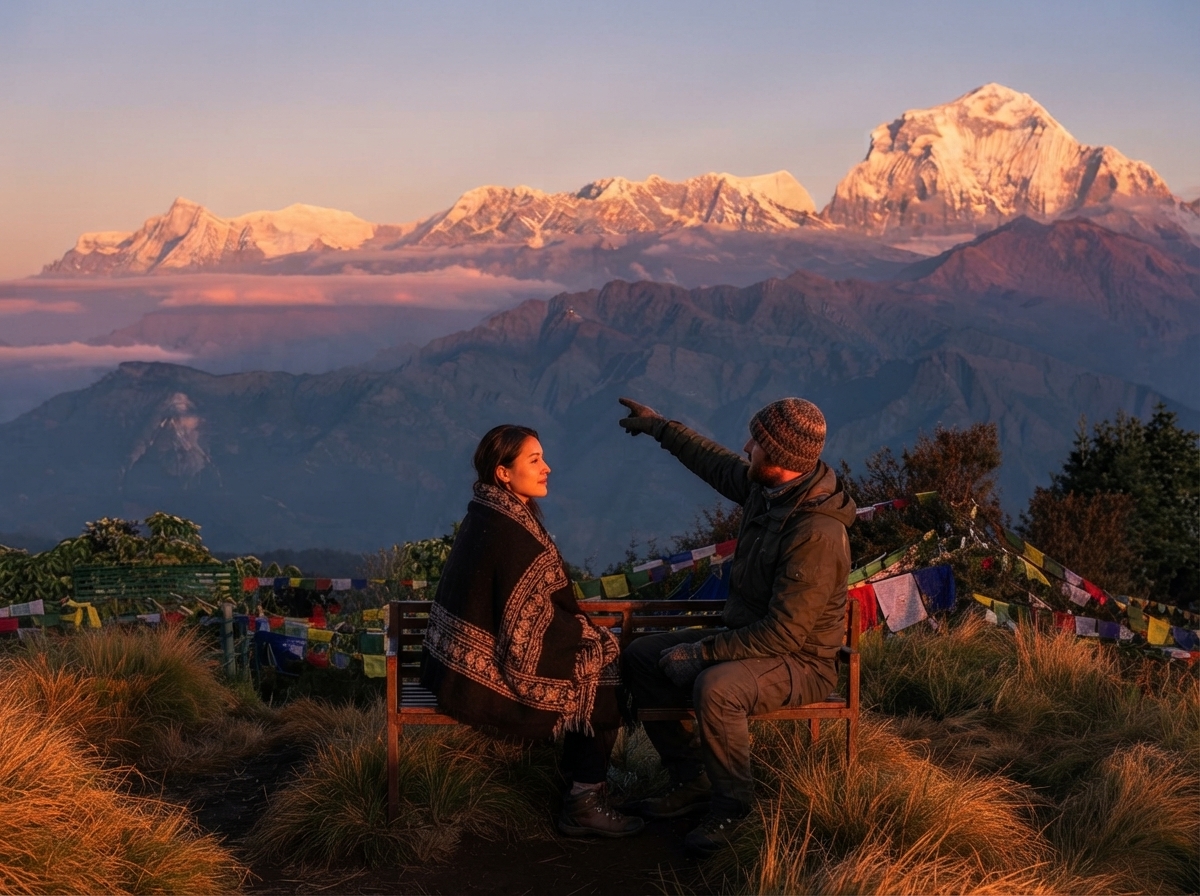
If you have never trekked in Nepal before and you only have time to do one thing, do this. The Poon Hill trek is famous for a reason. You walk through dense rhododendron forests, cross suspension bridges over glacial rivers, and on the final morning, you hike up to a viewpoint at 3,210 meters to watch the sunrise hit the peaks of Annapurna and Dhaulagiri.
Why it works for beginners: The trail is impossible to lose, the teahouses along the way are essentially mountain lodges with Wi-Fi and hot showers, and the altitude is highly manageable. You get the massive, snowy peaks without the danger of extreme high-altitude exposure.
The Reality Check: Day two involves climbing roughly 3,300 stone steps to reach the village of Ulleri. It is a grueling, sweaty morning. Just put your head down, take it one step at a time, and remember that everyone else on the trail is breathing just as hard as you are.
2. Ghandruk Village Trek (3 Days)
The Cultural, Low-Altitude Option
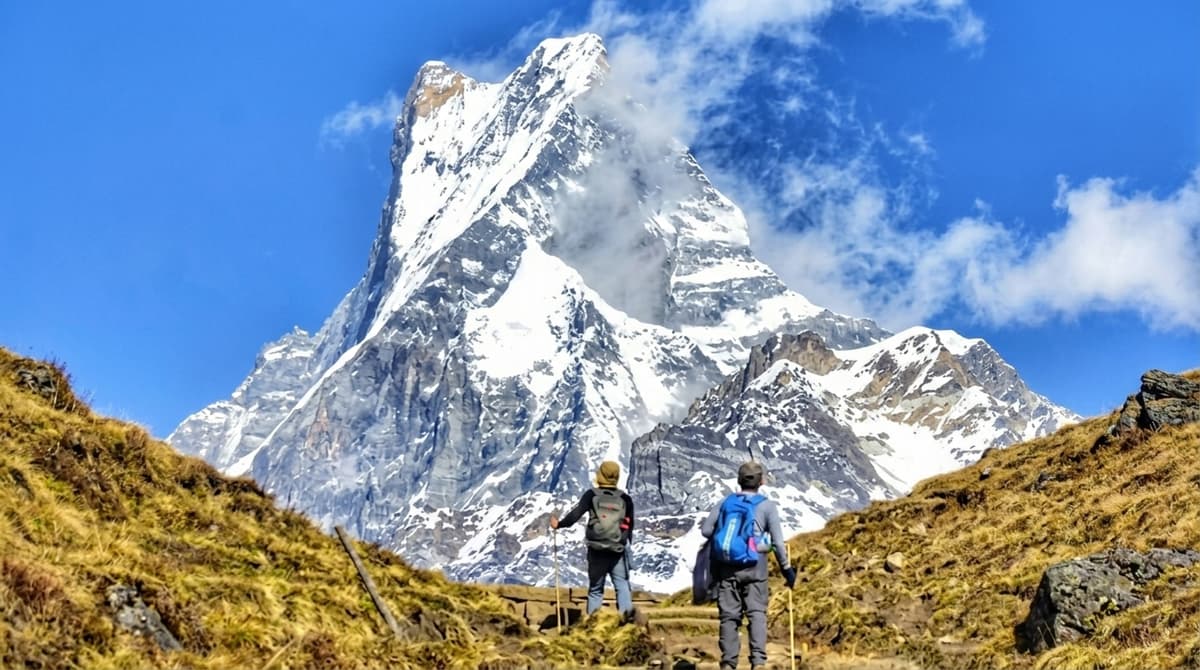
If the idea of climbing thousands of stairs sounds miserable, look at Ghandruk. This is a massive, traditional Gurung village sitting at just over 2,000 meters. The trail from the roadhead is shorter, less steep, and heavily focused on local culture. The stone-roofed houses frame a perfectly clear, in-your-face view of Annapurna South and Machhapuchhre (Fishtail) peak.
Why it works for beginners: The maximum altitude is barely over 2,000 meters. At this elevation, altitude sickness is biologically almost impossible. This makes it an incredibly safe option for young children, older travelers, or anyone nervous about how their lungs will handle mountain air.
The Reality Check: Because it is so accessible and low, Ghandruk is busy. You are not going into the deep wilderness here; you are walking from village to village along well-used local trade routes.
3. Panchase Trek (3 to 4 Days)
The Quiet, Off-the-Radar Alternative
Almost every first-time tourist gets funneled toward Poon Hill. If you want a beginner-friendly trek but you hate crowds, the Panchase route is the answer. Starting just outside of Pokhara, this trail winds up through thick, subtropical forests rather than high alpine rock. You eventually reach the Panchase peak (2,500m) which offers a sweeping view of three 8,000-meter giants: Dhaulagiri, Annapurna I, and Manaslu.
Why it works for beginners: The inclines are much more gradual than the main Annapurna routes. You aren't punishing your knees on steep stone staircases all day. Plus, because it is lower and heavily forested, you are protected from the harsh winds and dramatic temperature drops of the higher trails.
The Reality Check: The teahouses on the Panchase route are basic. You won't find the fancy bakeries or high-speed internet you get on the main Annapurna circuit. It is a more authentic, rustic experience.
4. Dhampus to Australian Camp (2 Days)
The "Bare Minimum" Hike
If you are not entirely sure you actually like hiking, but you still want the bragging rights of trekking in Nepal, do the Australian Camp route. You drive out of Pokhara to a trailhead at Phedi, walk uphill for about three hours, and arrive at a wide, grassy clearing at 2,060 meters. You spend the night staring at the Annapurna range, wake up for sunrise, and walk back down.
Why it works for beginners: It is just a single night away from your hotel in Pokhara. It requires almost zero commitment.
The Reality Check: It is over before it really begins. It feels more like a long day hike with an overnight stay than a true Himalayan expedition.
Treks Beginners Should Actively Avoid
Part of choosing the right trail is knowing what to stay away from. Do not let enthusiastic travel agents talk you into routes you aren't ready for.
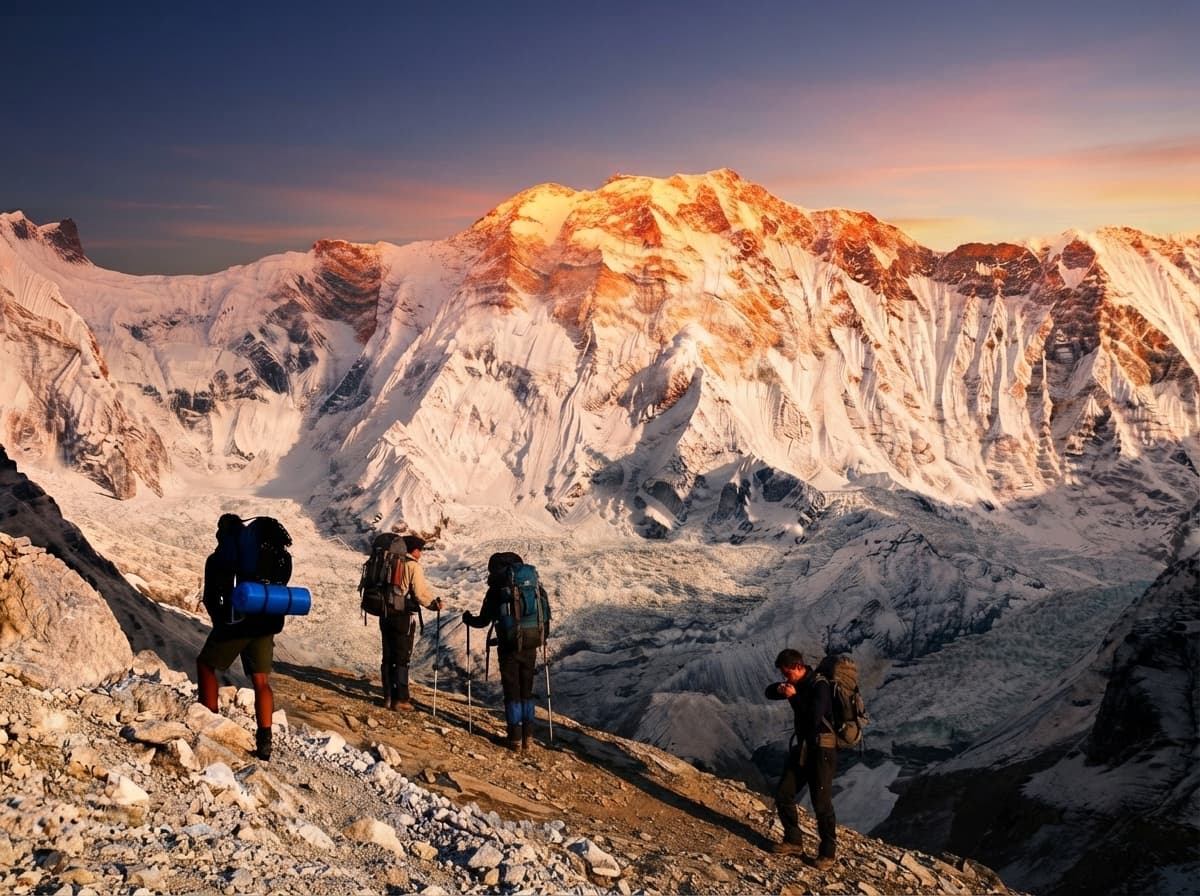
Avoid the Annapurna Circuit. This is a 14 to 18-day expedition that crosses Thorong La Pass at 5,416 meters (17,769 feet). That is an extreme altitude environment. Blizzards happen quickly, and the physical toll of walking for two weeks straight breaks a lot of first-timers.
Think Twice About Annapurna Base Camp (ABC). While ABC is not technically difficult, the standard route is 10 to 12 days of sustained uphill walking, maxing out at 4,130 meters. It is doable for a very fit beginner, but if you have never done a multi-day hike before, committing to nearly two weeks of walking is a massive gamble. Start with Poon Hill. If you love it, come back for Base Camp.
3 Things Every Beginner Gets Wrong
If you book one of the beginner-friendly treks listed above, you will be fine physically. Where first-timers actually fail is in their logistics and their mindset.
1. You Are Packing Too Much This is the number one mistake on the trail. You do not need three pairs of jeans, a laptop, and an entire pharmacy. Every extra kilo on your back feels like ten kilos when you are walking uphill at 3,000 meters. Pack two moisture-wicking shirts, one fleece, a warm down jacket, one pair of trekking pants, and good socks. That is it. If your bag weighs more than 8kg (17 lbs), you are doing it wrong.
2. You Are Walking Too Fast When you start a trek, adrenaline takes over. You pass the slower hikers. You feel great. Two hours later, your legs cramp and you are completely out of breath. The local Nepali phrase you will hear guides repeat is "bistari, bistari" — slowly, slowly. The secret to trekking in the Himalayas is to find a slow, steady, unbreakable rhythm and never stop moving.
3. You Are Obsessing Over Gear You do not need $300 custom hiking boots to walk to Poon Hill. You do not need a carbon-fiber ice axe. You need a comfortable, broken-in pair of trail running shoes or light hiking boots. You need a basic waterproof shell. The trails on these beginner routes are essentially dirt paths and stone steps. Don't overthink the gear.
Frequently Asked Questions
Do I need a guide for these easy treks?
Yes. In 2023, the Nepal Tourism Board updated the rules making it mandatory for all foreign trekkers to hire a licensed guide, even on beginner routes like Poon Hill. Aside from the legal requirement, having a guide means you don't have to worry about securing a room in a crowded teahouse, navigating forks in the trail, or carrying the bulk of your gear.
What happens if I get too tired and want to stop?
The beauty of these beginner routes is that the villages are very close together. If you are supposed to walk for six hours but you completely hit a wall at hour four, your guide can simply alter the itinerary and book you into a teahouse in the current village. The schedules are highly flexible.
Can my kids do these treks?
Absolutely. The Australian Camp and Ghandruk treks are incredibly popular with families. Children as young as five or six routinely complete these routes. Because the altitude is low, you don't have to worry about pediatric altitude sickness.
The Bottom Line
You do not need to be an elite athlete to trek in Nepal. You just need to leave your ego at home and pick a route that matches your actual experience level.
If you want the perfect mix of massive mountain views and comfortable walking, beginner-friendly treks for the Annapurna region like Poon Hill and Ghandruk are exactly what you are looking for. They deliver the full Himalayan experience without the extreme suffering.
If you are ready to stop researching and start walking, look at the daily itineraries for our [4-Day Ghorepani Poon Hill Trek] or the [3-Day Ghandruk Village Trek]. We handle the permits, the teahouse bookings, and the logistics out of Pokhara. You just need to show up ready to walk.