Everest Base Camp Trek Preparation Guide (2027): Training, Gear & Altitude Tips
- Physical Training: Focus on low-intensity sustained cardio (zone 2), weighted stair climbing, and eccentric leg strength for descending. Marathon endurance is not required; walking 5 to 7 hours consecutively with a 6 kg daypack is.
- Altitude Acclimatization: You cannot "train your lungs" for 5,000 meters at sea level. Success depends entirely on a conservative ascent itinerary, hydration (3 to 4 liters daily), and walking at a conversation pace (bistari, bistari).
- Gear Readiness: Break in your waterproof boots at least two months prior. The number-one trip-killer on Day 3 is heel blisters caused by brand-new footwear straight out of the box.
- Logistics & Health: Secure high-altitude medical evacuation insurance up to 6,000 meters, carry physical cash for high-altitude lodges, and carry a personal medical kit for blisters, gastro upsets, and the dry "Khumbu cough".
On the steep dirt switchbacks climbing up to Namche Bazaar on Day 2, there is a small clearing where tired trekkers stop to catch their breath.
Two seasons ago, I watched a 26-year-old amateur marathon runner from Sydney collapse onto a stone bench there. He was gasping for air, clutching his knees, and sweating through his technical compression shirt. Ten minutes later, a 63-year-old retired schoolteacher from Vancouver came strolling around the bend. She wasn't breathing heavily. Her poles clicked steadily against the shale, she gave the young man a polite nod, and she continued climbing steadily into the pine mist.
The marathon runner assumed his sub-three-hour race time meant Base Camp would be a breeze. He pushed too hard, spiked his heart rate on every rise, and had to be evacuated from Dingboche with severe altitude sickness five days later.
The schoolteacher had spent three months walking up parking garage stairwells with a backpack full of dry lentils, practiced slow rhythmic breathing, and arrived at Base Camp without a headache.
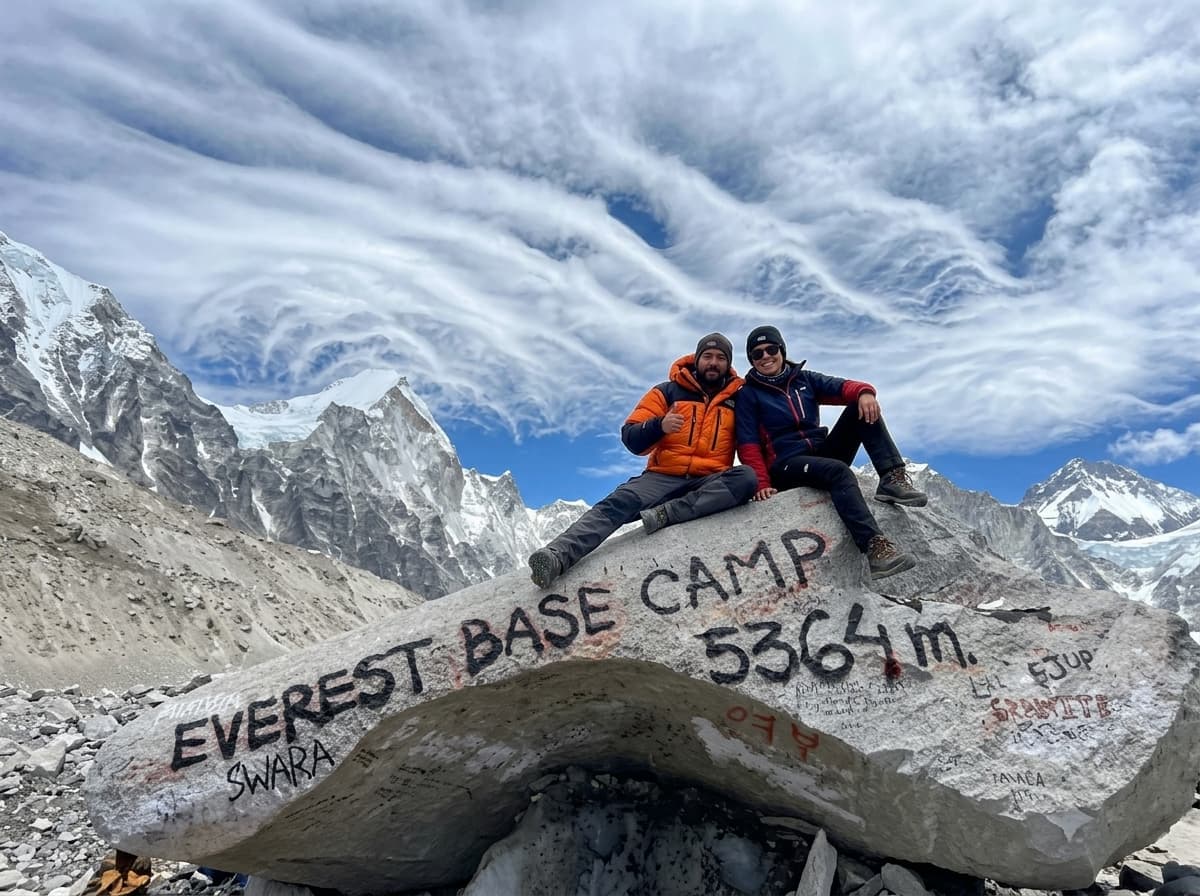
The Everest Base Camp trek (5,364 meters / 17,598 feet) does not require technical mountaineering skills, ropes, or an elite athletic pedigree. But it brutally punishes arrogance, poor footwear, and hurried pacing.
Preparation is not about getting into the best shape of your life. It is about conditioning your body for repetitive low-intensity endurance, understanding the physiology of thin air, and building the mental tolerance for unheated wooden rooms at sub-zero temperatures. Here is the complete, practical blueprint.
1. Physical Conditioning: The 12-Week Training Blueprint
You do not need to hire a private CrossFit coach or run twenty miles every Sunday.
The Everest Base Camp trek requires you to walk roughly 130 kilometers (65 miles) round-trip over 12 to 14 days. You will climb more than 4,000 vertical meters on uneven stone stairs, loose river rocks, and undulating glacial moraine, while carrying a daypack weighing 5 to 7 kilograms.
Your physical preparation needs to target three specific areas: aerobic base capacity, eccentric leg strength, and foot-and-ankle stability.
Aerobic Base Capacity (Zone 2 Cardio)
High-altitude trekking is 90% aerobic. At 5,000 meters, your body must process oxygen that has half the effective pressure of sea-level air. If your cardiovascular system is accustomed to working efficiently at low heart rates, you will burn fewer glycogen stores and produce less lactic acid.
- The Best Training: 45 to 60 minutes of low-intensity cardio, 3 to 4 times per week. You should be working hard enough to sweat, but slow enough that you can hold a full conversation without gasping.
- Top Activities: Incline treadmill walking (10% to 15% grade at 4 km/h), stair climber machines, outdoor trail hiking, or cycling.
Eccentric Leg Strength (The Downhill Insurance)
Most people assume the hardest part of Everest Base Camp is walking up. They are wrong.
Walking up tests your lungs. Walking down destroys your knees, quads, and hips. On the four-day descent from Gorakshep back to Lukla, you will drop nearly 2,500 vertical meters over jagged granite steps. This repetitive braking motion puts immense eccentric stress on your quadriceps and patellar tendons. If your legs are unconditioned, by Day 11 your knees will feel like they are packed with broken glass.
- Key Exercises:
- Step-downs from an elevated box (slow, 3-second descent)
- Walking lunges (weighted)
- Goblet squats
- Calf raises on the edge of a step to reinforce Achilles tendons
The 12-Week Progressive Training Schedule
Phase | Weeks | Weekly Focus | Minimum Target Workouts |
| Phase 1: Foundation | Weeks 1 – 4 | Build aerobic habit and joint resilience | • 3x 45-min cardio (incline walking or cycling) • 2x 30-min bodyweight leg strength (squats, lunges, planks) • 1x 2-hour outdoor weekend walk |
| Phase 2: Load & Incline | Weeks 5 – 8 | Add weight and vertical gain | • 2x 45-min stair master / hill intervals • 2x weighted leg strength sessions • 1x 3 to 4-hour weekend trail hike with a 5 kg backpack |
| Phase 3: Peak Simulation | Weeks 9 – 11 | Replicate mountain conditions | • 2x 60-min steep incline walk with a 7 kg pack • 1x full-body strength and mobility session • 1x 5 to 6-hour back-to-back weekend hike with boots and 8 kg pack |
| Phase 4: Taper & Rest | Week 12 | Active recovery and joint freshness | • 2x 30-min light flat walks (no heavy pack) • Gentle mobility and stretching • Rest, sleep, and hydrate before your flight to Nepal |
2. Altitude Preparation: Managing Thin Air
Understanding the atmospheric reality of Sagarmatha National Park is the difference between standing at Base Camp and getting airlifted down in a Eurocopter.
At sea level, effective oxygen availability is 100%. As you climb, the barometric pressure drops:
Location | Elevation (Meters & Feet) | Effective Oxygen Availability | Common Symptoms at this Stage |
| Kathmandu | 1,400m / 4,593 ft | ~85% | None for healthy adults |
| Namche Bazaar | 3,440m / 11,286 ft | ~67% | Mild breathlessness on stairs, elevated resting pulse |
| Dingboche | 4,410m / 14,468 ft | ~59% | Light morning headache, disrupted sleep, reduced appetite |
| Everest Base Camp | 5,364m / 17,598 ft | ~52% | Heavy breathing at rest, fatigue, slow movement |
| Kala Patthar | 5,545m / 18,192 ft | ~50% | Maximum exertion; half of sea-level oxygen per breath |
Can You Train for Altitude at Sea Level?
No. There is no gym workout, breathing technique, or high-altitude training mask that replicates how your blood chemistry adapts to 5,000 meters. Hypoxic elevation masks only restrict airflow; they do not alter barometric pressure or stimulate red blood cell production (erythropoietin).
Altitude acclimatization is a slow, involuntary biochemical process. Your kidneys must excrete bicarbonate through your urine to balance your blood pH as you hyperventilate thin air. That takes days, not minutes.
The Golden Rules of Himalayan Acclimatization
- Walk at a Conversational Pace (Bistari, Bistari): In Nepali, bistari means slowly. When you feel the urge to stride briskly past other groups, force yourself to downshift. Your pace should feel comically, almost frustratingly slow. If you cannot speak a complete sentence without pausing for breath, you are walking too fast.
- Drink 3.5 to 4.5 Liters of Water Daily: You lose massive amounts of moisture simply exhaling dry, frigid mountain air. Dehydration mimics and exacerbates acute mountain sickness (AMS). If your urine is not crystal clear by 3:00 PM every day, you are not drinking enough.
- Never Skip Rest/Acclimatization Days: A safe itinerary must include two built-in acclimatization days: one at Namche Bazaar (3,440m) and a second at Dingboche (4,410m). On these days, follow the mountaineering principle: Climb high, sleep low. Hike up 400 vertical meters during the afternoon, stay for an hour, and descend back to your lodge to sleep.
What About Diamox (Acetazolamide)?
Diamox is a carbonic anhydrase inhibitor that forces your kidneys to excrete bicarbonate, making your blood more acidic. This tricks your brain into breathing faster and deeper, especially while sleeping, speeding up natural acclimatization.
- Is it cheating? No. It is an established, life-saving travel medicine.
- When to take it: Many doctors recommend starting a low dose (125 mg twice daily) upon landing in Lukla or after reaching Namche Bazaar, continuing until descending past Namche.
- Side effects: Diamox causes a harmless tingling/pins-and-needles sensation in your fingers, toes, and face. It is also a mild diuretic (you will pee frequently), and it temporarily makes carbonated beer or soda taste flat and metallic.
- Contraindication: If you have an allergy to sulfa-based medications, you cannot take Diamox. Consult your travel doctor before departure.
Preventing the "Khumbu Cough"
The Khumbu Cough is a relentless, dry, hacking cough caused by breathing freezing, sub-zero air combined with trail dust from yak caravans. In severe cases, violent coughing fits can tear intercostal chest muscles.
- How to prevent it: Cover your mouth and nose with a breathable merino wool buff or balaclava starting from Day 2. Never breathe cold, dry mountain air directly through an open mouth while climbing. Suck on menthol lozenges, drink ginger honey tea at every rest stop, and sleep with your buff covering your neck and chin.
3. Gear Preparation: The Testing Protocol
You do not need to spend thousands of dollars on high-end mountaineering brands, but the gear you bring must work flawlessly under punishing conditions.
The Footwear Rule: Break in Boots 2 Months Early
Foot problems are the single most frequent reason trekkers fail to reach Base Camp.
Buy a pair of waterproof, medium-weight trekking boots with stiff ankle support (brands like Salomon Quest, Lowa Renegade, Scarpa, or La Sportiva). Do not buy them a week before your trip.
You must put a minimum of 50 to 80 kilometers on your boots before boarding your flight to Nepal. Wear them on weekend trails, climb stairs with your weighted pack, and test them with the exact merino wool socks you plan to wear in Nepal. If you feel a hot spot or heel slip at home, address it immediately with blister tape or alternative lacing techniques; it will not magically fix itself at 4,000 meters.
The 3-Layer System (Why Cotton Is Banned)
Cotton absorbs moisture, holds sweat against your skin, and robs your body of heat twenty-five times faster than dry clothing. It has no place in the Himalayas.
Layer | Purpose | Recommended Materials | What to Avoid |
| Base Layer | Moisture management next to skin | 200–260 gsm Merino wool or synthetic polyester tops and bottoms | Cotton t-shirts, cotton underwear |
| Mid Layer | Trapping warm air around your core | Polartec fleece jacket, grid fleece, or lightweight breathable active down jacket | Heavy cotton hoodies, denim |
| Outer Layer | Blocking piercing wind, snow, and rain | Windproof/waterproof Gore-Tex hard-shell jacket and pants | Heavy ski jackets (too bulky to ventilate while walking) |
| Insulation (Stationary) | Warmth around freezing teahouses and summit pushes | Heavy mountain-grade down jacket (700+ fill power with a box-baffle hood) | Thin ultra-light fashion down coats |
What to Buy at Home vs. What to Rent in Kathmandu
Save your money. You do not need to purchase an expensive $400 down jacket or a $300 four-season sleeping bag if you do not plan on doing sub-zero alpine climbing again.
Buy at Home (Crucial Fit) | Rent in Thamel, Kathmandu (Cheap & Functional) |
| • Broken-in waterproof trekking boots | • Heavy down jacket (rated to -15°C): 2–3 / day |
| • Moisture-wicking Merino socks (4–5 pairs) | • 4-season down sleeping bag (-15°C to -20°C): 2–3 / day |
| • Comfortable 30L–38L daypack with a padded hip belt | • Trekking poles: 1–2 / day |
| • UV400 polarized sunglasses (category 3 or 4) | • Microspikes / light crampons: $1 / day |
| • Personal thermal base layers | • Waterproof duffel bag (often provided free by local agencies) |
4. Health, Immunizations, and Medical Kit
You will be days away from comprehensive hospital care. Your personal medical kit should be packed in your daily backpack, not inside the duffel bag carried by your porter.
Essential Personal Medical Kit Checklist
Category | Medication / Supply | Exact Purpose on Trail |
| Altitude | Acetazolamide (Diamox) 125mg | Accelerates natural acclimatization (take under doctor guidance) |
| Gastrointestinal | Ciprofloxacin or Azithromycin | Broad-spectrum prescription antibiotic for severe bacterial traveler's diarrhea |
| Gastrointestinal | Loperamide (Imodium) | Antidiarrheal for emergency travel days between villages |
| Gastrointestinal | Oral Rehydration Salts (ORS) | Electrolyte replenishment after bouts of dehydration or sweating |
| Pain & Inflammation | Ibuprofen (400mg) | Relieves high-altitude headaches and reduces joint inflammation |
| Blister Care | Compeed hydrocolloid patches & Leukotape | Apply at the first sign of friction before a blister tears |
| Respiratory | Throat lozenges & nasal saline spray | Combats the dry, dusty air of the Khumbu valley |
| Water Safety | Chlorine dioxide purification tablets | Kills bacteria, viruses, and Giardia cysts in unboiled tap water |
Routine Travel Vaccinations for Nepal
Visit a travel clinic at least six to eight weeks before your departure date. Standard recommended immunizations for trekking in Nepal include:
- Hepatitis A and Typhoid (food-and-water-borne risks)
- Tetanus booster (must be valid within the past 10 years)
- MMR and Polio boosters (as per international travel standards)
- Rabies (optional, but stray dogs and monkeys are common along access roads and villages)
5. Mental & Logistical Preparation: Living in a Teahouse
Mental preparation is just as critical as physical training. Trekkers who arrive expecting heated hotel rooms and hot showers inevitably suffer. Those who embrace the rustic nature of mountain life have the trip of a lifetime.
What Everyday Teahouse Life Actually Looks Like
- No Room Heating: Except for a communal wood- or yak-dung-burning stove in the central dining hall from 5:00 PM to 8:30 PM, teahouses are unheated. Your bedroom will be the exact same temperature as the mountain outside. At Gorakshep or Lobuche, water glasses beside your bed will freeze solid overnight. Your -15°C down sleeping bag is your survival sanctuary.
- The Bathroom Reality: Downstairs shared bathrooms range from basic Western flush toilets to traditional porcelain squat toilets. Above Namche Bazaar, running water in bathroom pipes freezes overnight. You will flush using a plastic pitcher dipped into a 50-gallon drum of water with ice floating on top. Bring three rolls of toilet paper from Kathmandu and pack small biodegradable trash bags.
- Hygiene Strategy: You will not take a shower past Dingboche (4,410m). Stripping naked in an unheated concrete stall in sub-zero air is a fast track to catching hypothermia or the Khumbu cough. Experienced trekkers rely on no-rinse biodegradable body wipes for the upper half of the route.
Cash and Connectivity
- Withdraw Cash in Kathmandu: ATMs on the trail (Lukla and Namche Bazaar) run out of physical cash frequently during peak trekking months. Withdraw all your daily spending money in Kathmandu before departure. Budget roughly $30 to $45 USD equivalent in Nepali Rupees (NPR) per day for food, hot showers, and device charging if traveling independently, or $20 to $25 per day for personal incidentals on an agency-supported trek.
- Wi-Fi & Data: Purchase an Ncell or Nepal Telecom (NTC) physical SIM card at Kathmandu airport (NTC generally has superior reception across the Khumbu valley up to Tengboche). For higher elevations, you can buy an Everest Link prepaid Wi-Fi card at any teahouse for roughly $20 to $30 USD for 10GB to 20GB of data.
Travel Insurance Verification Checklist
Before paying for your policy, call your insurance provider and verify that your paperwork explicitly covers:
- Medical treatment up to 6,000 meters (19,685 feet).
- Emergency helicopter evacuation and search-and-rescue without requiring a pre-payment cash deposit.
- Repatriation of remains.
- Trip cancellation and flight disruption coverage (crucial for Lukla mountain flight delays).
6. The 12-Week Preparation Timeline
Use this chronological checklist to stay on track from booking to takeoff:
Timing | Action Items |
| 12 Weeks Before | • Book flights to Kathmandu and lock in your trek dates with a licensed local operator • Start Phase 1 of the physical training plan (cardio base & leg strength) • Purchase your trekking boots and begin breaking them in on weekend walks |
| 8 Weeks Before | • Visit your travel medicine clinic for vaccinations and prescription medications (Diamox, antibiotics) • Advance to Phase 2 training (add 5 kg weighted pack and stair climbing) • Check your passport validity (must have at least 6 months validity remaining) |
| 4 Weeks Before | • Finalize high-altitude travel insurance covering helicopter evacuation up to 6,000m • Peak training hike: 5+ hours on rough terrain wearing full boots and 7–8 kg pack • Acquire all base layers, socks, and personal medical supplies |
| 2 Weeks Before | • Begin tapering your physical workouts; focus on sleep, joint health, and hydration • Make two paper copies of your passport, travel insurance policy, and visa photos • Test-pack your daypack to confirm it weighs under 6–7 kg with full water bottles |
| 1 Week Before | • Rest days only. No heavy lifting or risky outdoor sports that could cause sprains • Notify your bank that you will be withdrawing cash in Nepal to prevent card blocks • Pack your essentials in your carry-on bag (boots, prescription meds, warm jacket) |
Frequently Asked Questions
How fit do I actually need to be for the Everest Base Camp trek?
You do not need to be an elite athlete, but you need solid cardiovascular endurance and strong leg conditioning. If you can walk 5 to 7 hours uphill on uneven stone stairs with a 6-kilogram backpack for multiple consecutive days without knee pain or exhaustion, your fitness is sufficient for Everest Base Camp.
How many months in advance should I start training for EBC?
You should begin structured physical preparation 8 to 12 weeks prior to your trek. If you already maintain an active cardiovascular routine, 8 weeks of stair climbing, weighted walking, and leg strengthening is adequate. If you are starting from a sedentary baseline, allow a full 16 weeks to condition your joints and tendons.
Should I take Diamox preventatively or wait until I get altitude symptoms?
Many high-altitude physicians recommend starting a prophylactic dose of Diamox (125mg twice daily) starting in Lukla or Namche Bazaar. Taking Diamox before developing severe symptoms helps your body acclimatize smoothly and prevents nighttime sleep apnea, whereas taking it after acute mountain sickness develops is less effective than immediate rest or descent.
What is the single biggest mistake people make when preparing for EBC?
The single biggest mistake is bringing brand-new, unbroken-in boots. Stiff hiking boots straight out of the box cause severe heel and toe blisters within the first two days of walking, turning the remaining 10 days of the trek into agony. You must put at least 50 kilometers on your boots before arriving in Nepal.
Can I do the Everest Base Camp trek if I have asthma or high blood pressure?
Many people with controlled asthma and hypertension complete the trek successfully. However, cold, dry mountain air can trigger exercise-induced asthma, so carry twice your normal inhaler supply inside your inner jacket to prevent freezing. Consult your cardiologist or physician for an altitude stress clearance before booking.
How do I prevent the Khumbu cough during the trek?
To prevent the Khumbu cough, wear a breathable merino wool buff or neck gaiter over your mouth and nose from Day 2 onward to humidify and warm the air you inhale. Avoid breathing deeply through an open mouth, drink 4 liters of warm fluids daily, and suck on menthol throat lozenges at rest stops.
What should go in my daypack versus the porter duffel bag?
Your porter carries your main duffel bag (sleeping bag, extra clothes, heavy toiletries, evening camp shoes) directly between teahouses, and you cannot access it during the day. Your personal daypack must hold your waterproof shell jacket, extra fleece, 2 liters of water, personal first-aid/medication, passport, cash, camera, sunscreen, warm gloves, and snacks.
Planning your Everest Base Camp expedition and want expert guidance on itineraries, gear selection, and safe acclimatization schedules? When you book with us, our licensed mountain leaders manage every aspect of your trek with personalized preparation support and daily medical monitoring. [Contact our team] for honest trail advice and a direct quote.