Best Winter Treks in Nepal: What Works in October, November, and December
Nepal recorded 236,587 trekking permits across its major regions in 2024. Winter months — December through February — accounted for roughly 3 to 5 percent of that total. Which means about 95 percent of trekkers never find out what Nepal looks like in winter.
That's a mistake.
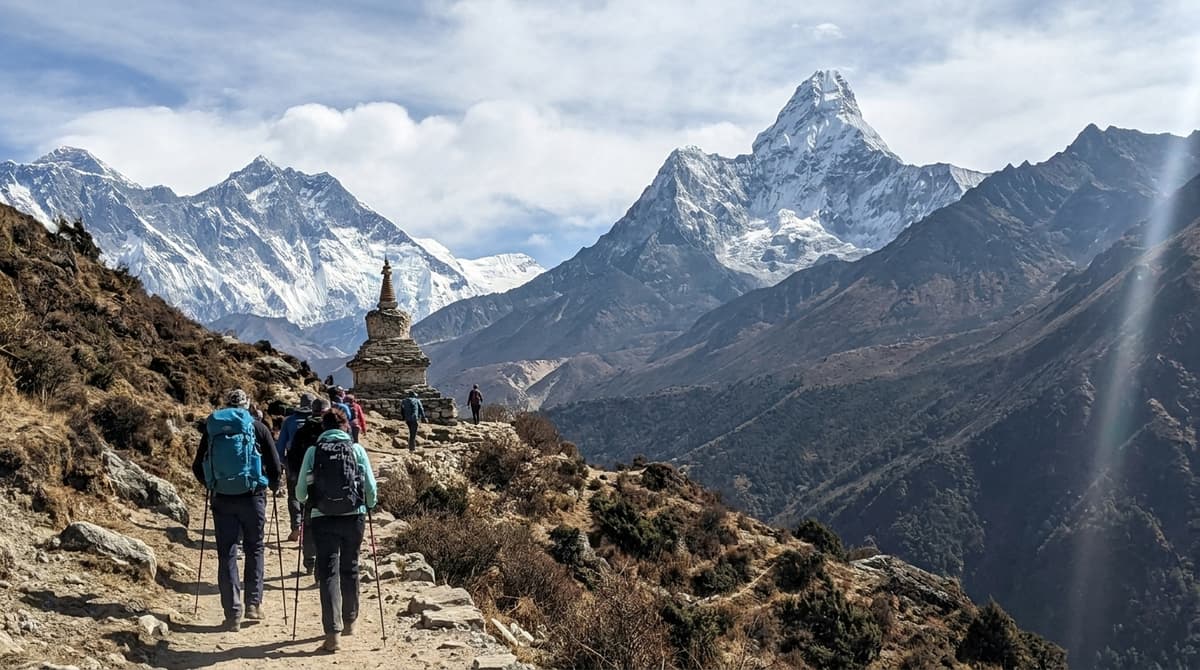
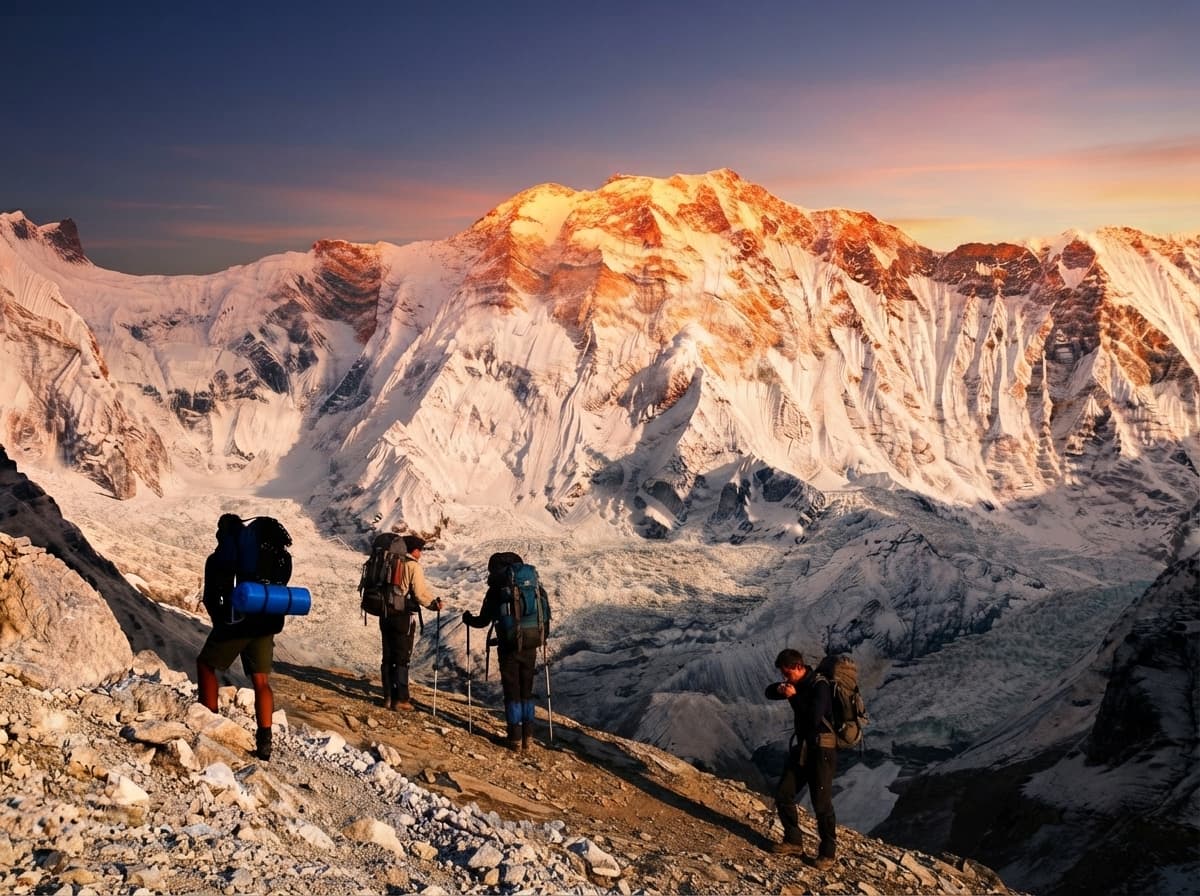
The late autumn-to-winter window — October through December — is when the Himalaya gives you its sharpest views, emptiest trails, and coldest nights. The first two are rewards. The third is the price of admission. And if you pick the right trek and pack the right gear, that price is genuinely worth paying.
We run treks year-round at MAT Nepal, including through December and into January. Some of our favourite trips happen after the autumn crowds leave. This guide covers the eight treks that actually work in Nepal's winter window — with real temperatures, real trekker numbers, real difficulty assessments, and honest advice about who should and shouldn't attempt each one.
Winter Trekking in Nepal — At a Glance
Month | Weather | Daytime Temp (Lower Elevations) | Nighttime Temp (3,000m+) | Crowds | Best For |
| October | Post-monsoon; clear skies, warm days, lush green hills | 15°C–22°C | 0°C to -5°C | Peak — very busy | Everything. All routes open and comfortable. |
| November | Crystal clear, dry trails, stable weather | 12°C–18°C | -2°C to -8°C | Peak — very busy | High passes, base camps, long circuits |
| December | Cold, extremely clear, shorter days (dark by 5:15 PM) | 5°C–12°C | -8°C to -20°C | Quiet — 80% fewer trekkers | Lower-altitude treks; solitude seekers; photography |
The 8 Best Winter Treks in Nepal — Compared
Here's the full comparison. We'll break each one down in detail below.
Trek | Region | Max Altitude | Days | Difficulty | Best Winter Months | Beginner-Friendly? | Cost (Guided) |
| Ghorepani Poon Hill | Annapurna | 3,210m | 4–5 | Easy | Oct, Nov, Dec ✅ | Yes | 350–600 |
| Mardi Himal | Annapurna | 4,500m | 5–7 | Moderate | Oct, Nov, early Dec | Yes (with guide) | 400–700 |
| Annapurna Base Camp | Annapurna | 4,130m | 9–12 | Moderate | Oct, Nov | Moderate — not Dec beginners | 800–1,500 |
| Pikey Peak | Solukhumbu | 4,065m | 6–8 | Easy–Moderate | Oct, Nov, Dec ✅ | Yes | 500–900 |
| Everest Panorama (Tengboche) | Everest | 3,860m | 7–9 | Moderate | Oct, Nov, early Dec | Yes (with guide) | 800–1,200 |
| Langtang Valley | Langtang | 3,830m | 7–10 | Moderate | Oct, Nov, early Dec | Yes (with guide) | 600–1,000 |
| Khopra Danda Ridge | Annapurna | 3,660m | 5–6 | Moderate | Oct, Nov, Dec ✅ | Yes | 450–750 |
| Panchase Trek | Annapurna/Pokhara | 2,517m | 3–4 | Easy | Oct, Nov, Dec ✅ | Yes — ideal first trek | 250–450 |
1. Ghorepani Poon Hill Trek — The Best Winter Trek for Beginners
The Ghorepani Poon Hill trek in Nepal's Annapurna region is a four-to-five-day walk from Nayapul (near Pokhara) to the 3,210-meter viewpoint at Poon Hill, with an overnight in Ghorepani village. It is widely considered the best beginner trek in Nepal, and it works exceptionally well through October, November, and December.
Why This Trek Works in Winter
Poon Hill stays below 3,300 meters — low enough that serious altitude sickness is not a concern for healthy adults. The teahouses along the route through Tikhedhunga, Ghorepani, and Tadapani are well-established and remain open through December. And the views from the summit at 5:30 AM — a 360-degree panorama of Dhaulagiri (8,167m), Annapurna South, Machhapuchhre, and the full Annapurna range — are actually better in December than in October because the air is drier and the visibility extends farther.
I'll be honest about the trade-off: December mornings at Poon Hill are cold. Genuinely cold. We've measured -8°C at the summit before sunrise in mid-December, and with wind it feels worse. You'll be standing still in the dark waiting for the sun, so your down jacket and gloves aren't optional — they're the difference between an unforgettable sunrise and a miserable one.
Temperature by Month
Month | Daytime (Trail) | Nighttime (Ghorepani, 2,874m) | Summit Sunrise (3,210m) |
| October | 12°C–18°C | 2°C to 5°C | 0°C to 3°C |
| November | 8°C–14°C | -1°C to 3°C | -3°C to 0°C |
| December | 4°C–10°C | -4°C to -1°C | -8°C to -3°C |
Trek Specs
- Duration: 4–5 days (Nayapul → Tikhedhunga → Ghorepani → Poon Hill → Tadapani → Nayapul)
- Maximum altitude: 3,210 meters (Poon Hill)
- Difficulty: Easy — suitable for first-time trekkers with reasonable fitness
- Permits required: ACAP (NPR 3,000 / ~$23) + TIMS (NPR 1,000–2,000)
- Starting point: Nayapul, 1.5 hours by car from Pokhara
- Guided cost: 350–600 per person (includes guide, permits, accommodation, meals)
Who Should Do This Trek
Anyone. Genuinely. If you can walk four to six hours a day on mountain trails for four consecutive days, you can do Poon Hill in winter. We've sent retired couples in their late sixties, solo travellers on their first-ever trek, and families with teenagers. The altitude is low enough that acclimatization isn't a concern, the trail is well-marked, and the teahouses serve dal bhat that keeps you warmer than any amount of merino wool.
2. Mardi Himal Trek — The Ridge Walk with the Best Views-to-Effort Ratio
The Mardi Himal trek is a five-to-seven-day ridge walk in the Annapurna region that climbs from forest to alpine meadow to a 4,500-meter viewpoint directly beneath the south face of Machhapuchhre (Fishtail). It is one of the newer officially opened routes in Nepal, and it's become one of our most requested winter treks at MAT Nepal — partly because of the views, partly because of the relative quiet.
Why This Trek Works in Winter (With Caveats)
Mardi Himal is excellent in October and November. December is doable but conditional. Here's the distinction:
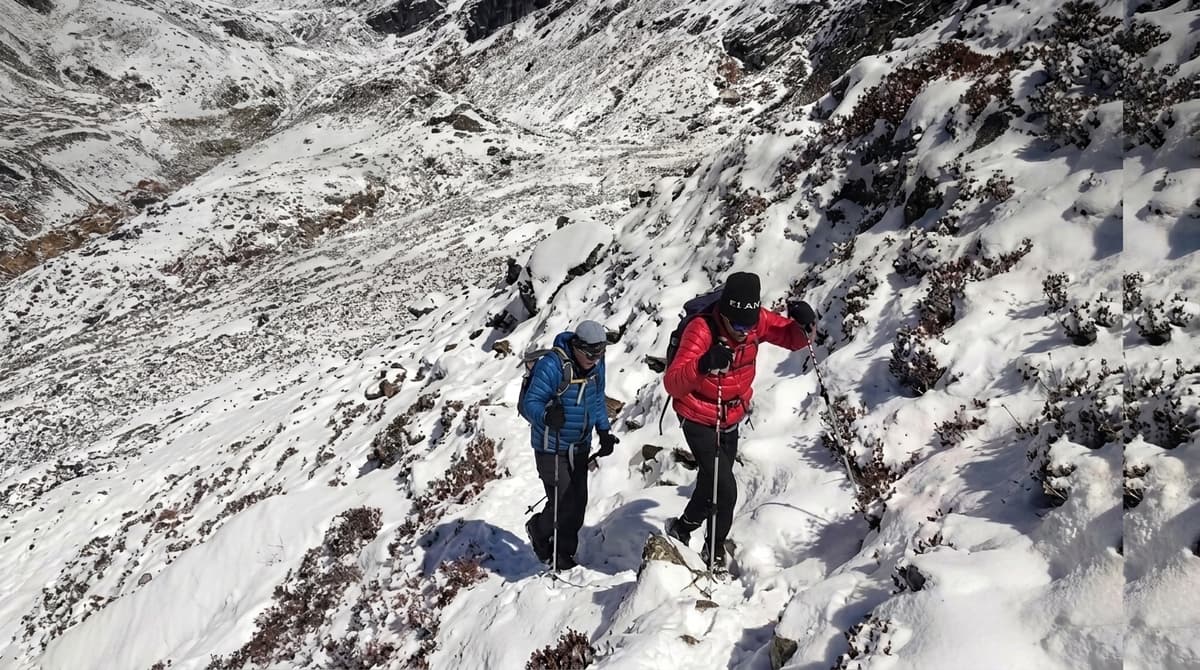
The lower sections — forest camp through low camp (~2,600m–3,300m) — are pleasant even in December. Rhododendron forest, clear trails, mild daytime temperatures. But the upper ridge from High Camp (3,550m) to Mardi Himal Base Camp (4,500m) is fully exposed to wind, and in December it's frequently covered in snow and ice. We send groups up there in early December with microspikes and experienced guides. By mid-to-late December, the ridge conditions become unpredictable enough that we recommend Poon Hill or Khopra Danda instead.
So the honest answer: October and November, absolutely go. Early December, yes — but only with a guide who knows this ridge in winter. Late December, think twice.
Temperature by Month
Month | Daytime (Ridge Walk) | Nighttime (High Camp, 3,550m) | Base Camp (4,500m) |
| October | 10°C–16°C | -2°C to 2°C | -5°C to -2°C |
| November | 6°C–12°C | -5°C to 0°C | -8°C to -5°C |
| December | 2°C–8°C | -8°C to -3°C | -12°C to -8°C |
Trek Specs
- Duration: 5–7 days
- Maximum altitude: 4,500 meters (Mardi Himal Base Camp)
- Difficulty: Moderate — the final ridge section requires confidence on exposed terrain
- Permits required: ACAP (NPR 3,000 / ~$23) + TIMS (NPR 1,000–2,000)
- Starting point: Kande (near Pokhara) or Sidhing
- Guided cost: 400–700 per person
- Winter-specific gear: Microspikes mandatory for High Camp and above in November–December. Trekking poles strongly recommended.
Beginner Verdict
Beginners can do Mardi Himal in October and November with a good guide. The trail is not technical, but the exposed ridge above High Camp requires steady nerves and sure footing — it's narrow, steep on both sides, and in November there's often a thin layer of frost on the rocks by morning. If you've never walked on icy terrain, talk to your guide before committing to the final push.
3. Annapurna Base Camp (ABC) — The Classic, But Know the December Limits
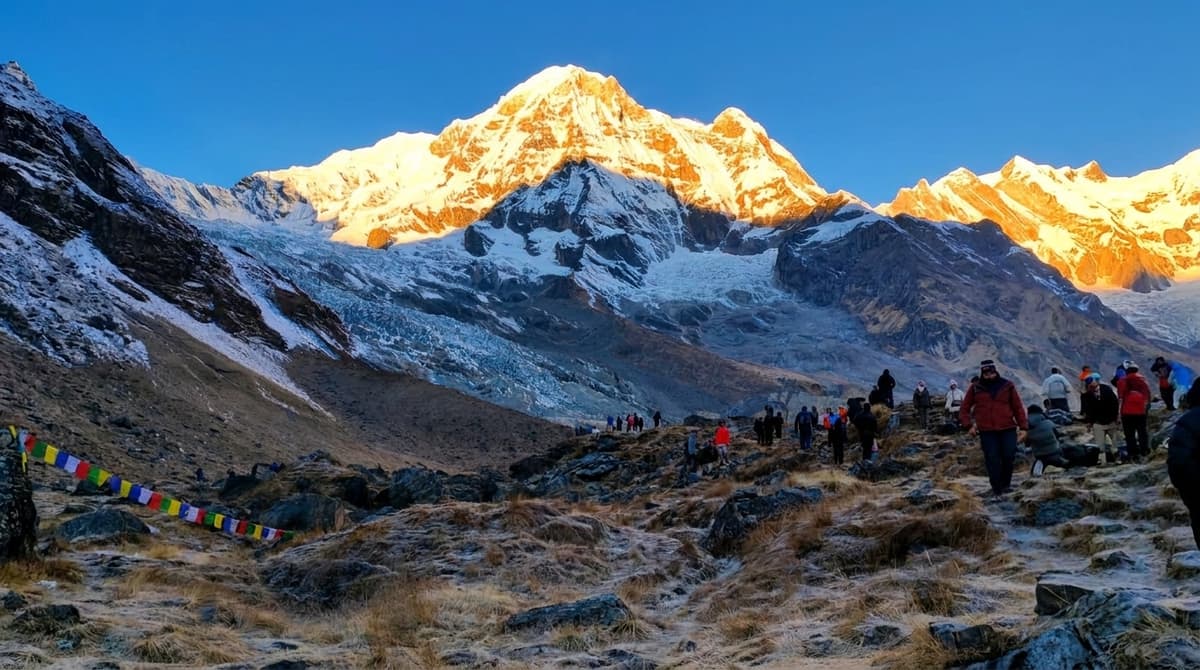
The Annapurna Base Camp trek reaches 4,130 meters inside the Annapurna Sanctuary — a natural amphitheatre surrounded by Annapurna I (8,091m), Annapurna South, Hiunchuli, and Machhapuchhre. It takes nine to twelve days from Nayapul through Ghandruk and Chhomrong, and it's one of the most popular treks in the world for good reason.
Winter Feasibility — Month by Month
October and November: ABC is at its best. Clear skies, functional teahouses, comfortable temperatures during the day, cold but manageable nights. This is peak season for a reason.
December: The ABC trek is feasible in December, but it comes with real trade-offs that most travel blogs gloss over. Above Deurali (3,230m), snow accumulates on the trail. The section entering the Annapurna Sanctuary passes through avalanche-prone zones — this is not theoretical risk, it's a genuine safety consideration that your guide needs to assess daily based on recent snowfall and temperature patterns. Most teahouses stay open in December, but some higher lodges operate with limited menus and reduced staff.
We run ABC groups in early-to-mid December. We don't run them in late December unless conditions are unusually mild and our guide team confirms the avalanche corridors are stable. That's not a marketing decision — it's a safety decision.
Temperature by Month
Month | Daytime (Trail, ~3,000m) | Nighttime (MBC, 3,700m) | ABC (4,130m) |
| October | 10°C–15°C | -2°C to 2°C | -5°C to 0°C |
| November | 5°C–12°C | -5°C to -2°C | -10°C to -5°C |
| December | 0°C–8°C | -10°C to -5°C | -15°C to -10°C |
Trek Specs
- Duration: 9–12 days
- Maximum altitude: 4,130 meters (Annapurna Base Camp)
- Difficulty: Moderate — longer than Poon Hill or Mardi Himal, with sustained altitude above 3,000m for several days
- Permits required: ACAP (NPR 3,000 / ~$23) + TIMS (NPR 1,000–2,000)
- Guided cost: 800–1,500 per person
- December caution: Avalanche risk above Deurali. Mandatory guide. Snow gear required.
Beginner Verdict
ABC is doable for fit beginners in October and November. It is not a good first trek in December — the cold, the sustained altitude, and the avalanche awareness required make it better suited to trekkers who've done at least one Himalayan trek before.
4. Pikey Peak — Everest Views Without the Everest Price Tag
The Pikey Peak trek in Nepal's Solukhumbu district reaches 4,065 meters and gives you a panoramic view of five of the world's six tallest mountains — Everest, Lhotse, Makalu, Cho Oyu, and Kanchenjunga — without flying to Lukla, without spending two weeks on the trail, and without the cost of the full Everest Base Camp route. Sir Edmund Hillary reportedly called it his favourite viewpoint of Everest. Having been to both, I understand why — the perspective from Pikey is wider, more sweeping, and you can actually see the full pyramid of Everest rather than the cramped view you get from base camp.
Why This Trek Works in Winter
Pikey Peak is one of the most underrated winter treks in Nepal. The trail stays in a comfortable altitude range (2,000m–4,065m), the lodges are basic but open year-round, and the Solukhumbu hills are sheltered enough that wind is less punishing than on the exposed ridges of the Annapurna region. December visibility is exceptional — the kind of crisp, limitless clarity where you can count individual ridges on peaks eighty kilometres away.
The catch: this isn't a well-known route yet. Teahouses are simpler and fewer than on Poon Hill or ABC. You won't have a menu with fifteen items — expect dal bhat, maybe egg fried rice, and tea. The lodges have blankets, but your own sleeping bag is essential in December.
Temperature by Month
Month | Daytime (Trail) | Nighttime (Lodge, ~3,500m) | Summit (4,065m) |
| October | 10°C–16°C | 0°C to 3°C | -3°C to 0°C |
| November | 6°C–12°C | -3°C to 0°C | -6°C to -3°C |
| December | 2°C–8°C | -6°C to -2°C | -10°C to -6°C |
Trek Specs
- Duration: 6–8 days (from Dhap or Phaplu)
- Maximum altitude: 4,065 meters (Pikey Peak)
- Difficulty: Easy to Moderate
- Permits required: Gaurishankar Conservation Area entry or local municipality fee (~NPR 1,000–2,000)
- No Lukla flight needed — drive from Kathmandu to trailhead (8–10 hours)
- Guided cost: 500–900 per person
- Beginner-friendly: Yes, all three months
5. Everest Panorama Trek (Namche to Tengboche) — Everest Without Base Camp
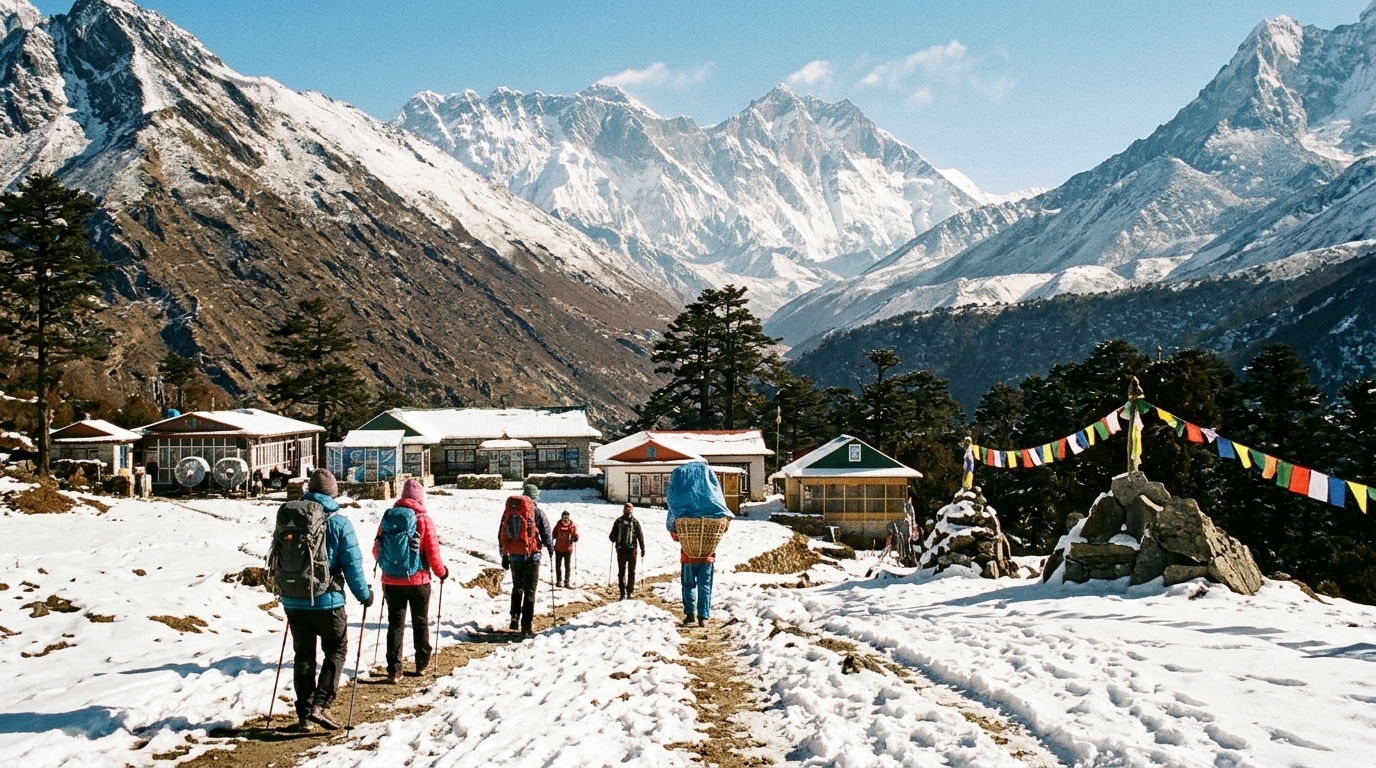
The Everest Panorama trek goes from Lukla to Namche Bazaar and up to Tengboche Monastery at 3,860 meters — giving you front-row views of Everest, Lhotse, Nuptse, and Ama Dablam without pushing to the full 5,364-meter Everest Base Camp. It takes seven to nine days round-trip and is the smart alternative for anyone who wants the Everest experience in winter without the extreme cold and altitude of the full EBC trek.
Why This Works Better Than Full EBC in December
The full Everest Base Camp trek reaches 5,364 meters, where December nighttime temperatures drop to -20°C or lower. Teahouses above Dingboche start closing or running on skeleton crews. The wind at Gorak Shep in December is something you remember whether you want to or not.
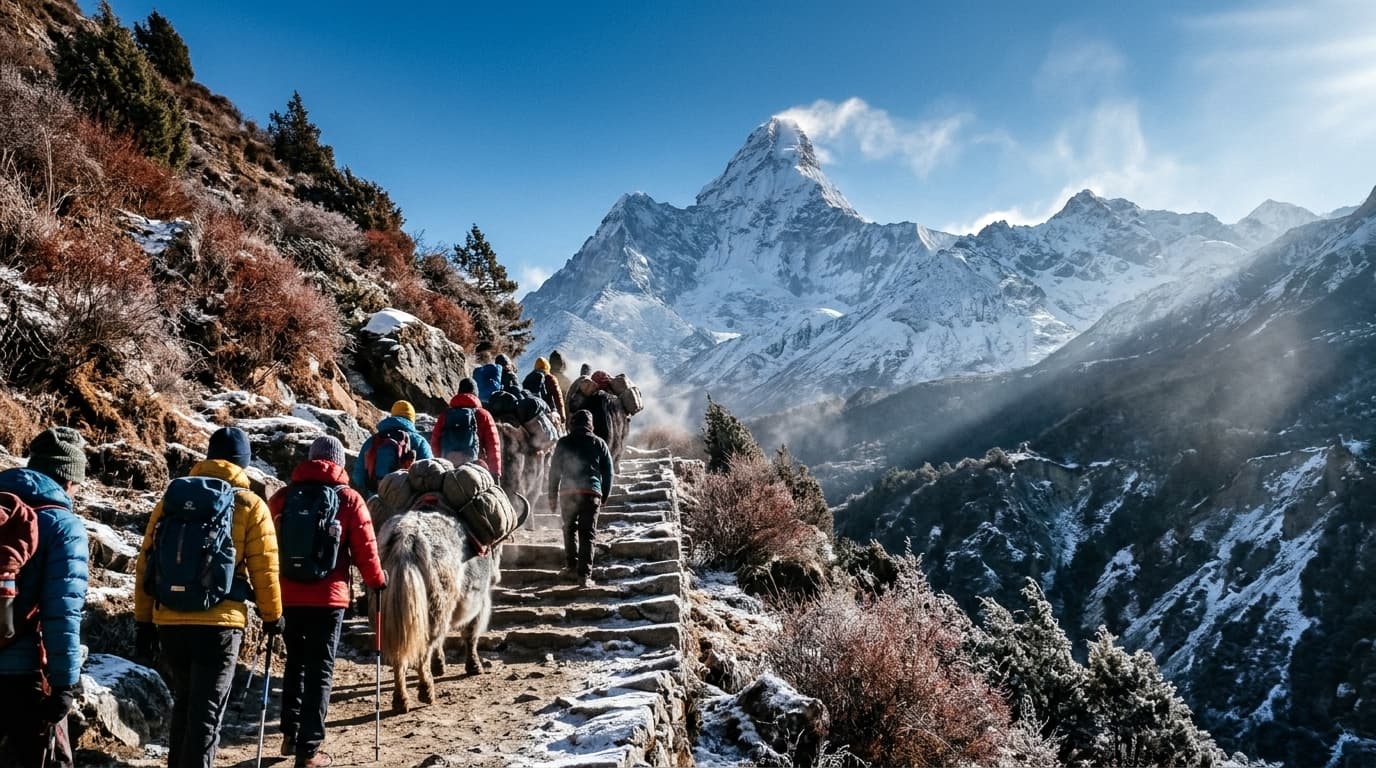
The Everest Panorama trek caps out at 3,860 meters. That's still cold in December — we're talking -10°C to -15°C at night — but the teahouses in Namche and Tengboche are established, well-stocked, and accustomed to winter guests. You get to sit in the warm dining hall at Tengboche with a hot lemon tea and look directly at the Everest massif from one of the most spectacular viewpoints in the Himalaya. And you get to do it with about a tenth of the people who'd be there in October.
Trek Specs
- Duration: 7–9 days
- Maximum altitude: 3,860 meters (Tengboche Monastery)
- Difficulty: Moderate — Lukla flight adds a variable; altitude is manageable for most
- Permits required: Sagarmatha National Park entry (NPR 3,000 / ~$23) + TIMS
- Guided cost: 800–1,200 per person
- December caveat: Lukla flights are weather-dependent year-round, but winter fog delays are more common. Build 2 buffer days minimum.
- Beginner-friendly: Yes, with a guide and proper gear
6. Langtang Valley Trek — No Flights, No Fuss, Close to Kathmandu
The Langtang Valley trek reaches 3,830 meters at Kyanjin Gompa and is located just north of Kathmandu — no domestic flights required. You drive three to four hours to the trailhead at Syabrubesi and walk from there. The trail follows the Langtang River through Tamang villages and dense forest into a wide glacial valley surrounded by 7,000-meter peaks.
Why Langtang Works Well in Early Winter
Langtang is one of the best October and November treks in Nepal. The valley faces south, which means more sun exposure and warmer daytime temperatures than you'd expect for the altitude. The Tamang villages along the route — rebuilt with remarkable resilience after the devastating 2015 earthquake — offer genuine cultural experiences that feel less commercial than the Annapurna teahouse circuit.
December is trickier. The upper valley (above Lama Hotel) gets cold enough that some teahouses reduce operations, and the trail to Kyanjin Ri (4,773m) can be icy. The main Kyanjin Gompa lodges stay open, but the experience is more austere.
Trek Specs
- Duration: 7–10 days
- Maximum altitude: 3,830m (Kyanjin Gompa) or 4,773m (Kyanjin Ri — optional day hike)
- Difficulty: Moderate
- Permits required: Langtang National Park entry (NPR 3,000 / ~$23) + TIMS (NPR 1,000–2,000)
- No flights needed — drive from Kathmandu
- Guided cost: 600–1,000 per person
- Best winter months: October, November, early December
7. Khopra Danda Ridge Trek — The Off-Grid Alternative to Poon Hill
The Khopra Danda trek is a five-to-six-day walk in the Annapurna region that reaches 3,660 meters at the Khopra Ridge viewpoint. It shares the first two days with the Poon Hill route but then branches south onto a quieter ridge trail with views of Dhaulagiri, Annapurna South, and the sacred Khayer Lake (4,500m) below.
Why This Trek Is Worth Knowing About
Khopra Danda gets maybe 5 percent of the foot traffic that Poon Hill gets. In December, you might be the only group on the trail for two consecutive days. The community-run lodge at Khopra is basic — solar-powered, limited menu, no hot showers — but it sits on the edge of a ridge with an unobstructed view of the Dhaulagiri massif that will stay with you long after the cold fades from your memory.
This trek works well through December because the altitude is moderate (below 3,700m on the main route), the trail is well-maintained by the community lodge network, and the southern exposure keeps it warmer than north-facing valleys at the same altitude.
Trek Specs
- Duration: 5–6 days
- Maximum altitude: 3,660m (Khopra Ridge) — optional day hike to Khayer Lake at 4,500m
- Difficulty: Moderate
- Permits required: ACAP (NPR 3,000 / ~$23) + TIMS
- Guided cost: 450–750 per person
- Beginner-friendly: Yes
- December-friendly: Yes
8. Panchase Trek — The Shortest, Cheapest, Easiest Winter Trek in Nepal
The Panchase trek is a three-to-four-day walk near Pokhara that reaches 2,517 meters at the Panchase summit. It is the lowest-altitude, shortest, and most affordable trek on this list — and in December, it offers something the higher treks don't: warmth. Relative warmth, anyway.
Why This Trek Exists on This List
Not everyone has ten days and a thousand dollars. The Panchase trek costs 250–450 with a guide, takes three or four days, never goes above 2,517 meters, and gives you views of the Annapurna and Dhaulagiri ranges from a forested hilltop that most tourists never visit. In December, daytime temperatures at the summit are still around 5°C–10°C, and nights drop to maybe -2°C to 2°C — cold, but nothing compared to the -15°C nights at higher treks.
It's also genuinely beautiful. The rhododendron forests are bare in December, but the oak and pine forests are still green, the birdlife is active, and the silence is complete.
Trek Specs
- Duration: 3–4 days
- Maximum altitude: 2,517 meters
- Difficulty: Easy — suitable for anyone with basic walking fitness
- Permits required: ACAP (NPR 3,000 / ~$23)
- Guided cost: 250–450 per person
- Best winter months: All three
- Ideal for: First-time trekkers, budget travellers, families, anyone wanting a quick Himalayan experience without serious altitude
How Cold Does It Get on Nepal Treks in December?
December is the coldest month covered in this guide, and the temperatures vary enormously depending on altitude. Here's what to actually expect — these are based on readings our guides have recorded over multiple seasons, not theoretical averages.
Altitude Zone | Daytime (Sun) | Nighttime (Clear Sky) | Feels Like (Wind) |
| 1,500m–2,500m (e.g., Panchase, lower Poon Hill trail) | 8°C–15°C | 0°C to 5°C | Comfortable with a fleece |
| 2,500m–3,500m (e.g., Ghorepani, Namche, Low Camp) | 3°C–10°C | -5°C to 0°C | Cold mornings, warm walking |
| 3,500m–4,500m (e.g., ABC, Tengboche, Mardi BC) | -2°C to 5°C | -10°C to -5°C | Seriously cold after dark |
| 4,500m+ (e.g., EBC, high passes) | -5°C to 0°C | -15°C to -25°C | Don't go here in December without expedition gear |
The single most important thing to understand about December trekking temperatures: daytime and nighttime are two completely different experiences. You can be walking comfortably in a base layer and fleece at noon, and shivering in your down jacket at 5 PM in the same spot. The temperature swing between afternoon sun and post-sunset shade at 3,500 meters is routinely 15 to 20 degrees Celsius.
What Gear Do I Need for a Winter Trek in Nepal?
The gear you need depends on which trek you're doing and which month. Here's the practical breakdown — what we actually tell our clients to bring, not a generic packing list.
Essential for ALL Winter Treks (October–December)
Item | Why | Rent or Buy in Kathmandu? |
| Down jacket (expedition-weight for Dec) | Teahouses have no central heating. The dining hall stove is the only warm spot. | Rent: 2–4/day in Thamel |
| Sleeping bag (-10°C for Nov, -15°C to -20°C for Dec) | Teahouse blankets are not enough in winter. A warm sleeping bag is the single most important piece of gear. | Rent: 2–3/day in Thamel |
| Waterproof trekking boots | Frost, ice, and snow on trails above 3,000m from November onward | Buy before you arrive — renting boots is risky |
| Thermal base layers (Merino or synthetic, 2 sets) | Moisture-wicking warmth. Cotton kills in winter — it holds moisture and makes you cold. | Buy in Thamel: 10–20/set |
| Fleece mid-layer | Insulation between base layer and down jacket | Rent or buy |
| Windproof/waterproof shell jacket | Wind at altitude in December is the real enemy, not the air temperature | Bring from home or buy in Thamel |
| Warm hat, gloves (liner + insulated), buff/neck gaiter | Exposed skin loses heat fastest. Double-layer gloves for December. | Buy in Thamel: 5–15 |
| Sunglasses (UV-rated) | Snow glare in December is intense — can cause snow blindness | Bring from home |
| Sunscreen (SPF 50+) and lip balm with SPF | High-altitude winter sun burns faster than summer beach sun | Bring from home |
| Headlamp with spare batteries | December daylight ends at 5:15 PM. Batteries drain fast in cold — keep them in your jacket pocket. | Buy in Thamel: 5–10 |
| Trekking poles | Essential for icy trail sections from November onward | Rent: 1–2/day |
Additional Gear for December Treks Above 3,000m
Item | Why |
| Microspikes / light crampons | Frozen trail sections, black ice on shaded slopes, snow-covered paths. Non-negotiable above 3,500m in December. |
| Gaiters | Keep snow, slush, and debris out of your boots |
| Thermos | Hot water freezes in a regular bottle above 4,000m. A thermos keeps your tea warm on the trail. |
| Sleeping bag liner (thermal/fleece) | Adds 3°C–5°C to your sleeping bag rating |
| Water purification tablets (not a filter) | Water filters can freeze and crack. Tablets work in any temperature. |
| Hot water bottle trick | Fill a Nalgene bottle with boiling water at the teahouse, put it in your sleeping bag 20 minutes before bed. Oldest trick on the mountain. Works every time. |
What You Don't Need
- Crampons (full mountaineering) — microspikes are sufficient for all treks on this list
- Ice axe — none of these treks require one
- Tent — all eight treks use teahouse accommodation
- Cooking gear — teahouses serve meals at every stop
Pro tip from our gear room: You don't need to buy expensive gear back home. Thamel in Kathmandu has hundreds of shops renting and selling trekking gear — down jackets, sleeping bags, microspikes, poles, thermals, everything. Inspect zippers, check down loft (squeeze it — if it doesn't spring back quickly, the down is dead), and test fit before you pay. Budget about 40–80 for a full winter rental kit for two weeks.
How Much Does a Winter Trek in Nepal Cost?
Winter treks in Nepal are generally 10 to 20 percent cheaper than peak-season autumn treks because demand drops. Here's what that actually looks like:
Expense | Budget Range (Per Person) | Notes |
| Guide | 25–40/day | Mandatory for all treks since 2023 enforcement. Licensed guides from a registered agency. |
| Porter | 15–25/day | Optional but recommended — carries your duffel bag (up to 25kg) |
| Teahouse accommodation | 3–8/night | Higher lodges charge more. December rates sometimes negotiable. |
| Meals (3/day) | 12–20/day | Dal bhat is cheapest (3–5) and most filling. Western food costs more. |
| Permits | 25–60 total | ACAP/MCAP: ~$23; TIMS: 8–15; varies by region |
| Transport (KTM–Pokhara) | 6–130 | Tourist bus (15–25), local bus (6–10), flight (100–130) |
| Gear rental (full winter kit) | 40–80 total | Down jacket, sleeping bag, poles, microspikes — 2 weeks |
| Total: Short trek (Poon Hill, 5 days, guided) | 350–600 | |
| Total: Medium trek (Mardi Himal / Langtang, 7–10 days) | 600–1,000 | |
| Total: Long trek (ABC / EBC Panorama, 10–12 days) | 800–1,500 |
These prices are for 2026 and include guide, permits, accommodation, and meals. Flights to Lukla (for Everest-region treks) add 180–350 round-trip depending on season and availability.
Is It Safe to Trek in Nepal in December?
December trekking in Nepal is safe on the right routes, with the right gear, and with an experienced guide. It is not safe to treat December like October and head to a high-altitude trek in a fleece jacket.
The specific safety considerations:
Altitude sickness operates the same way in winter as in autumn. Acclimatize properly, ascend gradually, and know the symptoms. Cold weather does not increase or decrease altitude sickness risk directly, but it does mask early symptoms because you might attribute headaches and fatigue to the cold rather than the altitude.
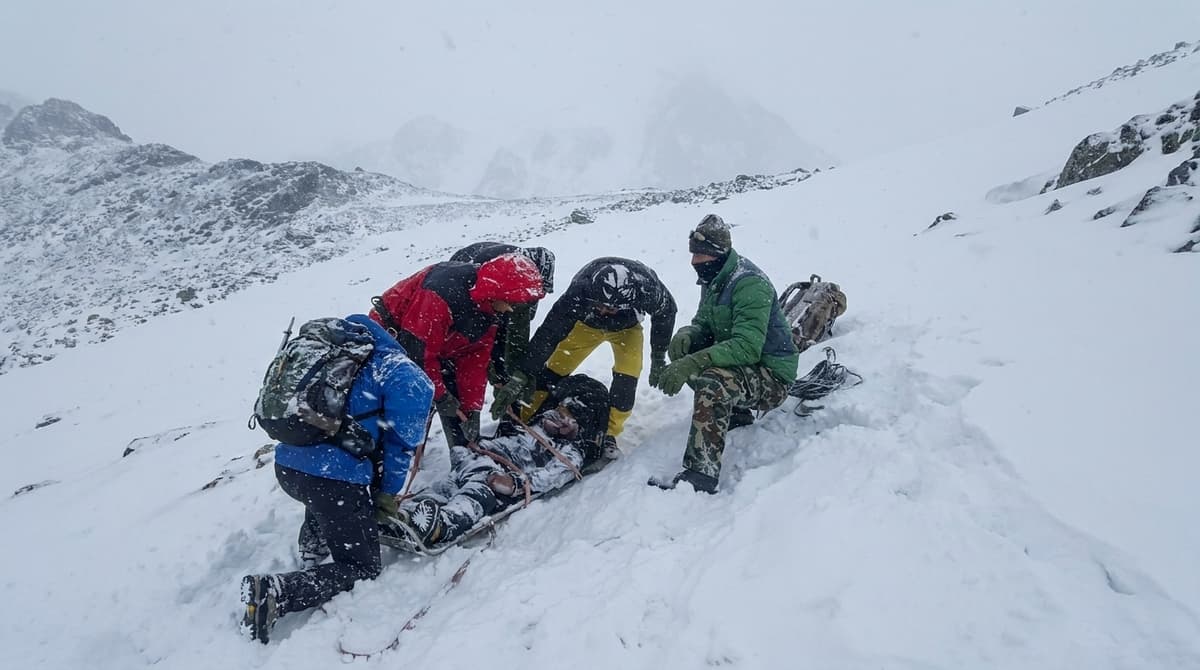
Hypothermia is the winter-specific risk. Teahouses do not have heated rooms. Your sleeping bag is your heating system. If your bag isn't rated for the temperatures you'll encounter, you will be uncomfortable at best and dangerously cold at worst.
Avalanche risk applies to treks entering narrow valleys above 3,500m after heavy snowfall — specifically the Annapurna Sanctuary approach (ABC), Thorong La (Annapurna Circuit), and any high pass crossing. December generally has less precipitation than January/February, but a single heavy snowfall event can change the risk profile overnight. This is why having a guide who can read conditions matters.
Trail conditions above 3,000m include ice, snow, and frozen water crossings. Microspikes and trekking poles are not optional equipment — they're safety equipment.
Daylight hours in December: approximately 6:45 AM to 5:15 PM (about 10.5 hours). Start early, plan shorter walking days than you would in October, and always reach your teahouse before dark.
Which Winter Trek Should You Choose?
If you've read this far and still aren't sure which trek to pick, here's the decision tree we use when clients ask us:
First trek ever? Budget is tight? → Panchase (3–4 days, 250–450, easy, lowest altitude)
First trek, want real mountain views? → Ghorepani Poon Hill (4–5 days, 350–600, easy, works all three months)
Want Everest views without the full EBC commitment? → Pikey Peak (6–8 days, 500–900, no Lukla flight) or Everest Panorama (7–9 days, 800–1,200, includes Lukla)
Fit, experienced, want a challenge? → Mardi Himal (October–November) or ABC (October–November; early December with caution)
Want something off the tourist circuit? → Khopra Danda (5–6 days, community lodges, 95% fewer trekkers than Poon Hill)
December trip, don't want to worry about snow and ice? → Panchase or Poon Hill — both stay below 3,300m where December conditions are manageable
Frequently Asked Questions
What is the best winter trek in Nepal for beginners?
The Ghorepani Poon Hill trek is the best winter trek in Nepal for beginners. It reaches a maximum altitude of 3,210 meters, takes four to five days from Nayapul near Pokhara, and works well through October, November, and December. The trail is well-marked, the teahouses are established, and the altitude is low enough that serious altitude sickness is not a concern for healthy adults. Guided cost is 350–600 per person including permits and meals.
Can you trek in Nepal in December?
Yes — December trekking in Nepal is feasible and rewarding on routes that stay below 4,000 meters. The best December treks are Ghorepani Poon Hill (3,210m), Khopra Danda (3,660m), Pikey Peak (4,065m), and Panchase (2,517m). These routes offer extremely clear mountain views, empty trails, and functional teahouses. Higher treks like ABC (4,130m) and Everest Panorama (3,860m) are possible in early December with proper winter gear and an experienced guide.
How cold is it in Nepal in December for trekking?
December trekking temperatures in Nepal vary by altitude. At 1,500m–2,500m, expect 8°C–15°C during the day and 0°C–5°C at night. At 2,500m–3,500m, daytime is 3°C–10°C and nights drop to -5°C to 0°C. Above 3,500m, nights reach -10°C to -15°C or lower. A sleeping bag rated to at least -15°C and a down jacket are essential for December treks above 3,000 meters.
Is the Annapurna Circuit open in December?
The Annapurna Circuit walking trail stays open in December, but Thorong La Pass (5,416m) may be blocked by snow in some years. December crossings of Thorong La are possible in good conditions but carry higher risk than October or November crossings. Lower-altitude sections of the circuit (Besisahar to Manang) remain accessible. Check with a registered trekking agency for real-time pass conditions before attempting a December crossing.
What is the cheapest winter trek in Nepal?
The cheapest winter trek in Nepal is the Panchase trek near Pokhara — a three-to-four-day walk to 2,517 meters that costs 250–450 per person with a guide, permits, accommodation, and meals included. The next most affordable option is the Ghorepani Poon Hill trek at 350–600 for four to five days.
Do I need a guide for winter trekking in Nepal?
Yes. As of 2023, Nepal requires all foreign trekkers to hire a licensed guide through a registered trekking agency. Beyond the legal requirement, a guide is especially important in winter for reading trail conditions, assessing avalanche risk on higher routes, navigating snow-covered sections, and helping with logistics at teahouses that may be operating with reduced staff.
Looking for a winter trek that fits your dates, budget, and experience level? Our team at MAT Nepal has been running October-to-December treks for over a decade. Contact us with your travel dates and we'll recommend the right route — no hard sell, just honest advice from people who've walked these trails in every season.