Shortest Everest Base Camp Trek: How Fast Can You Really Do It?
The fastest way to trek to EBC safely for a normal hiker is 9 to 10 days. You do this by walking up the standard route to Base Camp and Kala Patthar, then taking a helicopter directly back to Lukla or Kathmandu. You absolutely cannot walk the standard route round-trip in seven days without triggering severe altitude sickness.
Quick Answer: EBC Trek Timelines at a Glance
| Itinerary Type | Total Days | How It Works | Safety Level |
| Standard Round-Trip | 12–14 Days | Walk in, walk out. Two acclimatization days. | High (Standard) |
| Heli-Return Trek | 9–10 Days | Walk in, fly out from Gorakshep. Two acclimatization days. | High (Smart shortcut) |
| Skipping Acclimatization | 7–8 Days | Walking up too fast, ignoring rest days. | Dangerous (High risk of AMS) |
| Ultra-Runner FKT | < 24 Hours | Running non-stop from Lukla to EBC and back. | Elite Athletes Only |
The Reality Check: You Cannot Negotiate With Oxygen
Every season, travel desks in Thamel get the exact same email. Someone has limited vacation time, they are in excellent physical shape, and they want to know: can we do EBC in a week?
The short, blunt answer is no.
It does not matter if you run marathons or do CrossFit five days a week. Your cardiovascular fitness has absolutely nothing to do with how your body reacts to a 50% reduction in available oxygen. The mountain dictates the pace, and the rules of high-altitude physiology are rigid. If you try to force a two-week trekking itinerary into seven days of walking, you won't save time — you will just end up strapped to a stretcher, paying $5,000 for an emergency helicopter evacuation out of Dingboche.
But that doesn't mean you are stuck with the traditional 14-day schedule. If you are short on time, there is a legitimate, highly engineered shortcut. Here is exactly how fast can we trek to ebc, how the modern logistics work, and why the speed records set by ultra-runners don't apply to the rest of us.
The Fastest Way to Trek to EBC: The 9-Day Heli-Return
If you want the physical achievement of hiking to Everest Base Camp but you don't have two weeks to spare, the 9-day "Trek In, Fly Out" itinerary is the only viable option.
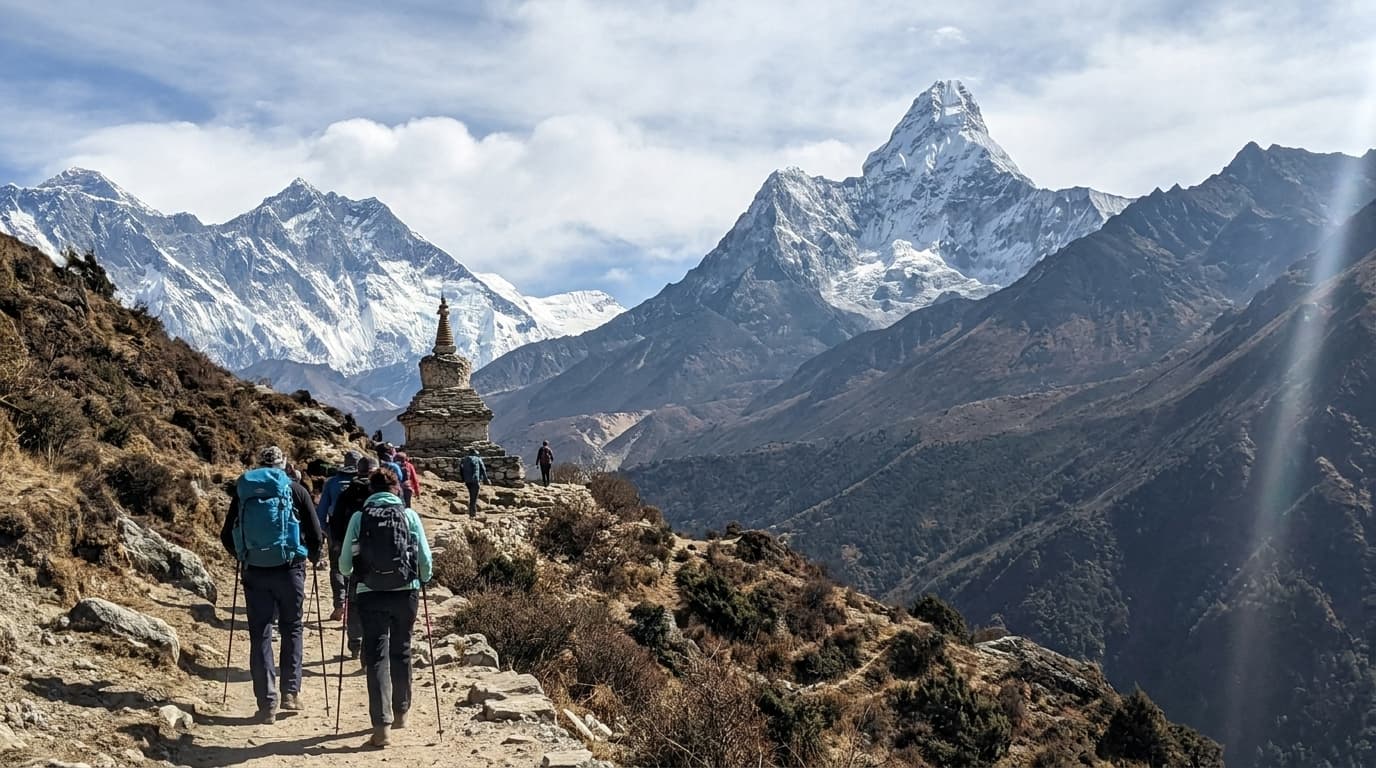
This isn't a cheat code that skips the hard work. You still walk every single step of the upward journey. You still cross the suspension bridges, climb the Tengboche hill, and earn the altitude. What you are skipping is the descent.
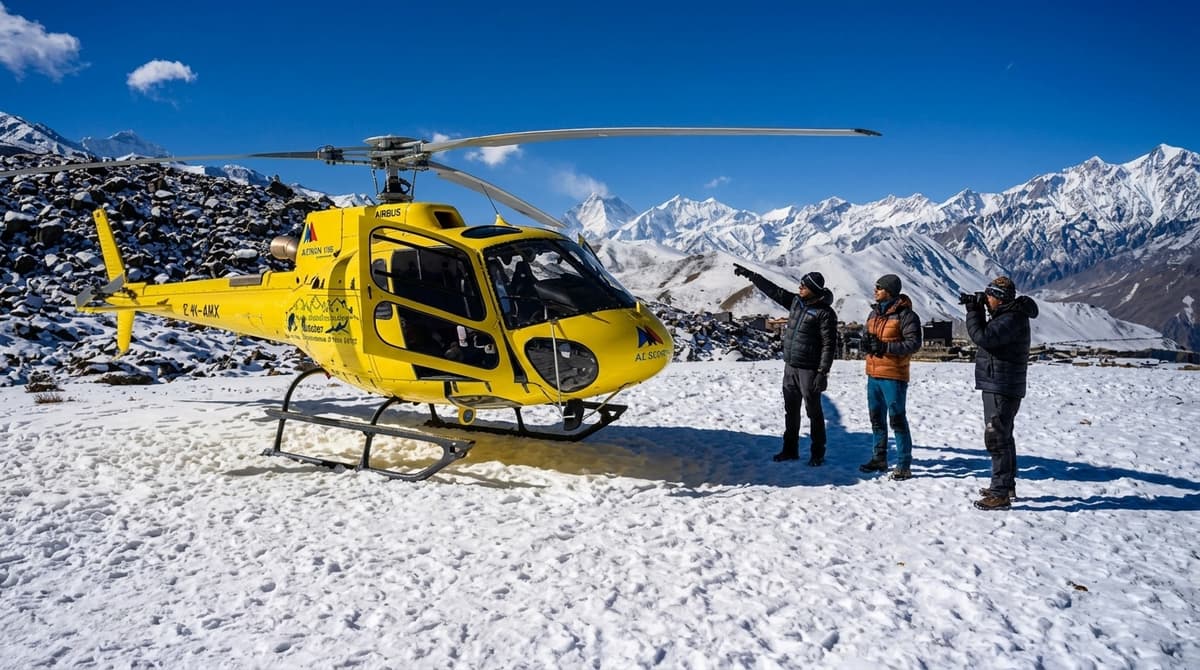
By taking a helicopter from Gorakshep (the final settlement before Base Camp) back to Lukla or Kathmandu, you instantly shave three to four days of brutal, knee-pounding downhill walking off your trip.
Here is what that aggressive but safe timeline actually looks like:
- Day 1: Fly to Lukla, Trek to Phakding (2,610m) — A short, easy first day to get on the trail.
- Day 2: Trek to Namche Bazaar (3,440m) — A heavy day of climbing. You feel the altitude hit today.
- Day 3: Acclimatization in Namche — Non-negotiable. You hike to the Everest View Hotel and sleep low.
- Day 4: Trek to Tengboche (3,860m) — Classic Khumbu scenery.
- Day 5: Trek to Dingboche (4,410m) — You cross the 4,000-meter threshold. The air gets noticeably thin.
- Day 6: Acclimatization in Dingboche — Your second non-negotiable rest day. You hike up Nangkartshang Peak.
- Day 7: Trek to Lobuche (4,940m) — You walk past the climber's memorial at Thukla Pass.
- Day 8: Trek to Gorakshep, visit Everest Base Camp (5,364m) — The big day. You drop your bags at Gorakshep and walk the lateral moraine to the base camp marker.
- Day 9: Hike Kala Patthar, Helicopter Out — You wake up before dawn, climb to 5,545 meters for the best view of Everest, walk back down for breakfast, and board a helicopter. You are back in Kathmandu by lunch.
This is the absolute floor for a safe trekking timeline. It maintains the two critical acclimatization days at Namche and Dingboche while maximizing your logistical efficiency at the end.
Why You Can't Safely Walk It in a Week
When people ask, "can we do EBC in a week," they are usually looking at a map, doing the math on the distance (about 65 kilometers from Lukla to Base Camp), and realizing they can easily walk 15 kilometers a day at home.
Here is the biological math they are missing.
Above 3,000 meters, wilderness medical guidelines dictate that you should not increase your sleeping elevation by more than 500 meters (about 1,600 feet) per day. Every 1,000 meters gained requires a full rest day to let your body generate the red blood cells needed to process thin air.
Lukla sits at 2,860 meters. Base Camp is at 5,364 meters. That is a 2,500-meter vertical gap. If you try to walk from Lukla to Base Camp in four or five days, you are breaking every rule of high-altitude medicine. Your blood oxygen saturation will plummet. Fluid will likely start leaking into your brain (High Altitude Cerebral Edema) or your lungs (High Altitude Pulmonary Edema). You won't just fail to reach Base Camp — you will create a life-threatening medical emergency.
The local guides know this. Reputable agencies will flat-out refuse to book a 7-day round-trip walking itinerary for you, because they are the ones who will have to coordinate your rescue when your lungs fill with fluid.
Speed Records: Who Actually Reached EBC the Fastest?
We just established that normal humans cannot do this in a week. But what about the absolute limits of human endurance?
The world of ultra-running tracks the "Fastest Known Time" (FKT) for major global trails. The Everest Base Camp route — specifically running from Lukla to Base Camp and back to Lukla in a single push — has become a massive proving ground for elite mountain athletes.
If you want to know who reached EBC the fastest, here are the current benchmarks that shatter the 12-day standard:
1. Tyler Andrews (2024) In April 2024, American ultra-runner Tyler Andrews set an absurd new FKT. He ran from Lukla, touched the Base Camp rock, and ran all the way back to Lukla in 14 hours and 28 minutes. To put that in perspective, he covered roughly 130 kilometers and over 4,000 meters of vertical gain in the time it takes most people to fly from New York to Dubai.
2. Pemba Sherpa (2022) Before Andrews, local Nepali runner Pemba Sherpa held the record, completing the round trip in an incredible 18 hours and 21 minutes. Local athletes have a distinct genetic advantage regarding altitude processing, making these runs slightly less lethal for them than for foreigners.
3. Karl Egloff (2021 - One Way) Swiss-Ecuadorian mountain runner Karl Egloff holds several high-altitude records. In 2021, he clocked a blistering one-way ascent time, running from the Lukla airport arch to the Base Camp rock in just 6 hours and 42 minutes.
Why they don't die: These athletes do not just jump off a plane in Lukla and start running. They spend weeks or months sleeping at extreme altitudes beforehand, fully acclimatizing their bodies to the thin air before they attempt the speed run. You cannot replicate this off the couch.
Frequently Asked Questions About Fast EBC Treks
Does the 9-day Heli-Return trek cost a lot more?
Yes. You are buying a seat on a commercial helicopter flight from Gorakshep to Lukla or Kathmandu. Expect the 9-day itinerary to cost roughly $800 to $1,200 more per person than the standard 14-day walking package, depending on whether you share the flight or charter privately. You are paying a premium to buy back four days of your life.
Is the shortest trek physically harder than the 14-day trek?
On the way up, no. The ascent profile, the daily walking hours, and the acclimatization stops are identical to the standard 14-day route. It is actually easier on your body overall, because you skip the grueling three-day descent which notoriously shreds trekkers' knees and ankles.
Can I take Diamox to speed up my trek?
No. Diamox (Acetazolamide) is a prophylactic medication that helps your body adjust to altitude, but it is not a magic pill that overrides the laws of biology. It helps prevent mild altitude sickness on a standard schedule. It will not save you if you try to compress a 12-day trek into seven days.
Can I just take a helicopter both ways?
If you have absolutely zero time and zero desire to walk, yes. The Everest Base Camp Helicopter Tour takes 4 to 5 hours round-trip from Kathmandu. You land at Kala Patthar for 15 minutes, eat breakfast at the Everest View Hotel, and fly home. It is the ultimate shortcut, but it is a sightseeing flight, not a trek.
The Bottom Line
Don't let your ego dictate your itinerary in the Himalayas. The mountain always wins.
If you are a normal traveler wanting to earn the view on foot, the fastest way to trek to EBC is to commit to the 9-day heli-return schedule. It respects the altitude, protects your knees, and gets you back to Kathmandu with enough time to actually enjoy the rest of your vacation.
Stop trying to figure out how to shave days off the ascent. Walk up at the right pace, touch the rock, take the photos, and then let the helicopter do the heavy lifting on the way home.
If you have a tight travel window and want to lock in a safe, fast itinerary, check the availability and route map for our [9-Day Everest Base Camp Trek with Helicopter Return]. We handle the permits, the teahouses, and the flight logistics so you can focus on the walking.