Annapurna Base Camp Trek Preparation Guide: Training, Gear, and the Reality of 10,000 Stairs (2027)
Key Takeaway (The 4 Pillars of ABC Preparation): Preparing for the Annapurna Base Camp trek requires dedicated stair climbing and eccentric quad training to handle over 10,000 uneven stone steps. While reaching 4,130 meters carries lower altitude risk than Everest, you gain 1,500 vertical meters rapidly over the final two days, requiring strict hydration and steady pacing. Pack for two distinct climates: warm subtropical river gorges at 22°C and freezing alpine conditions dropping to -10°C inside the Sanctuary.
- Stair Conditioning Over Flat Miles: The Annapurna Base Camp trek is an endless staircase carved into mountain foothills. Training must focus on stair climbing, weighted step-ups, and eccentric quad exercises to survive the 3,300 steps of Ulleri and the grueling stone gorges of Chhomrong.
- Rapid Elevation Profile: While the maximum altitude of ABC (4,130 meters / 13,550 feet) is lower than Everest Base Camp, you gain altitude rapidly once past bamboo forests. Pacing, hydration (3 to 4 liters daily), and monitoring pulse oxygen above Deurali are essential.
- Dual-Climate Layering: The trail spans subtropical river gorges at 22°C (with humidity and occasional leeches) to a glacial amphitheater dropping below -10°C at night. Your packing system must handle damp rainforest heat and freezing alpine winds.
- Sanctuary Regulations & Logistics: Single-use plastic mineral water bottles are strictly prohibited past Chhomrong. You must bring personal reusable bottles and chemical purification tablets, secure ACAP and TIMS permits, and carry sufficient physical cash from Pokhara.
Ask ten mountain guides whether the Everest Base Camp trek or the Annapurna Base Camp trek is physically harder, and half of them will give you an unexpected answer:
Annapurna Base Camp.
On paper, that sounds ridiculous. Everest Base Camp climbs to 5,364 meters, while Annapurna Base Camp peaks at 4,130 meters. Everest has thin air that makes your temples pound at rest; Annapurna has lush rhododendron forests and singing warblers.
Then you reach Day 3 at Chhomrong.
You stand on the ridge, look down at a vertical drop of 2,200 steep, irregular stone steps plunging into the Chhomrong Khola river, and realize that directly on the opposite side of the gorge, another 2,500 stone steps climb straight back up the cliff toward Sinuwa. There are no switchbacks. There is no gentle gradient. It is a relentless, quad-burning stone staircase that humbles marathon runners and seasoned gym enthusiasts alike.
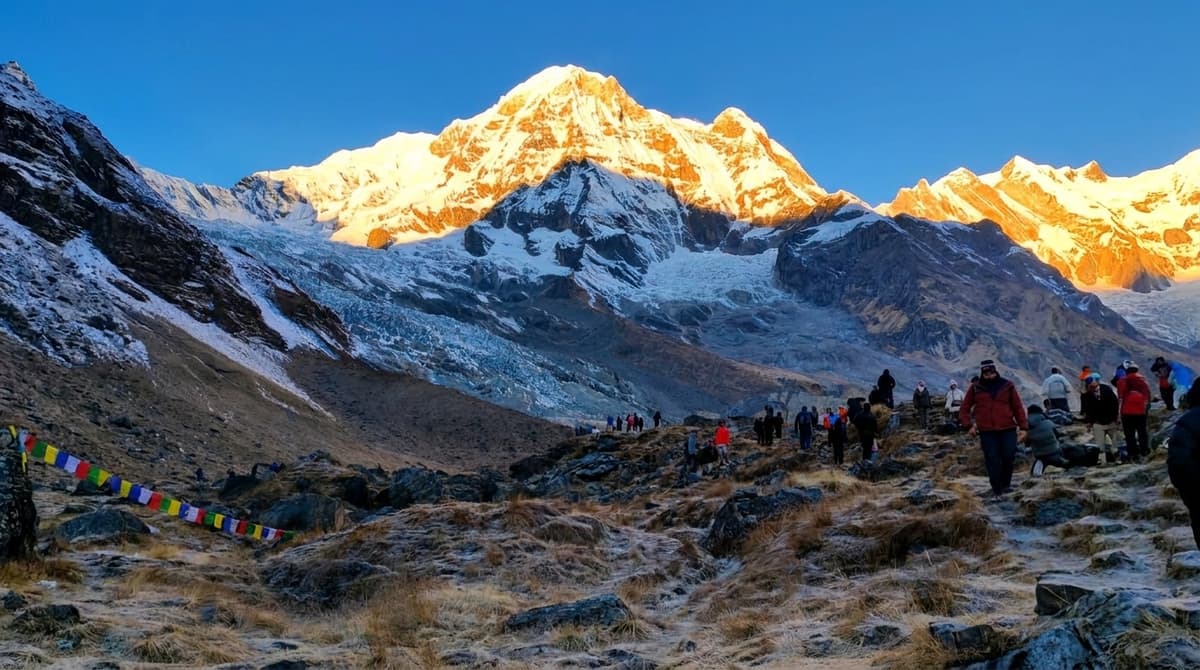
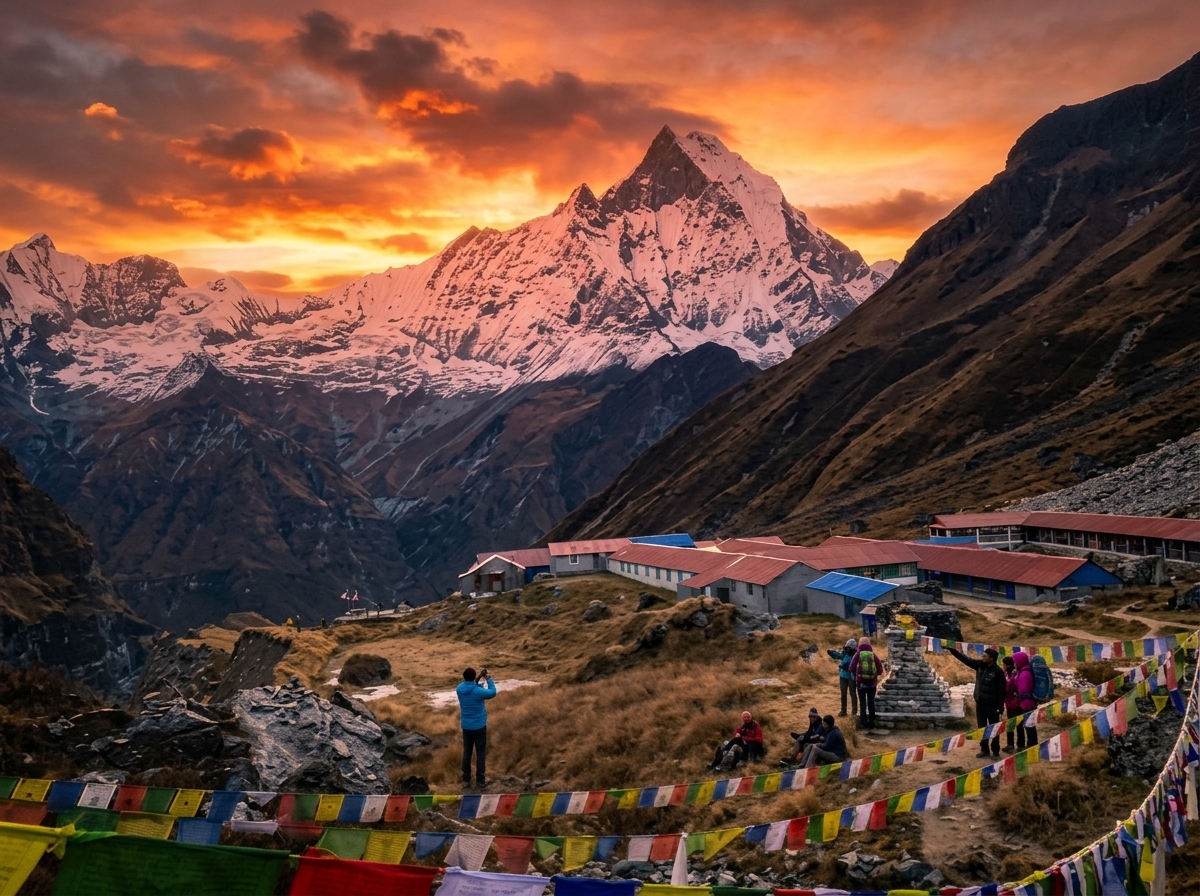
The Annapurna Base Camp (ABC) trek is one of the most visually spectacular mountain journeys on Earth, taking you directly into the heart of the Annapurna Sanctuary — a natural amphitheater ringed by ten peaks soaring over 7,000 meters, anchored by Annapurna I (8,091m) and the iconic spearhead of Machhapuchhre (Fishtail).
Preparing for ABC does not require high-altitude mountaineering skills. It requires bulletproof knees, eccentric leg strength, smart layering for two completely different climate zones, and respect for mountain weather. Here is the definitive preparation blueprint.
1. Physical Training: Conquering the "Stair Master of the Himalayas"
If your pre-trip training consists solely of jogging five miles on a flat road or riding a stationary bicycle, the Annapurna foothills will deliver a painful shock to your calves on Day 2.
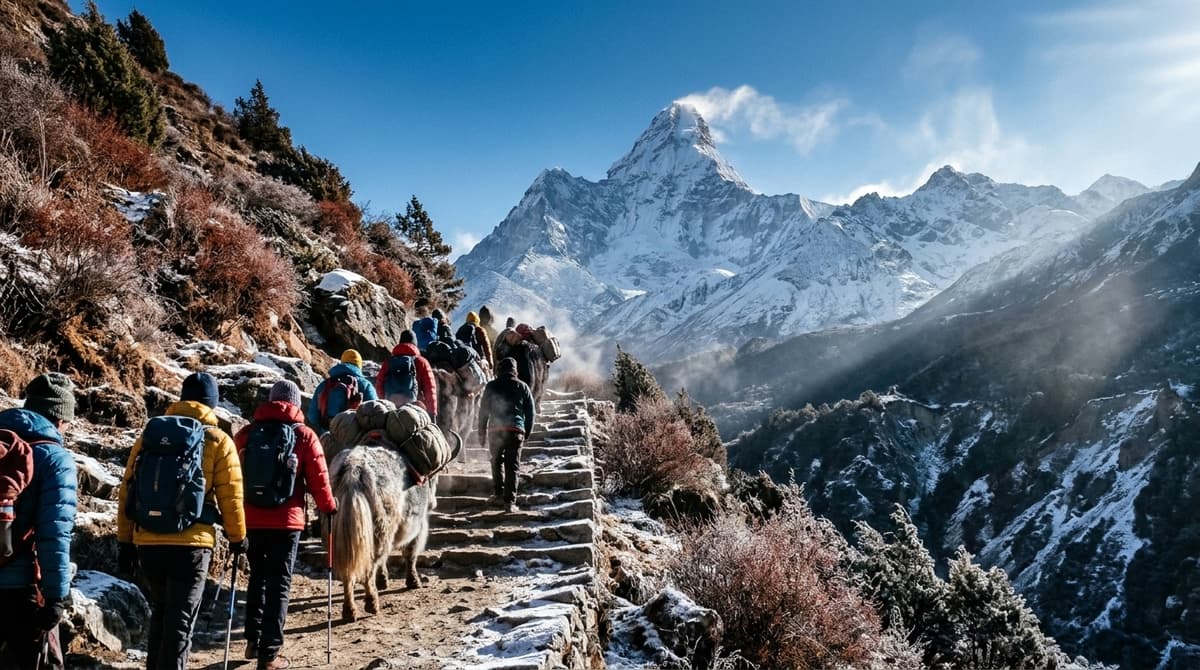
The Annapurna Circuit and Base Camp routes are famous for their ancient stone staircases. Local Gurung communities have spent centuries chiseling granite slabs into steps. These steps are not uniform; some are six inches tall, others are eighteen inches high, many are tilted, and almost all of them are wet from mountain springs.
Your training needs to mimic three distinct physical strains: vertical ascent power, eccentric braking control (downhill joint shock), and foot-strike balance.
Eccentric Quad Training: Saving Your Knees
Going up stone stairs builds cardiovascular fitness. Going down thousands of uneven granite steps produces micro-tears in your quadriceps and puts repetitive shock loads directly into your patellar tendons.
By the third day of walking down stairs, your quads become fatigued. When your muscles stop absorbing the shock, your knee joints take 100% of the impact. This is where "hiker's knee" (patellofemoral pain syndrome) strikes.
- Mandatory Gym Work:
- Eccentric Step-Downs: Stand on a 6-inch to 8-inch box. Slowly lower one foot toward the floor over 3 full seconds without resting weight, then push back up with the stance leg. 3 sets of 15 reps per leg.
- Weighted Bulgarian Split Squats: Elevates the back leg and trains deep single-leg stability under load.
- Tibialis Raises & Calf Drops: Strengthens the shin muscles and Achilles tendons to absorb the impact of landing on downhill stones.
Cardiovascular Specifics: The Stair Climber Protocol
Ditch the flat treadmill. For ABC preparation, your best friend is the gym StairMaster or a real outdoor staircase (stadium steps or parking garages).
- The Weighted Stair Session: Twice a week, do 45 minutes on the stair machine. Set the speed to a moderate, steady climb (40 to 50 steps per minute). Do not lean your upper body on the machine's handrails — that robs your core and legs of the training benefit.
- Add Weight Gradually: Start with a 3 kg daypack in Week 1, and progress to an 8 kg pack by Week 6. Wear your actual trekking boots on the machine to condition your ankles to the weight of your footwear.
8-to-10 Week Progressive Training Schedule
Phase | Weeks | Primary Training Focus | Weekly Workout Routine |
| Phase 1: Stair Adaptation | Weeks 1 – 3 | Joint adaptation & core stability | • 2x 40-min StairMaster or hill incline walking • 2x leg strength (bodyweight lunges, step-downs, planks) • 1x 2-hour outdoor walk on rolling terrain |
| Phase 2: Weighted Load | Weeks 4 – 7 | Muscular endurance under load | • 2x 50-min stair climber with a 5 kg pack • 2x weighted leg sessions (goblet squats, split squats) • 1x 3 to 4-hour weekend trail hike with 6 kg pack |
| Phase 3: Peak Volume | Weeks 8 – 9 | Simulating back-to-back trail days | • 2x 60-min steep stair climbing with a 7–8 kg pack • 1x full-body mobility & core session • Back-to-back weekend trail hikes (4 hours Saturday, 4 hours Sunday with full boots) |
| Phase 4: Taper & Recovery | Week 10 | Muscle freshness & joint healing | • 2x 30-min light walks on flat ground (no pack) • Foam rolling and hamstring/quad stretching • Rest, hydrate, and prepare for travel |
2. Altitude Reality: From Bamboo Rainforest to 4,130m
One of the unique challenges of the Annapurna Base Camp trek is the speed of your vertical climb over the final 48 hours.
You spend the first four days walking between 1,000 meters and 2,300 meters through warm subtropical forests and terraced farming villages. But once you leave the village of Chhomrong, the trail drops into a deep river canyon and ascends rapidly:
Trail Point | Altitude (Meters & Feet) | Oxygen Level vs. Sea Level | Atmosphere & Terrain |
| Nayapul / Birethanti (Trailhead) | 1,070m / 3,510 ft | ~88% | Subtropical valley, warm humidity, river beds |
| Ghorepani (Poon Hill detour) | 2,874m / 9,429 ft | ~72% | Dense rhododendron forest, cool mountain breeze |
| Chhomrong | 2,170m / 7,119 ft | ~78% | Terraced Gurung village, massive stone staircases |
| Himalaya Hotel / Dovan | 2,920m / 9,580 ft | ~71% | Dense bamboo canyon, cool damp air |
| Deurali | 3,200m / 10,498 ft | ~69% | Tree line disappears; alpine scrub and river gorges |
| Machhapuchhre Base Camp (MBC) | 3,700m / 12,139 ft | ~65% | Cold glacial valley; dramatic cliffs overhead |
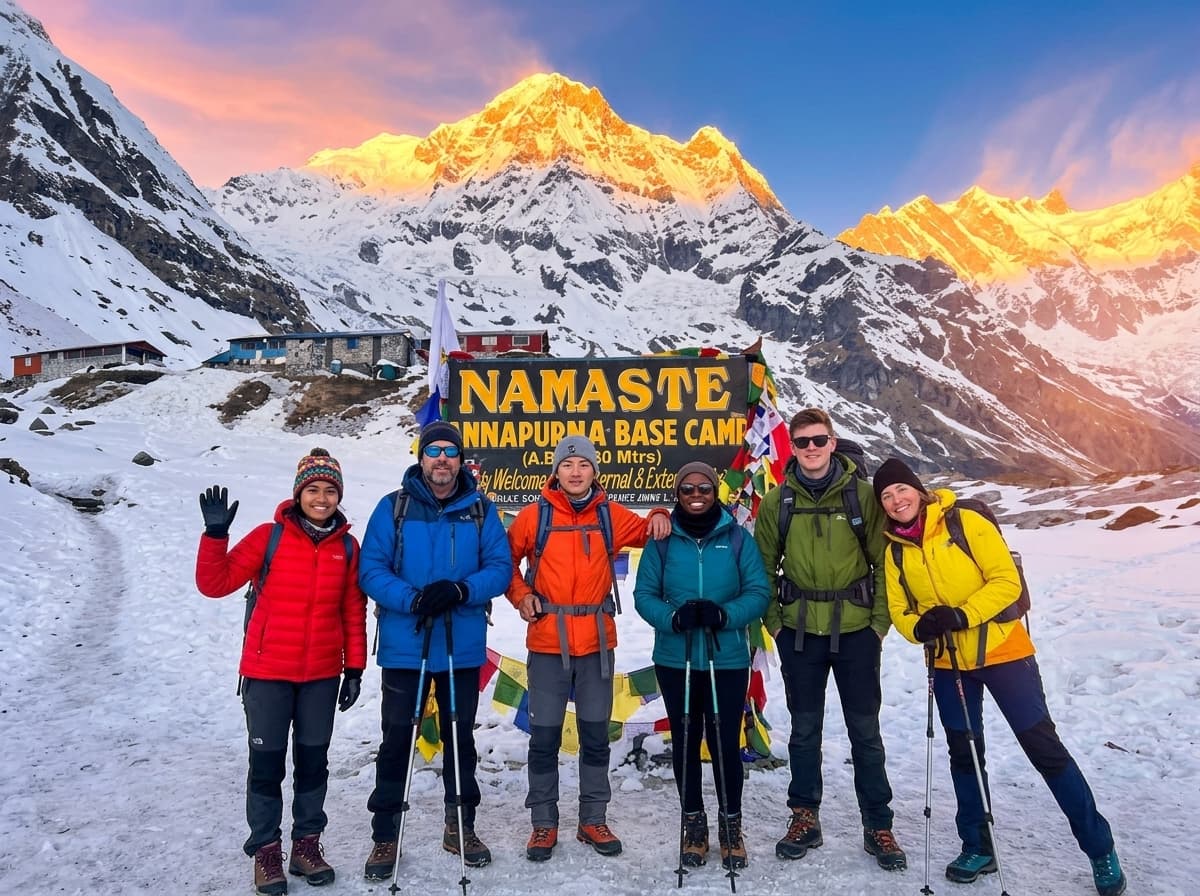
| Annapurna Base Camp (ABC) | 4,130m / 13,550 ft | ~61% | Glacial amphitheater; surrounded by 360° snow peaks |
Notice what happens between Dovan (2,600m) and Annapurna Base Camp (4,130m): you gain over 1,500 vertical meters in less than two days.
Because you are still below the extreme 5,000-meter mark of Everest Base Camp, many trekkers forget about acute mountain sickness (AMS) and charge uphill too quickly. At 4,130 meters, you have roughly 39% less oxygen per breath than at sea level. If you sprint through the canyon above Deurali, you will wake up at Base Camp with nausea and a thumping headache.
Pacing in the Canyon
- The Deurali to MBC Throttle: The section between Deurali and Machhapuchhre Base Camp is deceptively steep. Force yourself to walk at an easy, rhythmic shuffle.
- Hydration Target: Drink 3 to 4 liters of purified water every day. Avoid alcohol and heavy sedatives past Chhomrong, as they depress respiration during sleep.
- Diamox on ABC: Most healthy trekkers do not need prophylactic Diamox for Annapurna Base Camp because the maximum altitude (4,130m) is only held for one night before descending. However, carrying a blister pack of Diamox (125mg) in your first-aid kit as a safety measure is good practice.
The Avalanche Zone (Hinko Cave to Deurali)
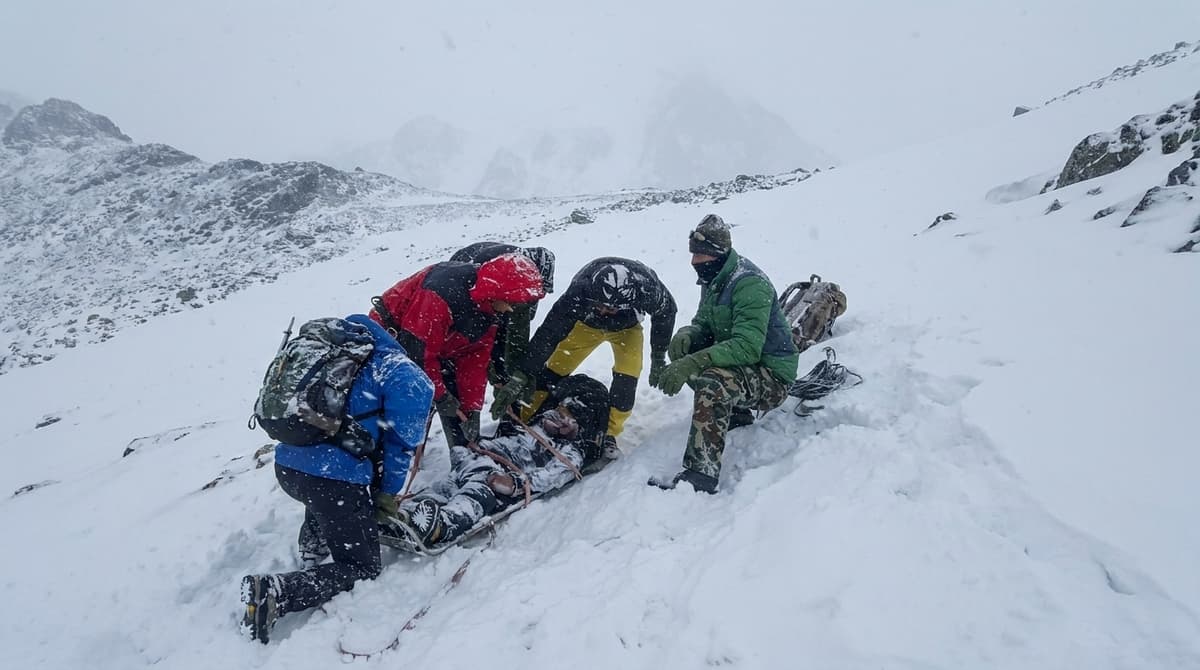
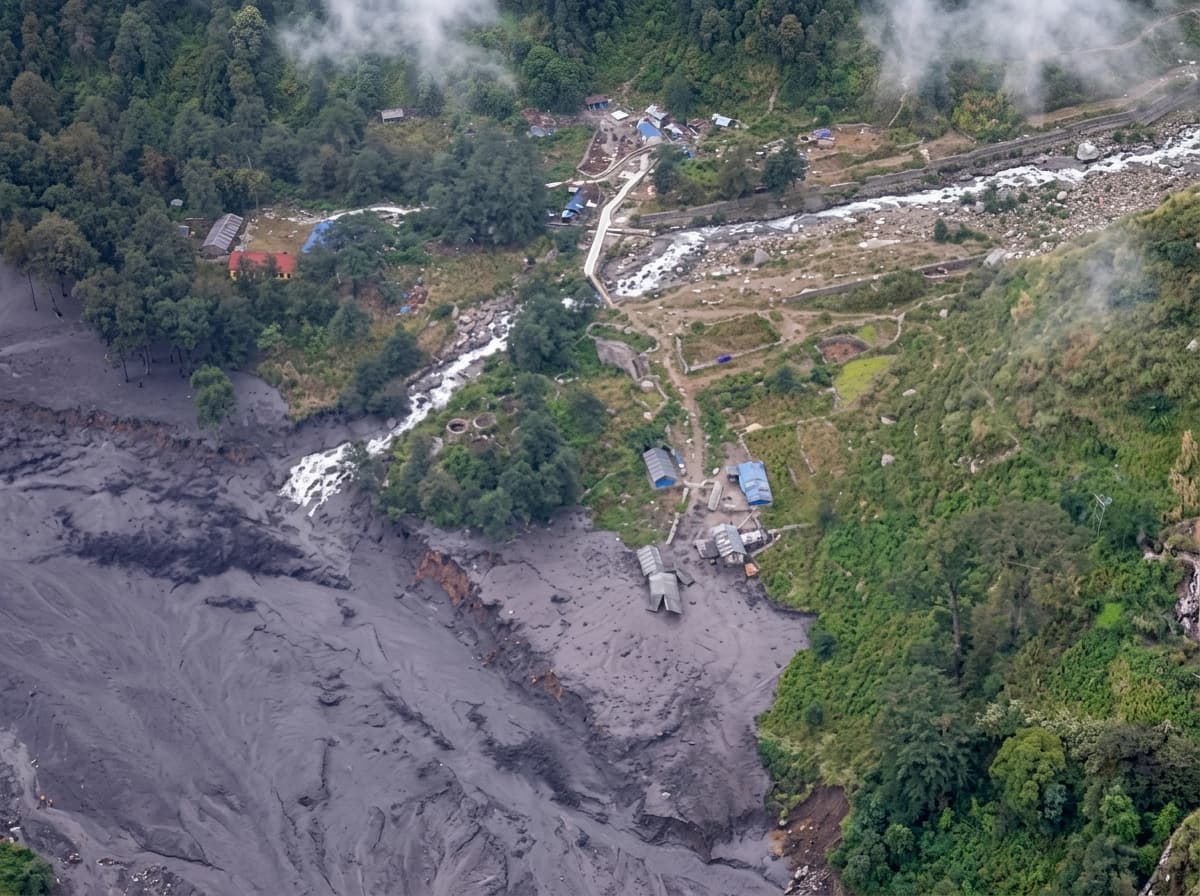
Between the rocky overhang of Hinko Cave and Deurali, the trail passes directly underneath several steep, narrow avalanche chutes dropping from Hiunchuli and Machhapuchhre.
During the late winter and spring months (February to early April), heavy snowmelt or fresh snowfalls can trigger slides across this specific section.
- Guide Protocol: Always listen to your guide's instructions through this corridor. On high-risk mornings, guides will space trekkers fifty meters apart, instruct everyone to turn off loud music, and move briskly without loitering for photos under the chutes until reaching safe ground at Deurali.
3. Footwear & Gear: Dual-Climate Packing
Packing for the Annapurna Base Camp trek requires planning for two completely opposing weather systems in a single duffel bag.
At Nayapul, Jhinu Danda, and Birethanti, you will be hiking in warm 20°C to 25°C sunshine alongside banana trees and waterfalls. Three days later, you will be walking across frozen glacial scree at ABC, where sunset temperatures plunge to -5°C to -12°C.
The Footwear Debate: Trail Runners vs. Trekking Boots
Hikers frequently ask if they can wear lightweight trail running shoes instead of heavy hiking boots on the ABC trek.
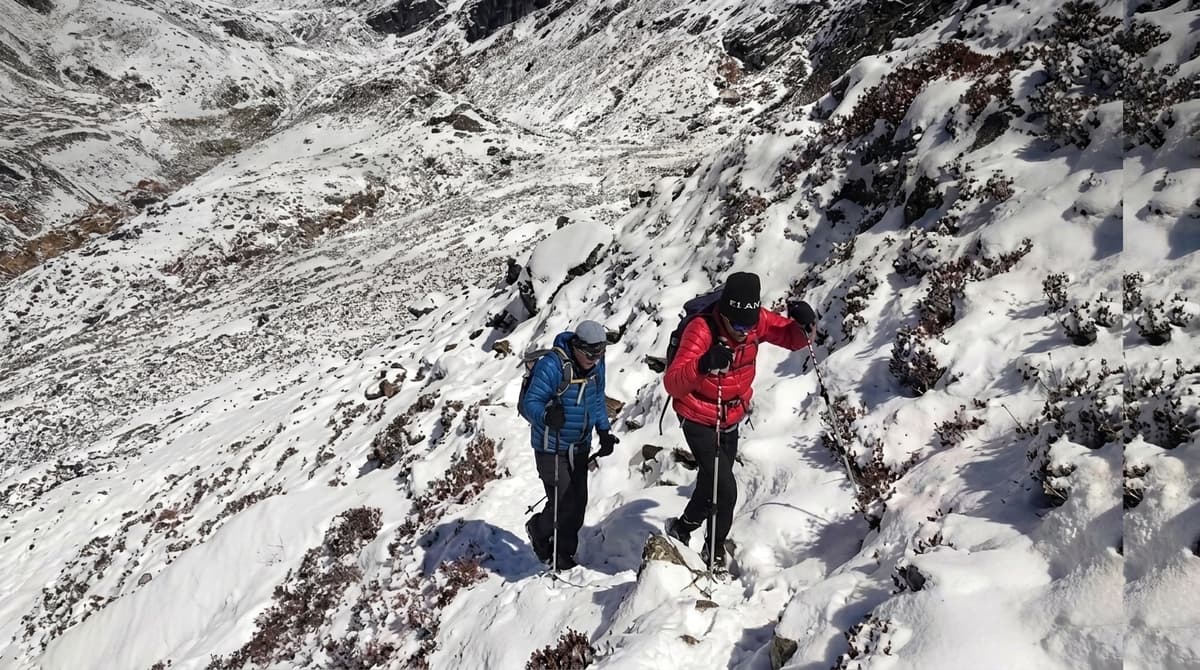
- Trail Running Shoes (Pros & Cons): Trail runners are lightweight, flexible, and comfortable on the massive stone staircases. However, they offer zero ankle roll protection on loose scree, and your feet will freeze if you encounter snow or black ice above MBC.
- Mid-Cut Waterproof Trekking Boots (Our Recommendation): A broken-in, mid-cut waterproof boot (like the Salomon X Ultra, Lowa Renegade, or Merrell Moab) is the ideal weapon for ABC. It provides ankle stability on wet, tilted granite stairs, protects your toes from stubbing against rocks, and keeps your socks dry during snow flurries inside the Sanctuary.
Trekking Poles: Non-Negotiable Joint Insurance
On the Everest trek, trekking poles are helpful. On the Annapurna Base Camp trek, poles are mandatory.
Using a pair of adjustable trekking poles transfers up to 20% to 25% of the downward load off your knees and onto your triceps, shoulders, and core. On the 2,200 steps dropping into Chhomrong, poles prevent knee blowouts.
Ensure your poles have secure lever-cam locks (twist-lock mechanisms often slip when put under heavy vertical weight on downhill steps) and rubber tip protectors for stone pavement.
Dual-Climate Clothing Checklist
Climate Zone | Elevation | What You Must Wear / Carry in Daypack |
| Subtropical Foothills | 1,000m – 2,400m | • Lightweight, quick-dry synthetic t-shirts or short-sleeve merino • Breathable trekking shorts or zip-off cargo pants • Wide-brim sun hat and UV sunglasses • Salt packet or DEET spray (for monsoon/September leeches) |
| Alpine Sanctuary | 3,000m – 4,130m | • Mid-weight thermal top and bottom (200+ gsm Merino wool) • Breathable fleece pullover or active softshell jacket • Heavy mountain down jacket (rated to -10°C to -15°C with hood) • Windproof and waterproof hard-shell jacket (Gore-Tex) • Warm beanie, neck buff, and insulated windproof gloves |
4. Health, Sanitation & The Sanctuary Plastic Ban
The Annapurna Conservation Area Project (ACAP) is one of the most environmentally progressive national park trusts in Asia. Preparing for your trek means knowing the strict environmental rules of the valley.
The Single-Use Plastic Water Bottle Ban
Single-use disposable plastic mineral water bottles (the clear plastic bottles sold in city stores) are strictly illegal past the village of Chhomrong.
If park rangers catch you carrying disposable plastic bottles into the sanctuary, you will be fined, and the bottles will be confiscated. This rule was instituted to stop thousands of discarded plastic bottles from polluting the pristine glacial riverbeds.
- How to get drinking water:
- Carry Reusable Water Bottles: Bring two 1-liter wide-mouth Nalgene bottles or one Nalgene plus a 2-liter hydration bladder.
- Safe Drinking Water Stations: Teahouses along the route operate centralized, UV-filtered "Safe Drinking Water Stations" where you can refill your bottles for a small fee (roughly NPR 80 to 150 per liter, or ~$0.70 to $1.20 USD).
- Chemical Purification Tablets: Bring a strip of chlorine dioxide purification tablets (Aquatabs or Micropur). You can fill your bottle from clean teahouse taps for free, drop in a tablet, wait 30 minutes, and have 100% safe, bacteria-free drinking water.
Personal Medical Kit for ABC
Item | What It Treats on the Trail |
| Knee Support Straps / Braces | Stabilizes patellar tracking during long downhill stair descents |
| Ibuprofen (400mg) | Relieves joint pain, swollen knees, and mild altitude headaches |
| Compeed & K-Tape (Leukotape) | Treats hot spots before blisters form on stair friction zones |
| Electrolyte Replacement Packs | Crucial for the humid lower valley where you will sweat heavily on climbs |
| Ciprofloxacin / Azithromycin | Prescription antibiotics for severe traveler's diarrhea |
| Loperamide (Imodium) | Emergency antidiarrheal for trail walking days |
| Diamox (125mg tablets) | Fast-tracks acclimatization if feeling breathless or sluggish past Deurali |
5. Teahouse Realities & Cash Budgeting
The teahouse network on the Annapurna Base Camp trek is well-developed, welcoming, and comfortable, but logistical realities shift the higher you climb.
Teahouse Life Inside the Sanctuary
In villages like Ghandruk, Chhomrong, and Landruk, teahouses are extensive stone lodges with hot gas showers, private rooms with attached Western flush toilets, and diverse menus serving everything from pizza to apple pie.
Once you pass Deurali and enter the Annapurna Sanctuary, space becomes strictly regulated by the conservation board. Only a limited number of lodges are permitted to operate at Machhapuchhre Base Camp and Annapurna Base Camp to preserve the natural amphitheater.
- Dormitory Sharing During Peak Season: In October, November, and April, private rooms at ABC are extremely scarce. You may be required to share a 4-bed or 6-bed dormitory room with fellow trekkers.
- Showers: Hot showers (solar or gas bucket) cost roughly $3 to $5 USD (NPR 300 to 500) lower down. Above Himalaya Hotel, water pipes often freeze, and taking a shower in freezing air is strongly discouraged.
- Electricity & Charging: Charging cameras, phones, and power banks costs $2 to $4 USD per charge in the upper lodges, where solar battery banks are limited. Bring a 20,000 mAh power bank from home.
How Much Cash to Withdraw in Pokhara
There are zero ATMs on the Annapurna Base Camp trail after you leave Pokhara.
Even if you booked an all-inclusive agency trek that covers all your rooms and meals, you need physical cash in Nepali Rupees (NPR) for incidental expenses:
Trekker Category | Recommended Cash to Carry from Pokhara | What It Covers |
| On an All-Inclusive Agency Package | $150 – $250 USD (~NPR 20,000 – 32,000) | Hot showers, device charging, Wi-Fi cards, bakery treats, hot mineral springs fee at Jhinu Danda, and crew tips. |
| Independent / Budget Trekker | $400 – $600 USD (~NPR 52,000 – 78,000) | All daily teahouse rooms, permits, 3 daily meals, drinking water, showers, transport, and guide wages. |
Tip: Withdraw all your cash from standard bank ATMs along Lakeside in Pokhara the afternoon before your trek begins.
6. The 8-to-10 Week Countdown Checklist
Follow this week-by-week timeline to prepare without stress:
Timeline | Checklist & Preparation Priorities |
| 8 to 10 Weeks Before | • Lock in your trek dates with your licensed local operator and confirm guide bookings • Begin Phase 1 stair training and eccentric leg conditioning at the gym • Inspect your trekking boots; if buying new boots, start walking in them immediately |
| 6 Weeks Before | • Advance to Phase 2 training (add 5 kg weighted daypack on stair climbers) • Acquire your adjustable trekking poles and test them on an outdoor trail • Visit a travel doctor for basic immunizations (Tetanus, Hep A) and prescription travel meds |
| 3 Weeks Before | • Purchase your 2 reusable Nalgene water bottles and chlorine dioxide tablets • Peak weekend training hike: 4+ hours on uneven trails with boots and 7 kg pack • Confirm your travel insurance policy explicitly covers trekking up to 4,500 meters |
| 1 Week Before | • Taper all workouts; do only light flat walks, foam rolling, and mobility work • Make two paper copies of your passport, Nepal visa photos, and insurance policy • Notify your credit card company that you will be traveling and withdrawing cash in Nepal |
| In Pokhara (Day Before) | • Withdraw all required cash in Nepali Rupees from a Lakeside ATM • Pack your daypack (keep it under 6 kg) and load the rest into your porter duffel bag • Buy a couple of chocolate bars, trail mix, and pack your blister kit within quick reach |
Frequently Asked Questions
Is Annapurna Base Camp harder than Everest Base Camp?
Annapurna Base Camp (ABC) is shorter and reaches a lower elevation (4,130m vs. EBC’s 5,364m), making altitude sickness much less severe. However, ABC involves significantly more steep stone stairs (over 10,000 steps round-trip, including the climbs around Ulleri and Chhomrong), making it physically harder on the knees, calves, and quads than the rolling trails of Everest.
How many stone stairs are there really on the ABC trek?
While there is no single official count for the entire trail, trekkers navigate more than 10,000 stone stairs over a standard 10-day itinerary. The most famous single stretch is the 3,300 stone steps climbing from Tikhedhunga to Ulleri, along with the 2,200 descending and 2,500 ascending steps crossing the Chhomrong Khola river valley.
Do I need Diamox for the Annapurna Base Camp trek?
Most healthy trekkers do not need Diamox for ABC because the trail reaches 4,130 meters for only a single night before descending. However, carrying a pack of Diamox (125mg) in your personal first-aid kit is sensible. If you experience persistent altitude headaches or shortness of breath past Deurali (3,200m), Diamox can help accelerate acclimatization.
Why are plastic water bottles banned in the Annapurna Sanctuary?
Single-use plastic bottles were banned past Chhomrong by the Annapurna Conservation Area Project (ACAP) to stop plastic pollution in the fragile alpine valley. Trekkers must bring personal reusable water bottles (like Nalgene) and refill them at certified Safe Drinking Water Stations or use chemical chlorine dioxide purification tablets.
Can I do the ABC trek in trail running shoes instead of boots?
Yes, many experienced hikers complete ABC in trail runners because they are comfortable on dry stone stairs. However, mid-cut waterproof trekking boots are safer because they provide ankle stability on tilted, wet granite slabs and keep your feet warm and dry if you encounter snow or black ice between Deurali and Base Camp.
How cold does it get at Annapurna Base Camp at night?
Nighttime temperatures at Annapurna Base Camp (4,130m) range from 0°C to -5°C during peak autumn (October–November) and drop between -8°C and -15°C during late winter (December–February). Spring nights (March–April) generally hover between -2°C and -8°C. A heavy mountain down jacket and a 4-season sleeping bag are essential.
What is the best month to do the Annapurna Base Camp trek?
The best months for the ABC trek are October and November (for crystal-clear blue skies, dry trails, and stable mountain panoramas) and March to April (for blooming pink rhododendron forests, warmer days, and dramatic snowscapes inside the Sanctuary).
Planning your Annapurna Base Camp trek and want personalized guidance on training schedules, route options, and licensed local guides? When you book with us, our experienced mountain team handles all permits, village logistics, and safety protocols from start to finish. [Contact our team] for candid advice and a transparent itinerary quote.