Mountain Safety: Lessons from Budhi Gandaki and Pokhara’s New Hospital
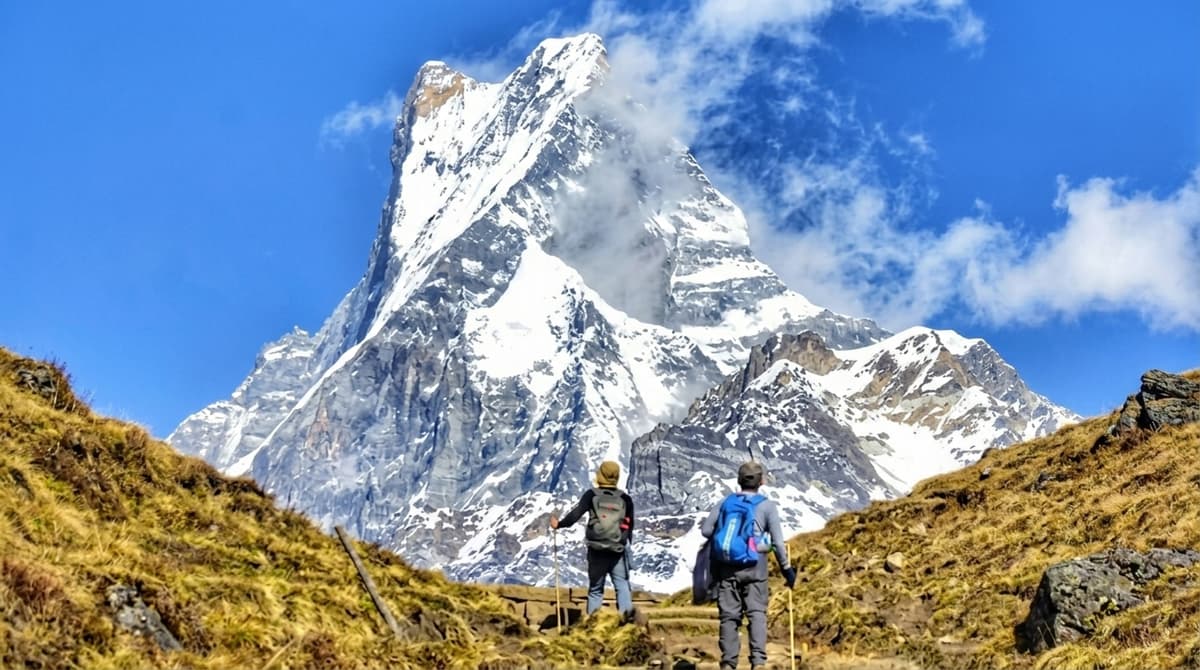
October is supposed to be the golden month in Nepal. The violent monsoon rains taper off, the mountain skies turn crystal blue, and the festival of Dashain fills the country with music and family gatherings. For thousands of trekkers arriving in Kathmandu and Pokhara, it is the coveted window to lace up boots and head into the high passes of the Annapurna and Manaslu circuits.
Yet on October 11, 2026—the sacred day of Ghatasthapana—two events played out in the rugged geography of Gandaki Province that highlight the real, dual nature of Himalayan travel.
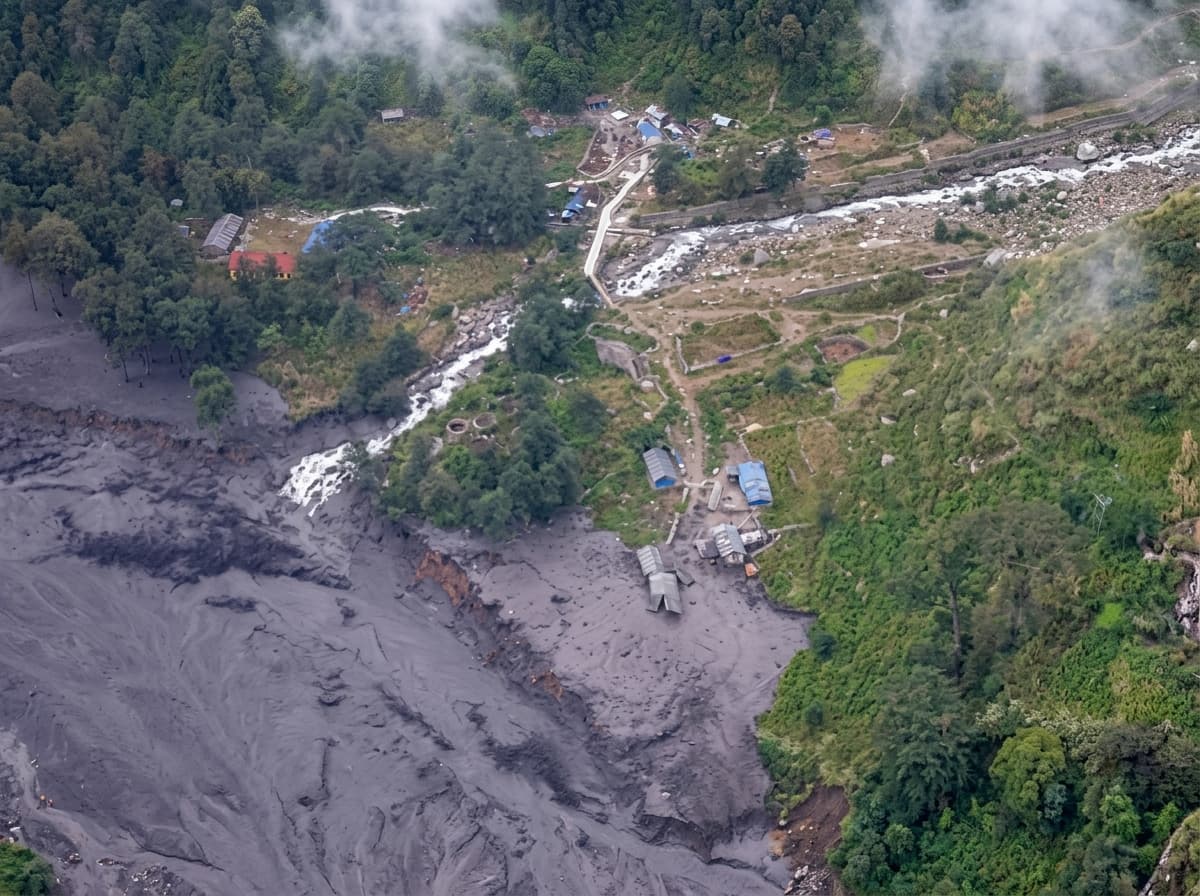
High up in Gorkha along the Budhi Gandaki River, an overnight landslide dam burst, sending a flash flood downstream that swallowed suspension bridges, damaged road networks, and trapped dozens of foreign hikers and local villagers in narrow ravines. Hours later, down in the subtropical valley of Pokhara, an international 15-bed hospital opened its doors at Powerhouse with 24/7 emergency care, multilingual clinicians, and direct foreign insurance billing.
These two developments are not unrelated news items. They are two halves of the same reality: the Himalayas remain brutally unpredictable, but the logistical and medical infrastructure protecting travelers and locals is entering a brand-new era.
What Triggered the Budhi Gandaki Flash Flood in Gorkha?
The Budhi Gandaki flash flood was caused by a massive geological dam breach between Lokpa and Chumling in Chumnubri Rural Municipality-6. Heavy residual rains destabilized steep cliff faces, dumping thousands of tons of rock and soil into the river channel. When that temporary debris dam collapsed under rising hydrostatic pressure in the early hours of Sunday morning, a wall of mud, boulders, and water surged down the gorge.
In steep alpine valleys like the Manaslu corridor, water has nowhere to spread out. It accelerates. The surge funneled through narrow gorges, tearing away footpaths carved into sheer rock faces and ripping down vital suspension bridges.
The damage to transport infrastructure was immediate and severe:
- Suspension bridges severed: The vital bridge connecting Nyakchet and Sirdibas was swept away, alongside the heavily trafficked Machhikhola–Kerauja footbridge.
- Border access compromised: A key section of the concrete motorable bridge connecting Arughat in Gorkha with neighboring Dhading was damaged, cutting off ground access to the trailhead.
- Settlements inundated: Villages including Salleri and Paiyu took direct hits from high water and silt deposits.
- Energy grid impact: The main construction camp, heavy machinery, and power equipment of the Budhi Gandaki Hydropower Project suffered significant damage, while local power lines and telecom towers collapsed.
For trekkers navigating the lower sections of the Manaslu Circuit, the trail simply vanished. Groups hiking toward Jagat and Nyakphedi found themselves trapped between vertical rock cliffs and an impassable, roaring torrent.
How Did Nepal’s Disaster Management Agency Coordinate the Air Rescue?
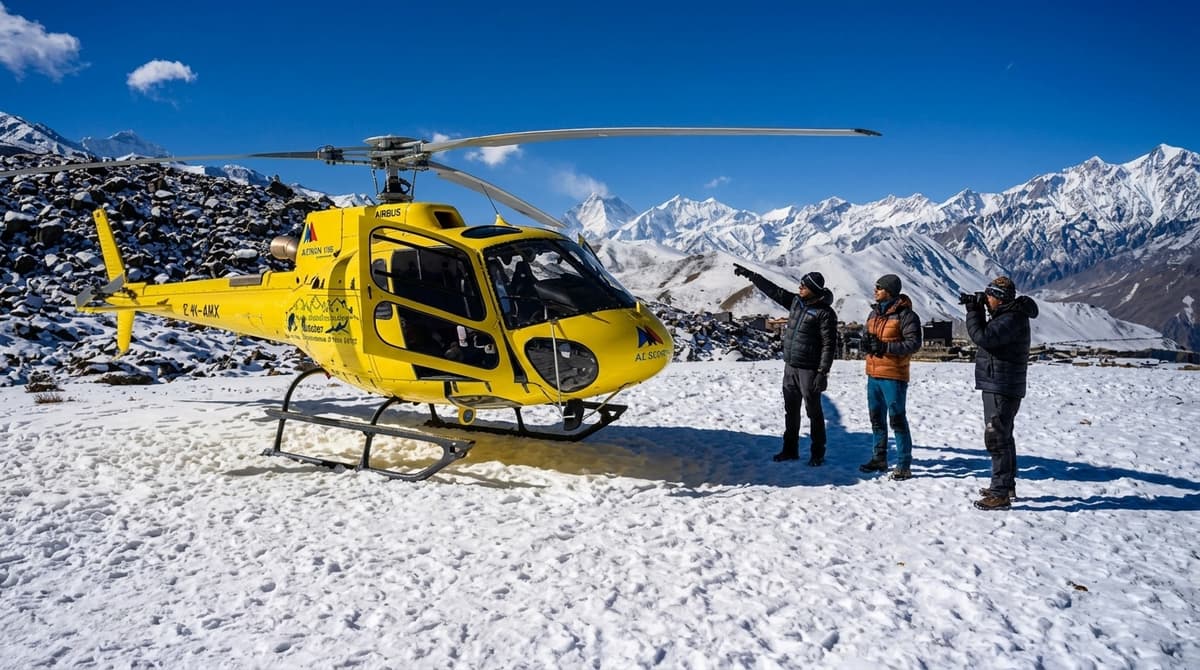
Nepal’s National Disaster Risk Reduction and Management Authority (NDRRMA) responded by mobilizing 437 frontline security personnel and deploying four military helicopters—including Russian-built MI-17 heavy lifters—directly into the disaster zone within hours of the dam breach.
Mountain search and rescue in Nepal requires a level of flying precision found nowhere else in the world. Deep gorges produce violent micro-drafts, and landing zones along the Budhi Gandaki often consist of nothing more than a boulder-strewn sandbar or a cleared patch of terraced farmland.
Table 1: Budhi Gandaki Flood Rescue Operations (Gorkha)
| Category | Detail / Metric | Specific Breakdown & Notes |
| Incident Date | October 11, 2026 (Ashwin 25, 2083 BS) | Landslide dam breach between Lokpa & Chumling (Chumnubri-6) |
| Total Rescued (Initial) | 36 people | Airlifted directly by Nepal Army helicopters |
| • Jagat | 6 people | Trail evacuees stranded by washed-out paths |
| • Nyakphedi | 9 people | Stranded trail population |
| • Yaru | 9 people | Includes 1 infant and 1 foreign national |
| • Payu | 12 people | Settlement evacuees |
| Total Rescued (Extended Ops) | 82+ people | Includes 9 foreign nationals across the Manaslu corridor |
| Missing Persons | 5 people | 2 women, 3 men from a sheepfold in Ungiling, Chumchet |
| Security Personnel Deployed | 437 Total Responders | • Nepal Army: 127 soldiers (incl. 3 Special Force units) • Armed Police Force (APF): 177 personnel • Nepal Police: 83 officers |
| Aviation & Aerial Assets | 4 Nepal Army Helicopters | Includes heavy-lift Russian-built MI-17 |
| Technical Assessment Team | 3 Experts | Geologists and drone operators for rapid risk assessment |
| Infrastructure Inspection | High-level engineering team | Directors General of Department of Roads & Local Infrastructure |
| Damaged Bridges | 3 Major Crossings | • Nyakchet–Sirdibas suspension bridge • Machhikhola–Kerauja suspension bridge • Concrete bridge section at Arughat (Gorkha–Dhading border) |
| Damaged Settlements & Projects | Communities & Hydropower | • Salleri & Paiyu villages inundated • Budhi Gandaki Hydropower Project main camp & equipment hit • Local power lines and telecom towers knocked out |
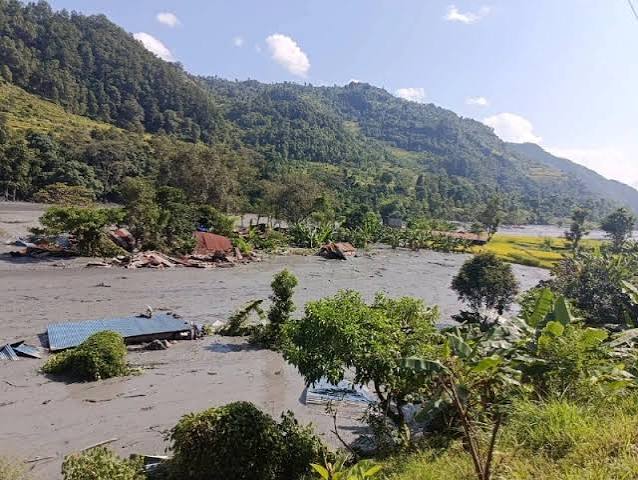
The operation wasn’t limited to lifting stranded people. Three specialized teams from the Nepal Army’s Special Forces dropped into the valley on foot to clear paths, while a dedicated unit equipped with survey drones and senior geologists flew overhead to assess whether further landslide dams were forming upstream.
Meanwhile, ground troops and local government representatives set up temporary shelters and supply drops for stranded porters and villagers in Arughat. Despite the successful airlift of dozens of hikers, the mission carried heartbreak: five local residents who were working at a sheepfold in Ungiling (Chumchet) were swept away and remained missing as rescue crews combed the banks.
The Medical Gap: What Happens After a Mountain Evacuation?
Getting hoisted into a helicopter is only the first step in a mountain rescue; the most complicated logistical battles usually begin the moment the aircraft touches down. Historically, evacuated trekkers and injured locals in Western Nepal have faced a fragmented medical landscape plagued by three systemic hurdles:
1. The Cash-Upfront Insurance Nightmare
Most international travel insurers do not have direct billing agreements with small rural clinics. In past seasons, foreign hikers evacuated with severe acute mountain sickness (AMS), fractures, or internal injuries were routinely brought to private hospitals that demanded immediate credit card authorizations or cash deposits ranging from $3,000 to $10,000 before admitting them. Navigating insurance adjusters half a world away while suffering from hypothermia or trauma is a nightmare no traveler is prepared for.
2. The Language and Consular Barrier
When an accident happens on a remote trail, communication must be instantaneous. A doctor needs to know pre-existing conditions, drug allergies, and exact symptom timelines. In standard regional emergency wards, foreign travelers frequently struggle to find doctors or nurses who speak fluent French, German, Mandarin, or Spanish. When an incident is fatal or critical, the lack of an established liaison to foreign embassies in Kathmandu often delays consular notifications by days.
3. Overcrowded Public Facilities
While public regional hospitals in Pokhara and Bharatpur boast talented trauma surgeons, they are perpetually overwhelmed with local emergency caseloads. Introducing complex repatriations, medical flights, and specialized language requirements stretches public resources thin, leaving both locals and foreign patients in suboptimal conditions.
How Overseas Friendship International Hospital Is Changing Emergency Care in Pokhara
To resolve these exact bottlenecks, Overseas Friendship International Hospital (OFIH) launched a specialized 15-bed branch in Pokhara-17, Powerhouse (Birauta), officially opening its emergency bays on Ghatasthapana.
The hospital is an expansion of OFIH’s flagship 50-bed facility on Lekhnath Marg in Thamel, Kathmandu, which opened on July 22, 2022. That flagship has spent four years operating as a trusted healthcare provider for diplomatic staff, tourists, and the expat business community, earning an official certification as a designated Health Security Unit from the Overseas Chinese Association in Nepal.
Now, bringing that model directly to Pokhara transforms the receiving end of Himalayan rescues.
Table 2: Overseas Friendship International Hospital (OFIH) Profile
| Feature | Pokhara Branch (New) | Kathmandu Branch (Flagship) |
| Location | Ward No. 17, Powerhouse / Birauta, Pokhara | Lekhnath Marg, Thamel, Kathmandu |
| Opening Date | Ghatasthapana (Dashain), October 2026 | July 22, 2022 |
| Bed Capacity | 15 Inpatient Beds | 50 Inpatient Beds |
| Emergency Coverage | 24/7 Emergency & Trauma Unit | 24/7 Full Multi-Specialty Hospital |
| Contact Number | 061-415386 | Available via Thamel desk |
| Key Leadership | • Dr. Xia Chenchen (Chairperson) • Bidur Khatiwada (Board Director) | Management Board & Chief Medical Officers |
| Accreditation / Status | Expansion unit for Western Nepal / Gandaki | Certified Health Security Unit by the Overseas Chinese Association in Nepal |
| Target Patients | Foreign tourists, trekkers, expat community, local residents | Diplomatic staff, expats, inbound international travelers, locals |
| Specialized Capabilities | • International counselors on site • Multilingual medical staff • Direct international travel insurance processing • Embassy & consular coordination • Trekking accident & trauma emergency intake | • Advanced surgical and inpatient units • Multi-specialty diagnostic labs • Medical repatriation facilitation |
| Strategic Advantage | Serves growing medical tourism from direct Pokhara–Dubai flights and Annapurna/Manaslu rescues | Central tourist hub in Thamel for transit patients |
According to OFIH Chairperson Dr. Xia Chenchen and Board Director Bidur Khatiwada, the Pokhara facility was engineered from the ground up around emergency agility.
Instead of demanding large cash advances from injured tourists, the hospital’s international desk handles real-time verification directly with overseas insurance providers, allowing treatment to start immediately. Their multilingual staff eliminates diagnostic confusion, while dedicated consular officers manage communications with foreign embassies whenever critical care or medical evacuation back to a home country is required.
Crucially, the hospital’s leadership emphasized that the facility is not an exclusive tourist enclave. By operating 24-hour emergency trauma bays equipped with modern diagnostic imaging, the hospital provides local residents of Pokhara-17 and surrounding wards with high-standard emergency care, helping ease the burden on Pokhara's public healthcare system.
How Direct Dubai Flights Are Fueling Pokhara’s Medical Tourism
The opening of an internationally accredited medical facility in Pokhara aligns directly with the city’s broader infrastructure pivot: the launch of regular, direct commercial flights between Pokhara International Airport and Dubai.
For decades, Pokhara was strictly an overland or domestic air destination. Every international visitor had to transit through Kathmandu’s congested Tribhuvan International Airport, clear immigration, switch terminals, and fly or drive west.
Direct connectivity to the Middle East fundamentally shifts that equation:
- The Gulf Expat Corridor: Millions of travelers across the UAE, Europe, and Asia can now reach the foothills of the Himalayas through a single hub connection, bypassing Kathmandu entirely.
- High-Value Adventure Tourism: The demographic of travelers entering Pokhara is broadening. Alongside traditional backpackers, the region is seeing an influx of time-constrained professionals, luxury trekkers, and wellness travelers who expect international-standard safety nets.
- Medical and Post-Trek Wellness: With pristine air, lake views, and modern private clinical facilities, Pokhara has the natural geography to establish itself as a regional hub for post-expedition recovery, sports physiotherapy, and specialized alpine health services.
When an adventure destination can prove that its airspace is connected and its medical infrastructure is globally certified, traveler confidence surges.
What Trekkers Must Check in Their High-Altitude Insurance Policies
The rescue of foreign hikers from Yaru and Jagat during the Budhi Gandaki flood highlights a harsh lesson that thousands learn too late: standard travel insurance is virtually useless on high-altitude Himalayan trails.
If you are planning to trek the Manaslu Circuit, Annapurna Base Camp, or any route in Nepal, audit your policy against these non-negotiable clauses before stepping foot on the trail:
1. The Altitude Ceiling Clause
Almost all standard travel insurance policies (including coverage provided by premium credit cards) contain an explicit altitude cap—usually set at 3,000 meters (9,840 ft) or 4,000 meters (13,120 ft). The Manaslu Circuit crosses Larkya La Pass at 5,160 meters, and the Annapurna Circuit crosses Thorong La at 5,416 meters. If you require an evacuation above your policy's limit, your insurer will deny the claim entirely, leaving you personally liable for rescue bills that often exceed $8,000.
- The rule: Demand written confirmation that your policy covers hiking up to 6,000 meters.
2. Explicit Helicopter Search and Rescue
Your policy wording must state that emergency search, rescue, and evacuation by helicopter is included. Some policies cover "emergency medical transport" but specifically exclude rotary-wing aircraft in mountain regions unless pre-authorized by an underwriter—an impossible requirement when cell towers wash away in a landslide.
3. Direct Hospital Billing Agreements
Ask your insurance provider if they operate through a direct payment guarantee or if their model is purely "pay and claim." If they operate on reimbursement, ensure you have an emergency credit line with at least $10,000 in available credit to cover hospital deposits while claim paperwork is being reviewed.
4. Adventure Activity Riders
Ensure your policy classifies your trip as "trekking" or "mountain hiking," not generic tourism. Some underwriters require an additional hazardous-activity rider if your itinerary involves crossing glaciers, traversing scree slopes, or sleeping in wilderness camps.
Field Protocols: How to Survive a Sudden Mountain Hazard in Nepal
When natural hazards strike remote Himalayan trails, your personal decision-making in the first two hours dictates whether you become an evacuee or a casualty.
- Never contest a flooded river: Mountain rivers carry immense kinetic energy and tons of pulverized granite. If a suspension bridge is damaged or water is washing over a trail section, retreat to the nearest village. Do not attempt to wade across swollen creeks.
- Respect local checkposts: Checkpoints managed by the Nepal Police and Armed Police Force at gateways like Arughat, Jagat, and Besisahar receive radio warnings long before information hits the internet. When officers close a trail, accept the delay.
- Carry a secondary emergency power and communication system: During the Budhi Gandaki disaster, power lines and mobile phone towers went dark across Chumnubri within hours. A satellite messenger (like a Garmin inReach) paired with a high-capacity solar battery bank is your only reliable lifeline when local infrastructure collapses.
- Memorize key emergency contacts: Save offline numbers for the local administration, the Tourist Police (1144), your embassy's 24-hour duty desk, and regional emergency clinics like OFIH Pokhara (061-415386).
The Reality of Himalayan Travel Today
The beauty of the Himalayas lies in their raw scale and wild isolation. But isolation cuts both ways. The October 11 flash flood on the Budhi Gandaki was a stark reminder of the geology beneath our feet: mountains shift, rivers carve new channels, and trails wash away.
What has fundamentally changed is how Nepal responds. The rapid air deployment by the Nepal Army and security forces pulled 36 people from danger within hours, scaling to more than 80 secure evacuations across the weekend. And down in Pokhara, the arrival of facilities like Overseas Friendship International Hospital means that when an evacuation lands, the medical and administrative safety net is finally ready to catch them.
Go to the mountains. Hike the circuits. But carry the right insurance, respect the terrain, and understand the systems working behind the scenes to keep you safe.