Which Mardi Himal Trailhead Should You Start From: Kande, Phedi, or Lwang?
If you've started planning the Mardi Himal Trek, you've probably already noticed a problem: almost every itinerary online begins from a different place. Some start at Kande. Others start at Phedi (also called Dhampus Phedi). A few begin at Lwang village. And to make it more confusing, some routes use these same villages as ending points instead.
This isn't a mistake — Mardi Himal is unusual among Annapurna region treks because it has three legitimate trailheads, each with its own drive time, terrain, difficulty curve, and cultural flavor. Picking the right one can be the difference between a trek that matches your fitness and interests and one that feels rushed, too easy, or logistically frustrating.
This guide breaks down Kande, Phedi, and Lwang side by side so you can choose the best Mardi Himal trailhead for your trip — whether you're short on time, chasing mountain views, or hoping for a deeper cultural experience in a Gurung village.
Quick Answer: Which Trailhead Is Best?
- Choose Kande if you want the shortest, most direct route and you're a first-time trekker.
- Choose Phedi if you want the classic, most-photographed ridge route and don't mind a slightly longer approach.
- Choose Lwang if you want a slower start (or finish) with genuine Gurung homestay culture, tea gardens, and a quieter trail.
Now let's look at why.
Mardi Himal Trek: The Basics First
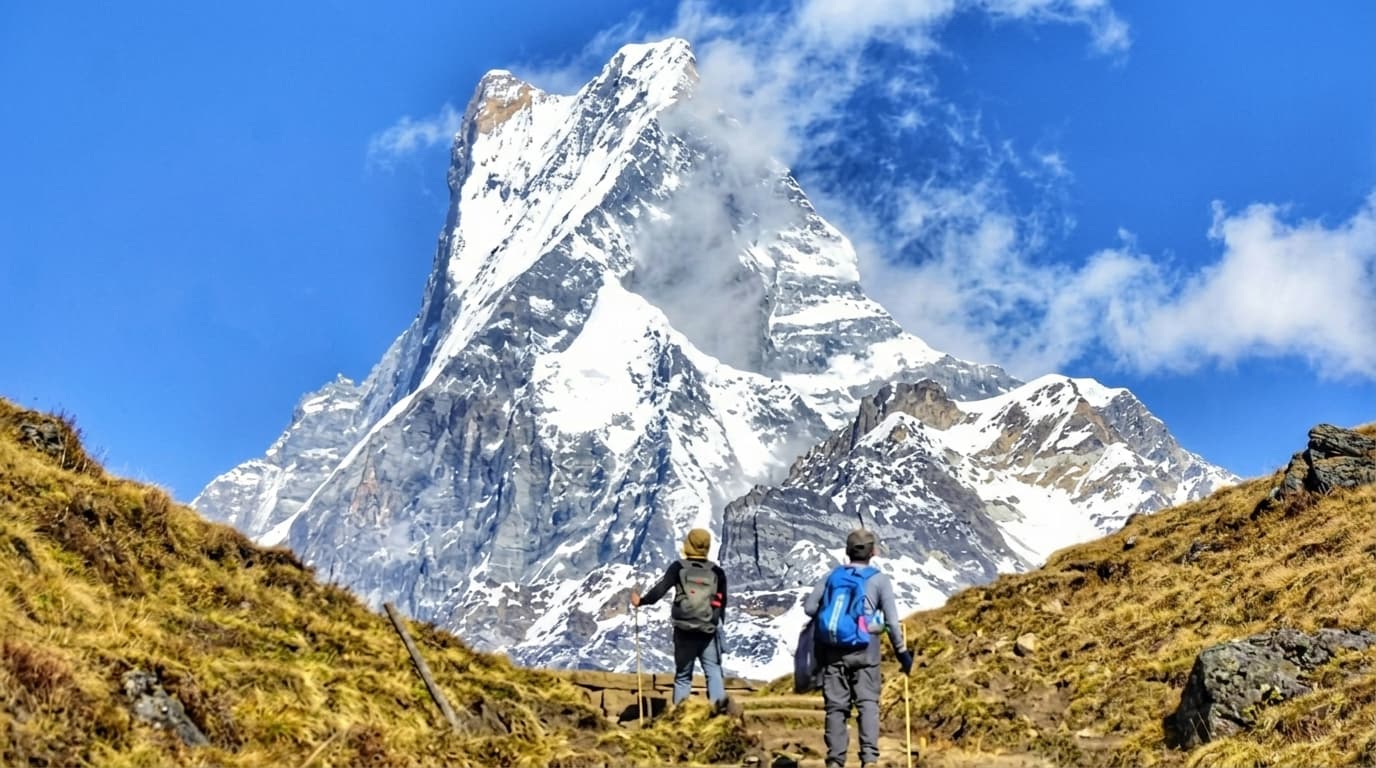
Before comparing trailheads, it helps to know what stays the same no matter where you start. The Mardi Himal Trek sits in the Annapurna Conservation Area, directly beneath Machhapuchhre (Fishtail Peak), and typically runs 4 to 7 trekking days depending on your pace and route choice. Most itineraries top out at either the Mardi Himal Upper Viewpoint (around 4,200 m) or push further to Mardi Himal Base Camp (around 4,450–4,500 m). You'll need an ACAP (Annapurna Conservation Area Permit) regardless of your starting point, and the trek is generally rated moderate — achievable for reasonably fit beginners, but with real altitude to respect above High Camp.
What does change based on your trailhead is the first (and sometimes last) one to two days of your trek: how long the drive from Pokhara takes, how steep the initial climb is, which villages you pass through, and how much cultural immersion you get before hitting the high ridge trail.
Starting From Kande: The Classic, Direct Route
Kande is the most commonly used starting point for the Mardi Himal Trek, and for good reason — it's straightforward, well-marked, and gets you onto the trail quickly. Drive from Pokhara: About 1 to 1.5 hours by jeep or local bus.
What the trail looks like: From Kande, you climb roughly 1.5 hours up to Australian Camp (around 2,000 m), a popular rest stop with a handful of teahouses and open views of Annapurna South, Hiunchuli, Machhapuchhre, and Phewa Lake below. From there, the trail continues through Pothana and Deurali before joining the main Mardi Himal ridge trail toward Forest Camp, Low Camp, and High Camp.
Best for:
- First-time trekkers who want a simple, low-stress start
- Travelers with limited time who want to reach High Camp in fewer days
- Anyone who wants early mountain views without a long approach walk
Trade-offs: Because Kande is the shortest approach, you'll gain elevation a bit faster on day one, and you'll spend less time in lower-altitude villages compared to starting at Phedi or Lwang. If cultural immersion is a priority, Kande gives you the least of it on the way in.
Starting From Phedi: The Classic Ridge Route
Phedi (often written as Dhampus Phedi) is the other major, well-established starting point — and it's also the traditional trailhead for other famous Annapurna region treks, including the Annapurna Base Camp Trek and Ghorepani Poon Hill.
Drive from Pokhara: Roughly 18–19 km by road, about 45 minutes to an hour depending on traffic.
What the trail looks like: From Phedi, the trail climbs through Dhampus village — one of the larger, more scenic Gurung settlements in the area — before continuing to Pitam Deurali and merging with the same ridge trail used by the Kande route (Forest Camp, Low Camp, High Camp, Upper Viewpoint). Because Dhampus is a proper village rather than just a roadside trailhead, you get a more gradual, village-to-village feel on your first day.
Best for:
- Trekkers who want the "classic" Mardi Himal experience with a well-worn, reliable trail
- Those who'd like a bit more village scenery early on, without adding extra trekking days
- Anyone combining Mardi Himal with a side trip through Dhampus or connecting toward Annapurna Base Camp
Trade-offs: Phedi's popularity means you'll likely share the first day's trail with trekkers headed to Ghorepani or Annapurna Base Camp before the routes split. It's also a marginally longer approach than Kande, though the difference is minor — usually less than an hour of extra driving or walking.
Starting (or Ending) From Lwang: The Cultural Detour
Lwang village is a little different from the other two. While it is used as a trek starting point, it's more commonly used as an ending point — and arguably, that's where it shines. Lwang sits at around 1,460–1,550 m, roughly 20–26 km northwest of Pokhara, and is one of Nepal's best-known community-based homestay villages.
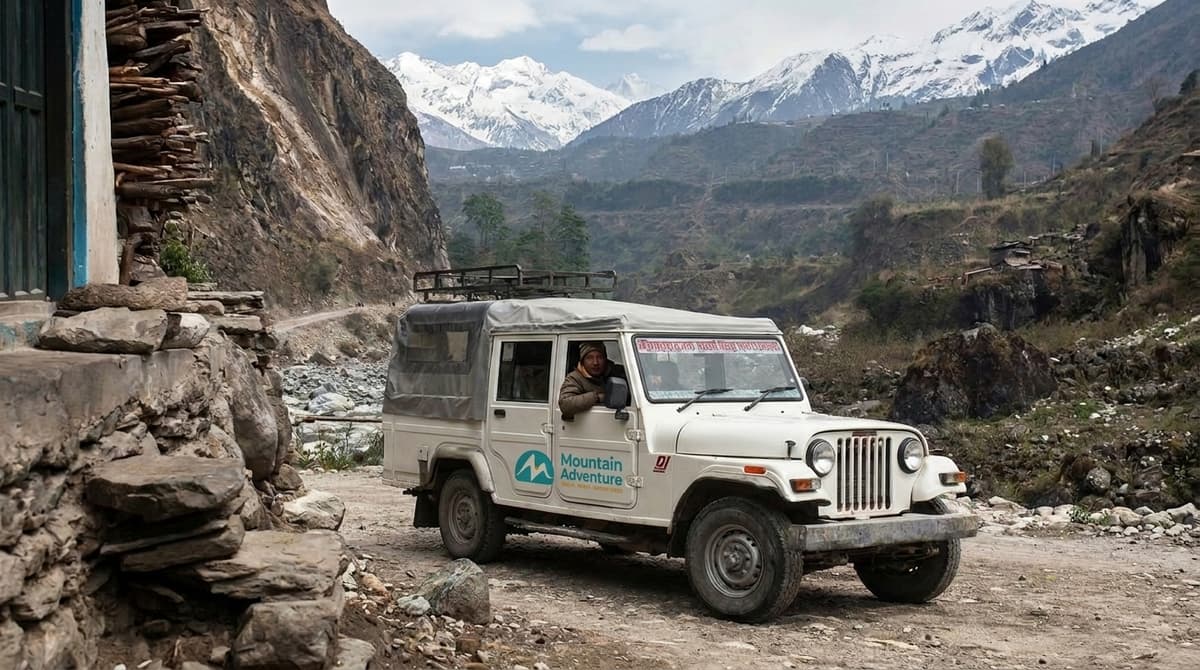
Drive from Pokhara: About 1 to 1.5 hours to Khoramukh, followed by a 45-minute forest walk into the village (if starting here). If used as an ending point, you simply walk down into Lwang from the High Camp/Low Camp area.
What makes it different: Lwang is a working Gurung village known for its organic tea gardens, traditional homestays (around a dozen households host trekkers), waterfalls near Ghalel, and even canyoning nearby. Trekkers who route through Lwang — either starting or finishing there — get an overnight homestay experience with a local family: home-cooked meals, conversation, and a much slower pace than a standard teahouse.
Best for:
- Trekkers who want authentic cultural contact, not just mountain views
- Those doing a 6–7 day itinerary with room for an extra cultural day
- Photographers and slow-travel types who don't mind a longer trip for a richer experience
Trade-offs: Using Lwang adds walking days and isn't the fastest way onto the high ridge trail. It's rarely the right choice if you're short on time or purely focused on reaching the viewpoint or base camp as efficiently as possible.
Kande vs Phedi: Head-to-Head
Since Kande and Phedi are the two most-used starting points, here's the direct comparison trekkers ask about most.
Factor | Kande | Phedi |
| Drive time from Pokhara | ~1–1.5 hours | ~45 min–1 hour |
| First-day scenery | Mountain views early (Australian Camp) | Village scenery (Dhampus) |
| Trail traffic | Moderate | Higher (shared with ABC/Poon Hill trekkers initially) |
| Difficulty of first climb | Slightly steeper, more direct | Slightly more gradual |
| Best for | Speed and simplicity | Classic village-to-ridge feel |
In practice, the difference between Kande and Phedi is smaller than most blogs suggest. Both merge onto the same ridge trail by day two, and both are well-supported with teahouses. If you're stuck deciding between the two, let your guide or agency's logistics (drive routing, group pickup points) make the call — the trekking experience itself won't differ dramatically.
Lwang vs Kande: A Bigger Decision
Lwang vs Kande is a more meaningful choice, because it's really a choice between two different kinds of trek.
- Kande gets you to altitude and mountain views fast, with minimal detour time. It suits trekkers who see the summit viewpoint as the main event.
- Lwang slows things down deliberately, trading a day or two of extra walking for homestay culture, tea gardens, and quieter trails. It suits trekkers who see the villages and people as just as important as the peaks.
Neither is "better" — they answer different questions. If someone asks "what's the best Mardi Himal trailhead," the honest answer is: it depends on whether you're optimizing for time and mountains (Kande) or immersion and pace (Lwang).
Decision Guide: Match the Trailhead to Your Trip
You have 4–5 days and want maximum mountain time: Start at Kande, descend via Siding. This is the shortest, most efficient loop.
You want the most "classic" Mardi Himal itinerary with balanced scenery: Start at Phedi, descend via Siding or Lwang. This gives you village scenery on the way up and a cultural stop on the way down without adding much time.
You have 6–7+ days and want a richer, slower trip: Start at Kande or Phedi, and make Lwang your finishing point (or even your starting point if you want the homestay experience first). This is the best structure for trekkers who want both the ridge walk and genuine cultural contact.
You're trekking with kids, older family members, or anyone who prefers an easier pace: Phedi's more gradual village approach, or a Lwang-based itinerary with lower daily distances, will feel more comfortable than Kande's steeper early climb.
You're a photographer chasing early mountain views: Kande's climb to Australian Camp delivers Annapurna South, Hiunchuli, and Machhapuchhre views within the first couple of hours — hard to beat for early payoff.
Practical Logistics: Permits, Transport, and Costs
Regardless of which trailhead you choose, a few things stay constant:
- Permits: You'll need an ACAP permit. TIMS card requirements vary by operator and current regulation, so confirm with your trekking agency before departure.
- Transport: All three trailheads are reached by a short drive (jeep, private car, or local bus) from Pokhara — none require a flight or long-distance travel beyond the Kathmandu–Pokhara leg.
- Accommodation: Basic teahouses line the ridge route from Forest Camp through High Camp regardless of your starting point. The difference is only in the first (and last) day or two.
- Guides and porters: Licensed guides are recommended for all routes, and are especially useful for navigating the Lwang detour, where trail markings are less frequent than on the main Kande–Phedi ridge trail.
- Best season: March to May and September to November offer the clearest mountain views and most stable weather across all three trailhead options.
Ready to Choose Your Route?
Kande, Phedi, and Lwang each open the door to the same incredible Mardi Himal ridge trail and Machhapuchhre views — but the journey to get there looks different depending on what you're after. If you're still weighing time, difficulty, and cultural experience, our local guides at Mountain Adventure Trek can help you map the right start and finish points for your fitness level, schedule, and travel style.
Talk to a Mardi Himal trek specialist today and get a custom itinerary — Kande, Phedi, Lwang, or a combination of all three — built around exactly how you want to experience the Annapurna region.
Plan Your Mardi Himal Trek With Mountain Adventure Trek