Muktinath: Jeep, Flight or Helicopter? Which Is Best?
Muktinath sits at 3,800 meters in the Mustang district, tucked against the base of the Thorong La pass, and getting there has never been the simple part of the pilgrimage. For decades, reaching this temple meant days on foot or a punishing jeep ride along one of Nepal's roughest mountain roads. That's changed. Travelers today can choose between a jeep, a short mountain flight followed by a drive, or a helicopter that gets them there and back before lunch. Each option gets you to the same sacred ground, but the experience of getting there — the cost, the time, the risk of delay, even how your body handles the altitude change — varies enormously between the three.
This comparison walks through what each option actually involves, based on how these trips run in practice, so the choice comes down to what matters most for your trip rather than guesswork.
Why the Transportation Choice Matters So Much Here
Most pilgrimage or sightseeing destinations in Nepal don't force this kind of decision. You take a taxi, or you don't. Muktinath is different because the terrain between Pokhara and the temple is genuinely difficult, and the three main ways of covering that distance sit at opposite ends of nearly every spectrum that matters to a traveler — time, money, comfort, and reliability.
The jeep route follows the Kali Gandaki Gorge, widely cited as the deepest gorge on earth, climbing from Pokhara's mild mid-hill climate up into the high, dry Mustang landscape over the course of a full day or more. The flight option cuts most of that climb out of the equation by skipping straight to Jomsom, a small airstrip town at just under 2,750 meters, before a short jeep ride finishes the job. The helicopter skips the climb entirely, lifting off from Pokhara and setting down within walking distance of the temple itself.
None of these is objectively "correct." A retired couple visiting for religious reasons has different priorities than a backpacker who wants the gorge views and doesn't mind a bumpy road, and both of them have different priorities than a family trying to fit Muktinath into a five-day Nepal trip that also includes Kathmandu and a short trek. The right choice really does depend on who's asking.
Option One: Muktinath by Jeep
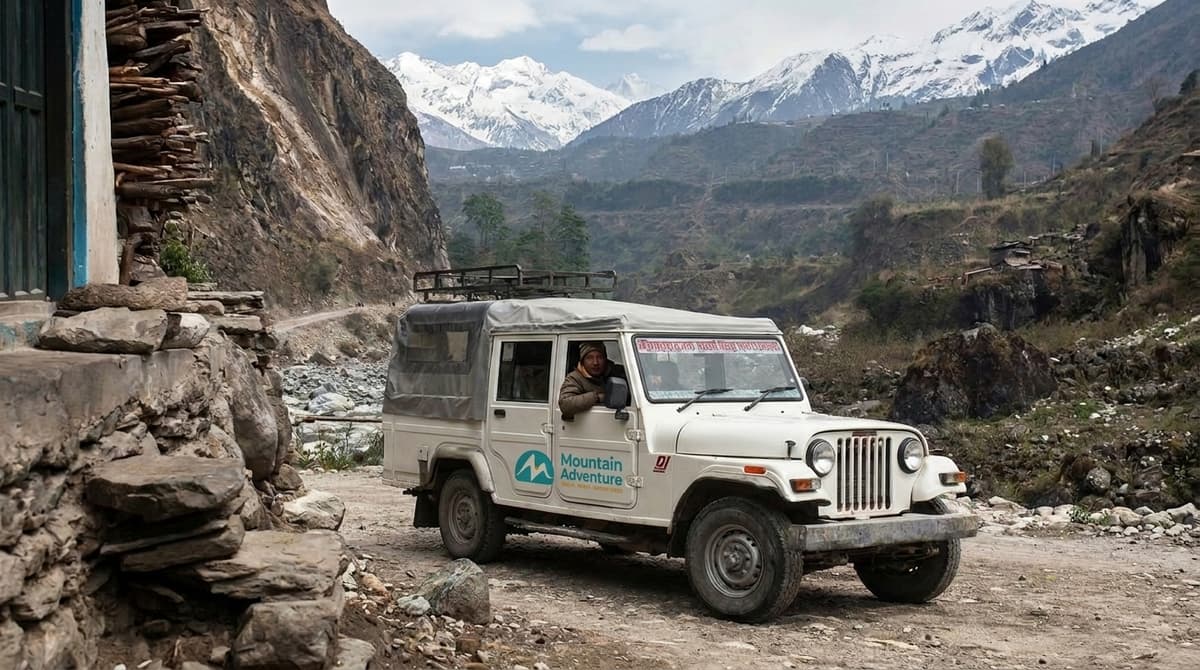
The jeep route is the traditional way of reaching Muktinath overland, and it remains the most popular option for travelers who have the time and want the full landscape experience rather than a shortcut through the sky.
What the Drive Actually Involves
The full road distance from Pokhara to Muktinath runs somewhere between 180 and 205 kilometers depending on the exact route and return path, and the drive itself typically takes anywhere from six to eleven hours one way, depending heavily on road conditions, the season, and how many stops the itinerary includes along the way. The route runs through Beni, Tatopani, Ghasa, Marpha, and Jomsom before finishing with a short climb through Kagbeni to Muktinath itself. Most operators split this into a two-day trip, driving to Jomsom on day one and continuing to Muktinath and back on day two, though some tighter itineraries push through in a single very long day.
The road itself has improved substantially over the past several years. Much of it beyond Beni is now paved or partially paved, though sections remain rough, and landslide-prone stretches can turn a bad monsoon month into a genuinely slow, jarring ride. A high-clearance 4×4 jeep is standard for this route, and shared jeeps sharing a vehicle with other travelers cost noticeably less than booking a private one.
What You See Along the Way
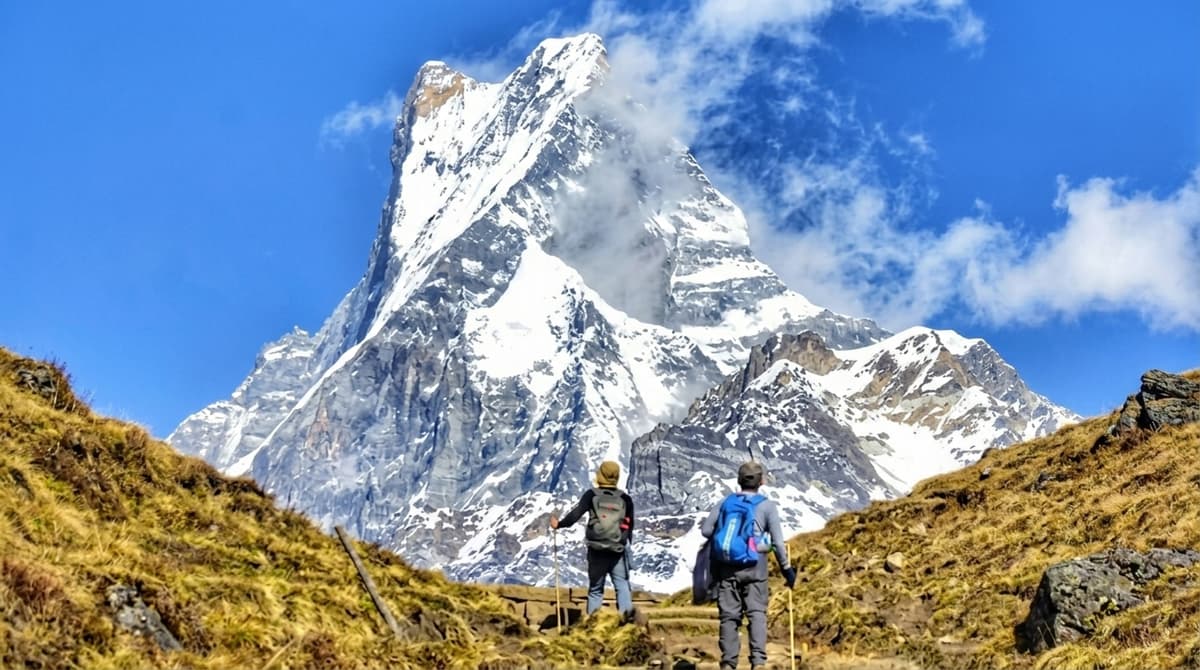
This is the route's biggest selling point. The drive follows the Kali Gandaki River for most of its length, passing through Rupse Waterfall, the hot springs at Tatopani, apple orchards around Marpha, and a string of small Thakali villages that most travelers never encounter any other way. The landscape itself transforms dramatically over the course of the drive — from Pokhara's green, subtropical valley to the stark, high-desert terrain of Upper Mustang, with Dhaulagiri and Nilgiri visible for long stretches once the road climbs past Ghasa.
Cost and Practical Considerations
A shared jeep seat from Pokhara to Jomsom, followed by local transport onward to Muktinath, runs in the range of a few thousand Nepali rupees total, making it by far the cheapest of the three options. A private jeep for the full two-day round trip costs considerably more but still comes in well under the price of a helicopter, and it's often the more economical choice for a group of four to seven people splitting the cost of one vehicle. Beyond the fare itself, travelers should also budget for an entrance permit and TIMS card, along with one or two nights of accommodation in Jomsom or Muktinath depending on the itinerary.
Who the Jeep Route Suits Best
This option makes the most sense for travelers who have two to three days available, want to actually see the Mustang landscape rather than fly over it, and don't mind a long day of driving on imperfect roads in exchange for a much lower price tag. It's also the natural choice for larger groups traveling together, since splitting a private jeep across several people brings the per-person cost down significantly. It's a poor fit for anyone with serious time constraints, motion sensitivity on winding mountain roads, or physical limitations that make a full day of jeep travel genuinely uncomfortable.
Option Two: Muktinath by Flight (Pokhara to Jomsom, Then Jeep)
The flight option is often described as the middle ground between the jeep and the helicopter, and that's a fair way to think about it — faster and more comfortable than the full overland drive, but noticeably cheaper than a dedicated helicopter charter.
How the Flight-Plus-Jeep Combination Works
The core of this option is a short mountain flight from Pokhara to Jomsom, covered by regional carriers including Tara Air, Summit Air, and Shree Airlines, taking roughly 30 to 35 minutes in the air. These flights depart early in the morning, generally between 6:00 and 8:00 AM, because the winds through the Kali Gandaki valley pick up sharply by mid-morning and make later departures unreliable. Once in Jomsom, the remaining 21 kilometers to Muktinath are covered by shared or private jeep along the Mustang highway, adding another 30 to 45 minutes of driving. Door to door, a traveler can realistically go from a Pokhara hotel to the temple gate in around two to two and a half hours, assuming the flight departs on schedule.
The One Real Catch: Weather
Mountain flights in this region are genuinely weather-dependent, and it's worth being direct about that rather than glossing over it. Cancellations and delays are common, particularly between October and December when high winds through the gorge become more frequent, and travelers booking this route should build at least one buffer day into their schedule rather than flying in and out on the same tight timeline as a return flight home. This isn't a minor caveat — it's the single biggest practical difference between this option and the helicopter, which handles marginal weather far more reliably.
Cost Comparison
A one-way flight between Pokhara and Jomsom generally runs somewhere in the range of 100 to 130 US dollars per person, with prices shifting by season and how far in advance the ticket is booked — booking two to three weeks ahead during peak season is a reasonable rule of thumb. Add a shared jeep fare from Jomsom to Muktinath, which is inexpensive, and the total cost for this route sits well below a helicopter charter but noticeably above the jeep-only option, particularly once the return flight is factored in as well.
Who This Option Suits Best
The flight-and-jeep combination is a strong fit for travelers who want to avoid the long overland drive but don't have the budget or the group size to justify a helicopter, and who have enough flexibility in their overall itinerary to absorb a weather delay without wrecking the rest of their trip. It also suits travelers who want at least some time on the ground in Mustang — walking around Jomsom, seeing Kagbeni, getting a feel for the region rather than just glimpsing it from altitude — without committing to a full multi-day jeep journey.
Option Three: Muktinath by Helicopter
The helicopter tour is the fastest and most expensive of the three options by a wide margin, and it exists specifically to solve the time problem that the other two options can't.
How the Helicopter Tour Runs
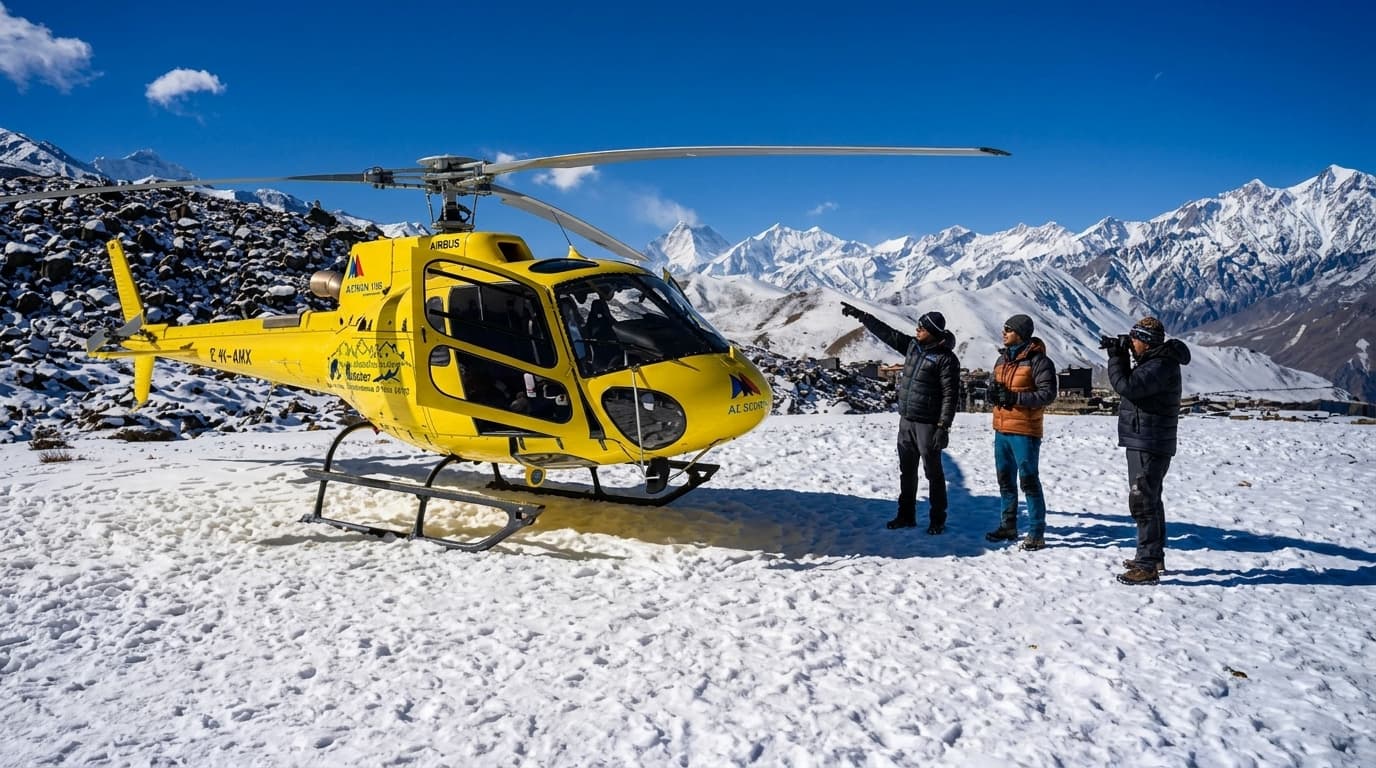
A typical Muktinath helicopter tour from Pokhara takes off early in the morning, generally between 6:30 and 7:30 AM, for the same reason the fixed-wing flights do — calmer air before the winds build later in the day. The flight itself covers the distance from Pokhara to Muktinath in well under an hour, with the helicopter landing at Ranipauwa, a short walk from the temple complex. Travelers typically have an hour or so on the ground to complete darshan, take the ritual bath at the 108 water spouts, and visit the nearby Jwala Mai temple before boarding the return flight. Including the round-trip flying time and the time spent at the temple, the entire tour from hotel pickup to hotel drop-off usually runs somewhere between two and three hours, occasionally stretching closer to four depending on the operator and any add-on sightseeing over Pokhara Valley on the way back.
Reliability in Marginal Weather
This is where the helicopter genuinely outperforms the fixed-wing flight. Helicopters are able to fly and land in a wider range of visibility conditions than a fixed-wing aircraft, which makes outright cancellations far less common — though not impossible, since genuinely severe weather can still push a departure back by a few hours or, rarely, a full day. For travelers with an unmovable return flight home or a tightly packed itinerary elsewhere in Nepal, this reliability is often the deciding factor over the fixed-wing flight option, even at a significantly higher price.
Cost and Booking Structure
Helicopter tours to Muktinath are priced very differently from the other two options. Because most operators run these as private charters rather than shared seats, the cost is typically quoted per group rather than per person, and a private helicopter for a small group can run well into four figures in US dollars, with the exact figure depending on group size, the operator, and whether the flight departs from Pokhara or the considerably more expensive Kathmandu route. Group-joining options do exist with some operators, splitting the cost of a shared helicopter among unrelated travelers, but availability depends on finding enough people booked for the same date, and it's generally advisable to inquire about this well in advance rather than assuming a shared seat will be available on short notice.
Who the Helicopter Suits Best
This option is built for travelers who value time and comfort above cost — families making a religious pilgrimage who want to avoid a long, jarring road trip; older travelers or anyone with health conditions that make altitude changes or long jeep rides risky; and anyone with a tightly scheduled trip who simply doesn't have two or three days to spend getting to and from Muktinath. It's also a popular choice for travelers celebrating a special occasion or those who specifically want the aerial views of the Annapurna and Dhaulagiri ranges as part of the experience, since the helicopter offers a vantage point neither the jeep nor the fixed-wing flight can match.
Comparing the Three Side by Side
Laid out against each other, the differences between these three options come down to a handful of factors that matter differently depending on who's traveling.
Time is the most obvious divide. The jeep route takes a full day or two; the flight-and-jeep combination takes a couple of hours each way, weather permitting; and the helicopter compresses the entire round trip into a single morning. Cost runs in almost exactly the reverse order — the jeep is by far the cheapest, the flight sits in the middle, and the helicopter costs several times more than either alternative, especially when booked privately rather than shared.
Reliability cuts across these differently than most travelers expect. The jeep is the most weather-resilient of the three in one sense — a landslide can close the road, but that's a rare event compared to the wind patterns that regularly disrupt fixed-wing flights through the gorge. The helicopter sits in between, less prone to outright cancellation than the fixed-wing flight but not entirely immune to weather delays either.
Comfort and physical demand matter more than they might seem to at first glance. A full day or two of jeep travel on rough roads is genuinely tiring, and for older travelers or anyone prone to motion sickness, that fatigue is a real consideration rather than a minor inconvenience. The flight and helicopter both largely sidestep this, though the sudden altitude gain from a helicopter landing directly at 3,800 meters, without the gradual acclimatization the jeep route provides, is worth discussing with a doctor for anyone with underlying health conditions or a history of altitude sensitivity.
Scenery is the one area where the "faster is better" logic doesn't hold up cleanly. The jeep route offers by far the richest ground-level experience — villages, rivers, hot springs, and a slow transition through changing landscapes that neither of the flying options can replicate. The helicopter offers a different kind of scenery entirely, a sweeping aerial view of the same mountain ranges from an angle almost no other form of travel provides. The fixed-wing flight sits somewhere in between, offering good views from altitude but for a much shorter window than the helicopter and without the ground-level detail of the jeep.
Matching the Right Option to Your Trip
For travelers with time to spare and a limited budget, the jeep is the clear choice, and honestly the one that delivers the most complete picture of the Mustang region along the way. Anyone drawn to the idea of the Kali Gandaki Gorge, the Thakali villages, or the hot springs at Tatopani should lean toward this option even if a faster route is available, since those stops are part of what makes the trip memorable rather than just a means of getting somewhere.
For travelers who want to save a day or two without spending helicopter money, the Pokhara-to-Jomsom flight followed by a short jeep ride is the most balanced option — provided the rest of the itinerary has enough flexibility to absorb a weather delay without real consequences. This tends to suit independent travelers and smaller groups who are comfortable handling their own logistics on the ground in Jomsom.
For travelers where time, comfort, or physical ability genuinely rules out the other two options, the helicopter earns its price tag. Families completing a religious obligation on a tight schedule, older pilgrims, or anyone whose Nepal trip simply doesn't have three spare days to give to Muktinath will get more value from the certainty and speed of a helicopter than from the savings of a cheaper option that costs them time they don't have.
A Fourth Approach: Mixing the Options
It's worth mentioning a combination that a fair number of experienced travelers land on once they've weighed the three choices against each other: flying or heli-ing one direction and driving the other. Taking the jeep out to Muktinath and flying back to Pokhara, for instance, lets a traveler experience the gorge and the villages along the Kali Gandaki at a relaxed pace on the way in, while avoiding a second exhausting day of driving on the return leg when the novelty of the scenery has already worn off. The reverse works too — flying out early to save time on the outbound leg, then taking the jeep back at a slower pace with stops built in for Tatopani's hot springs or an extra night in Marpha.
This hybrid approach costs more than a pure jeep trip but less than flying or heli-ing both directions, and it solves a complaint that comes up often from travelers who do the full round trip by jeep: the return drive, covering the same road in reverse, starts to feel repetitive once the initial scenery has already been seen. Not every operator advertises this combination outright, but most are willing to arrange it on request, since the logistics — one seat on a flight, one seat in a jeep — aren't especially complicated on their end.
Altitude and Health Considerations Worth Taking Seriously
Muktinath's elevation, sitting close to 3,800 meters, puts it high enough that altitude-related discomfort is a real possibility regardless of which transportation option gets a traveler there. The jeep route has one genuine advantage here that's easy to overlook amid all the discussion of scenery and cost: it gives the body a gradual, multi-day climb rather than a sudden jump, which is exactly the kind of pacing that reduces the risk of altitude sickness. Travelers who fly or take a helicopter go from Pokhara's roughly 800-meter elevation to nearly 3,800 meters in a matter of hours, with no acclimatization window in between.
For most short visits — a few hours at the temple before flying back down the same day — this rapid ascent doesn't cause serious problems for the average healthy traveler, since the exposure at altitude is brief. But it's a different calculation for anyone with a history of altitude sickness, a cardiovascular or respiratory condition, or simply an unknown sensitivity to elevation changes. Anyone in these categories should talk to a doctor before booking a same-day flight or helicopter tour, and should consider whether the jeep route's gradual ascent might be the safer choice even if it costs more time. Staying well hydrated, avoiding alcohol on the day of travel, and keeping the visit at altitude relatively brief are sensible precautions regardless of which option gets chosen.
A Few Practical Notes Before Booking
Regardless of which option ends up making sense, a handful of details apply across all three. A TIMS card and the relevant entrance permit are required for travel into the Mustang region and should be arranged before departure rather than at the last minute, since jeep operators in particular will expect this to already be sorted.
The best overall season for any of these three routes is generally spring through autumn, when road conditions are more stable and mountain flights face fewer weather disruptions, though the monsoon months from June through August bring a higher risk of landslides on the jeep route specifically. Anyone booking a fixed-wing flight or a helicopter tour should build at least a one-day buffer into the broader itinerary, since even the more weather-resilient helicopter option isn't entirely immune to delays during unstable conditions. And regardless of the transportation choice, the sudden change in elevation — particularly for travelers flying or heli-ing directly into Jomsom or Muktinath without the jeep route's gradual climb — is worth discussing with a doctor beforehand if there's any history of altitude sensitivity, since the temple itself sits close to 3,800 meters above sea level.
So, Which Is Actually Best?
There isn't a single right answer here, and that's really the point. The jeep is best for travelers who have the time, want the full landscape, and are working with a tighter budget. The flight-and-jeep combination is best for travelers who want to save time without spending helicopter money, as long as they can absorb an occasional weather delay. And the helicopter is best for travelers who need certainty, speed, and comfort above everything else, and who are willing to pay for it.
What matters most is being honest about which of those things — time, money, comfort, or the journey itself — actually matters most for your trip, rather than picking based on which option sounds most impressive. Muktinath rewards all three kinds of travelers equally once they arrive; the only real difference is how they got there.
Plan Your Muktinath Tour With Confidence
Whether the plan is a scenic two-day jeep journey through the Kali Gandaki Gorge, a quicker flight-and-drive combination through Jomsom, or a same-day helicopter pilgrimage, a well-organized Muktinath Tour takes the guesswork out of permits, timing, and weather contingencies. Having someone handle the TIMS card, the vehicle or flight booking, and the buffer planning around Nepal's unpredictable mountain weather means the only thing left to focus on is the temple itself — which, after all, is the reason for the trip in the first place.