How Difficult Is the Annapurna Circuit Compared to Annapurna Base Camp?
The Annapurna Circuit is significantly harder overall than Annapurna Base Camp (ABC), driven primarily by severe altitude (5,416m at Thorong La Pass versus 4,130m at Base Camp) and expedition duration (14 to 16 days versus 9 to 10 days). However, the two treks punish the human body in completely different ways: ABC is a short, violent workout on your knees and quadriceps due to more than 6,000 continuous stone staircases, while the Annapurna Circuit is a protracted cardiovascular endurance test that challenges your red blood cell count, lungs, and mental stamina in sub-zero alpine conditions.
Walk into any gear shop in Thamel or Pokhara, and you will hear prospective hikers asking the same question: "I want to trek in the Annapurnas, but is the Circuit that much harder than Base Camp?"
Most commercial websites brush this off with generic travel-brochure labels: they rate ABC as "moderate" and the Circuit as "moderate to strenuous."
Those labels tell you almost nothing about what your body actually experiences on the trail.
I have watched ironman triathletes break down in tears halfway up the stone stairs between Tikhedhunga and Ulleri on the ABC route. And I have watched 62-year-old retired schoolteachers calmly step across Thorong La Pass at 5,416 meters without a single complaint because they understood how to pace their lungs.
The truth is that neither trek is "easy," but they test completely different physiological systems. Below is an honest, guide's breakdown of how the physical difficulty of the Annapurna Circuit compares to Annapurna Base Camp across altitude, musculoskeletal stress, daily endurance, and emergency logistics.
Head-to-Head Difficulty Comparison: Circuit vs. ABC
Difficulty Metric | Annapurna Base Camp (ABC) | Annapurna Circuit | Which Is Harder? |
| Crux Elevation | 4,130 meters (13,550 ft) | 5,416 meters (17,769 ft) at Thorong La | Circuit is vastly harder. 5,416m has roughly 50% sea-level oxygen. |
| Trek Duration | 7 to 10 days (most do 9) | 12 to 16 days (most do 14) | Circuit. Sustaining effort over two weeks causes deep cumulative fatigue. |
| Total Walking Distance | ~70 to 90 km | ~140 to 180 km (with jeep skips) | Circuit. Roughly double the horizontal foot distance. |
| Steepest Leg Challenge | 6,000+ vertical stone steps | Sustained scree descent of 1,600m from the pass | ABC is harder on knees/joints; Circuit is harder on lungs. |
| Cold & Weather Extremes | -5°C to -10°C at ABC at night | -15°C to -25°C windchill on pass day | Circuit. Severe frostbite and blizzard risk at 5,400m. |
| Days Spent Above 3,500m | 2 days (Machhapuchhre BC & ABC) | 5 to 6 continuous days | Circuit. Extended exposure drains sleep, appetite, and energy. |
| Passage / Trail Technicality | Paved stone paths, canyon trail | High-altitude gravel, scree, potential ice/snow | Circuit. Microspikes often required on frozen pass snow. |
| Overall Difficulty Rating | Moderate (High Joint Strain) | Strenuous (High Altitude Endurance) | The Annapurna Circuit is the harder trek. |
1. Altitude Exposure: 4,130m vs. 5,416m
The altitude difference between these two routes is not a small detail — it is the fundamental dividing line between a challenging mountain hike and a serious high-altitude expedition.
The Altitude Curve on Annapurna Base Camp
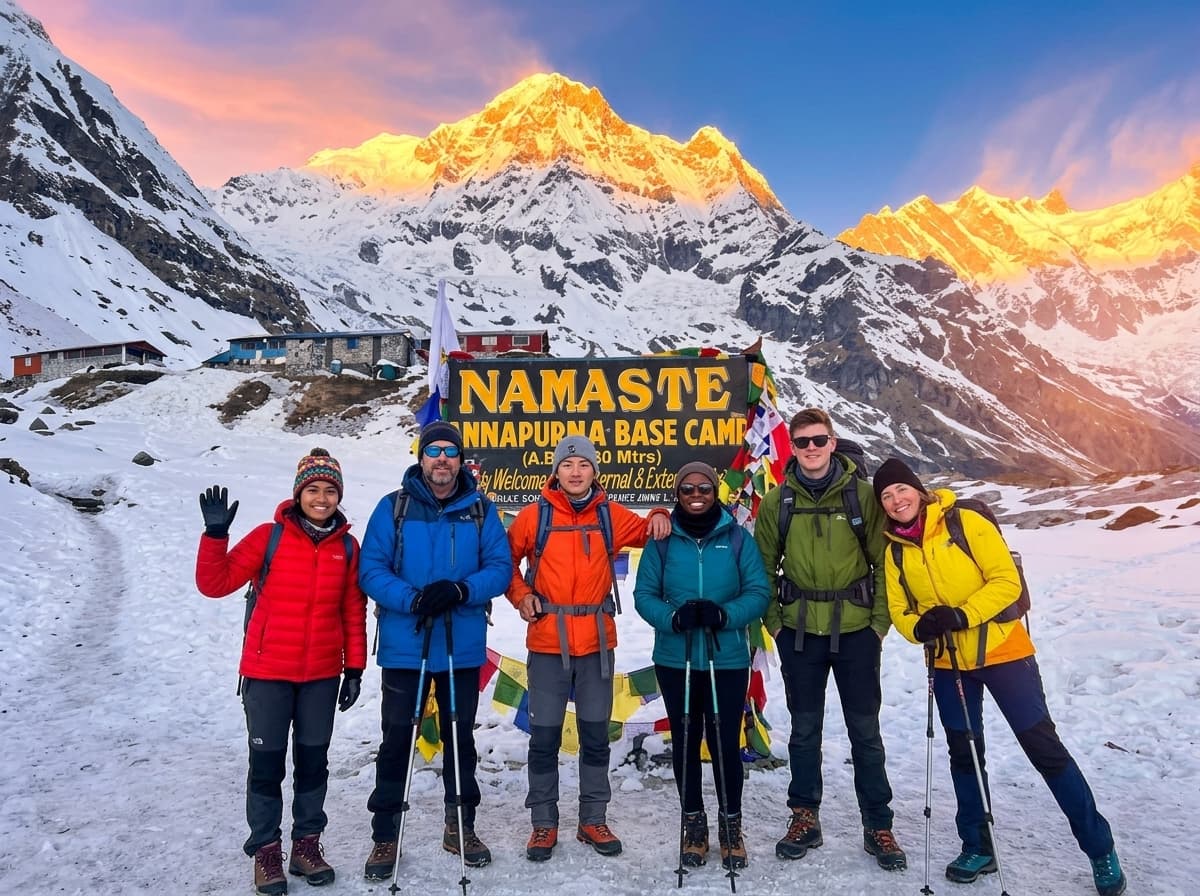
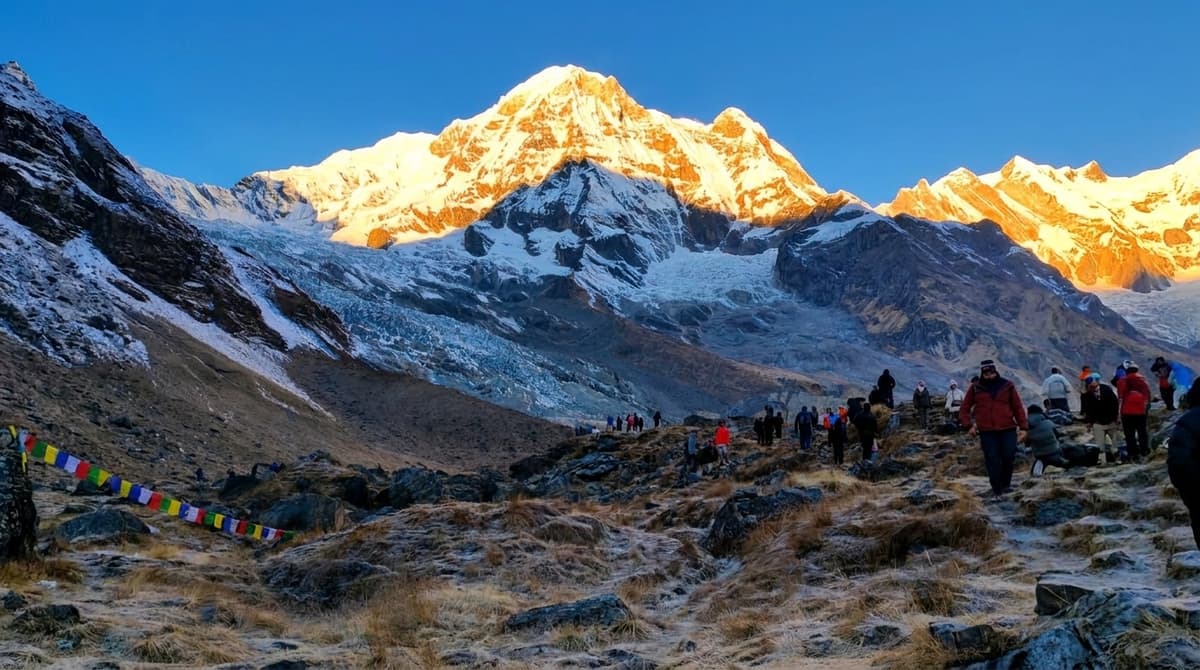
On the ABC trek, you enter the Annapurna Sanctuary from the south. The climb is steady through the Modi Khola canyon. You sleep at Deurali (3,200m), spend one night at Machhapuchhre Base Camp (3,700m), and reach Annapurna Base Camp at 4,130 meters on day six.
At 4,130 meters, the effective oxygen level in the air is roughly 62% of what you breathe at sea level. You will certainly feel short of breath climbing out of your sleeping bag, and your resting pulse will be elevated. However, you only spend a single night sleeping at 4,130 meters before walking back down to lower elevations. Because your exposure time at peak altitude is brief, the incidence of severe Acute Mountain Sickness (AMS) is relatively low, provided you did not sprint up the canyon.
The Altitude Curve on the Annapurna Circuit
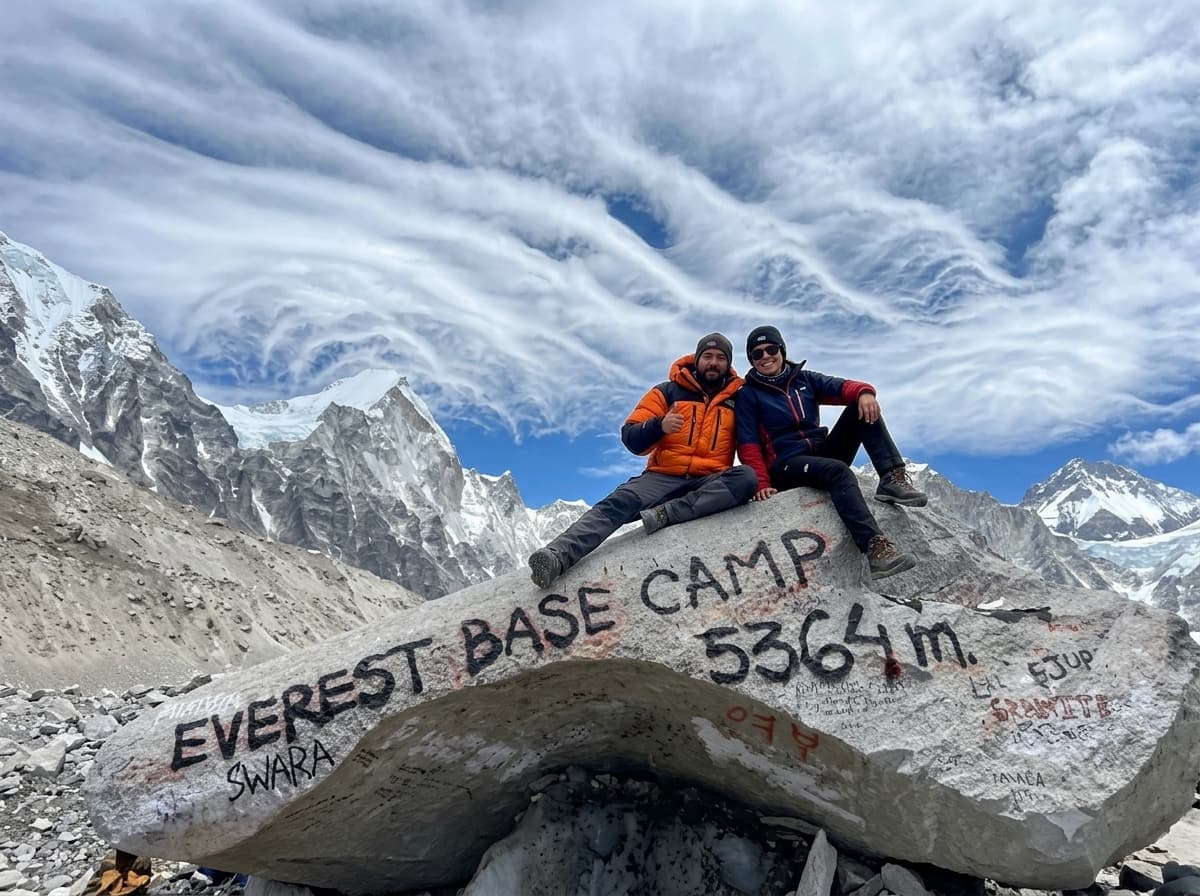
The Annapurna Circuit crosses Thorong La Pass at 5,416 meters (17,769 feet). To put that in perspective, Thorong La is higher than Everest Base Camp (5,364m) and higher than Mont Blanc (4,808m).
At 5,416 meters, effective oxygen drops to nearly 50% of sea-level density. Every three steps uphill feels like running up a flight of stairs holding a wet towel over your mouth.
Furthermore, the Circuit requires spending five to six consecutive nights sleeping above 3,500 meters (Pisang, Manang, Yak Kharka, and Thorong Phedi or High Camp at 4,850m). Prolonged exposure to thin air degrades sleep architecture (periodic breathing), suppresses your appetite, and dehydrates your respiratory tract through heavy hyperventilation.
When you wake up at 3:30 AM at High Camp to make the pass crossing, your body is already carrying five days of minor hypoxic strain. If your acclimatization in Manang was rushed, Thorong La will stop you in your tracks.
2. Musculoskeletal Stress: Stone Stairs vs. High-Pass Scree
Trekkers who finish the Annapurna Circuit often say their lungs were the limiting factor. Trekkers who finish Annapurna Base Camp almost universally curse their knees.
ABC’s Trap: The Vertical Staircase
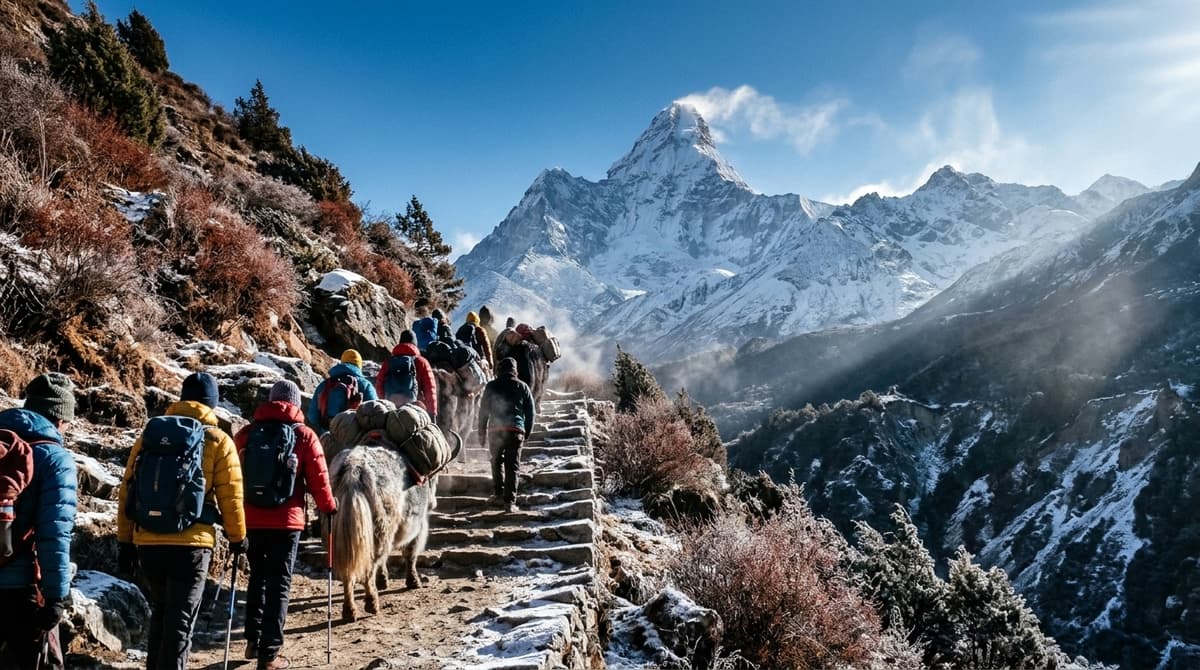
The terrain on the Annapurna Base Camp trek is notoriously stepped. Because the Modi Khola canyon is narrow, steep, and prone to heavy monsoon erosion, generations of Gurung villagers have built massive staircases out of split granite stone.
- Between Tikhedhunga and Ulleri alone, you will climb roughly 3,300 continuous stone steps in three hours of vertical agony.
- Between Chhomrong, the river bottom, and Sinuwa, you descend 2,500 stone stairs only to immediately climb 2,000 stone stairs up the opposite wall of the ravine.
- On the descent from Base Camp, you must retrace every single one of those stairs going down.
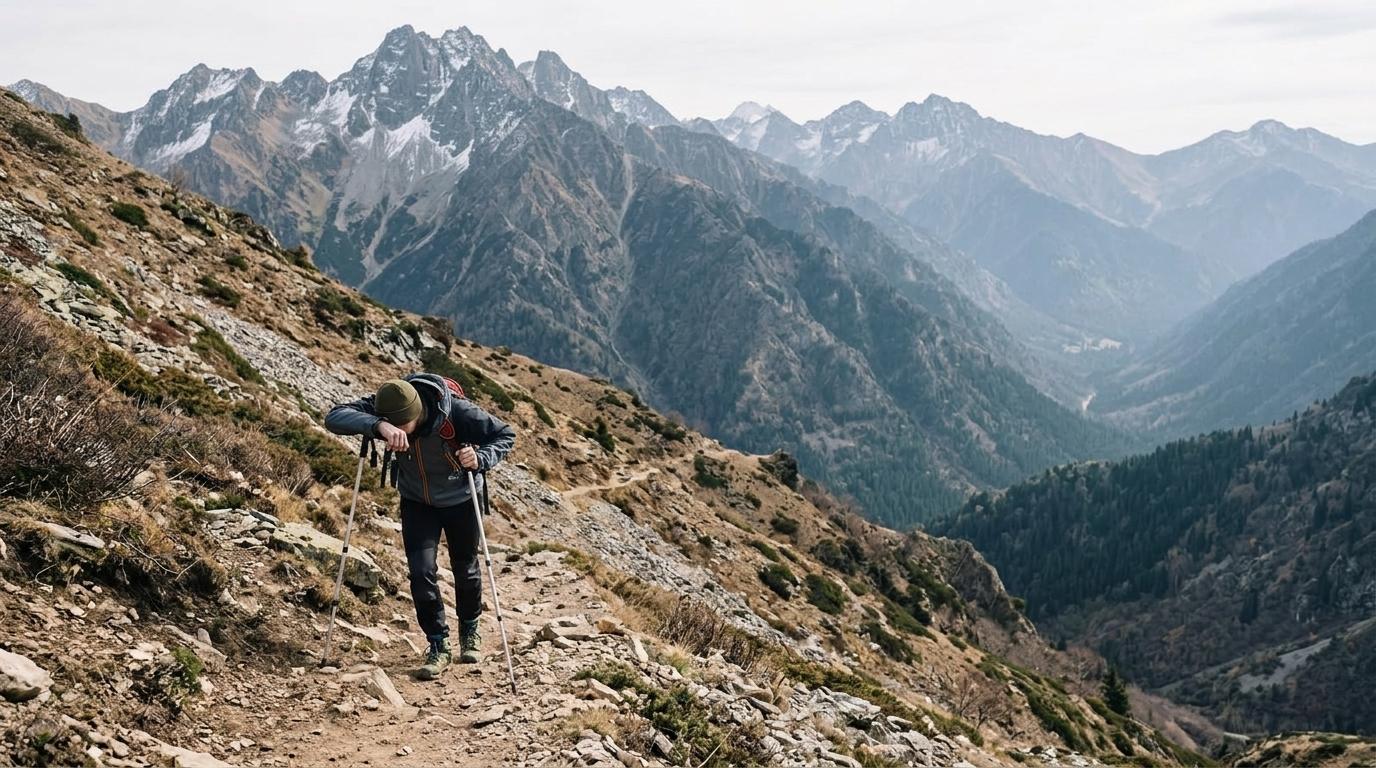
Descending thousands of uneven stone stairs forces your quadriceps into repeated eccentric contractions, where the muscle is forced to lengthen under load while acting as a shock absorber. This is the exact mechanism that triggers severe delayed-onset muscle soreness (DOMS) and causes patellar tendonitis (runner's knee).
If you have pre-existing knee injuries or weak stabilizer muscles, ABC can be physically more painful than the Circuit, even though it sits at a lower altitude. As we highlight in our Annapurna Base Camp preparation guide, eccentric step-down conditioning is mandatory.
The Circuit’s Terrain: Long Undulations and Scree
By contrast, the Annapurna Circuit features far fewer stone stairs. The Marsyangdi valley slopes upward more gradually, allowing for long, rhythmic strides along dirt trails, pine forest paths, and alpine pastures. Your knees take far less daily impact during the first week.
The physical crux on the Circuit is concentrated into Pass Day:
- A 600m to 1,000m vertical climb on steep, loose switchbacks in pitch-black sub-zero air from High Camp to the pass prayer flags.
- An immediate, punishing 1,600-meter vertical descent down the western face to Muktinath across loose scree, gravel, and frozen mud.
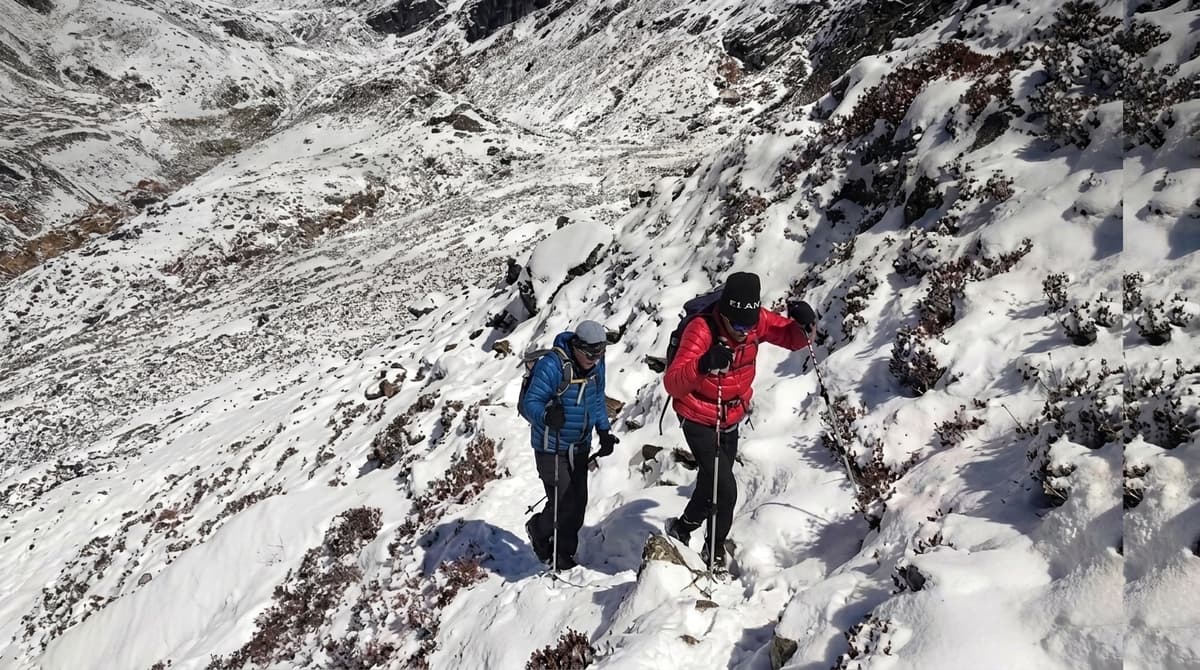
That descent from Thorong La (5,416m) down to Muktinath (3,800m) is a grueling four-to-five-hour knee grinder. Trekking poles are an absolute survival tool on this section to prevent slipping on loose scree. But once you reach Muktinath, the severe vertical dropping is essentially over.
3. Duration and Daily Stamina: 9 Days vs. 15 Days
Never underestimate the physical toll of duration.
Walking six hours a day for nine days on the ABC trek is an achievable goal for any moderately fit gym-goer or weekend hiker. Even if you push yourself hard, you can see the finish line: by day seven you are already descending, and by day nine you are having a cold drink in Pokhara.
The Annapurna Circuit is an endurance campaign. You are waking up at 6:30 AM, packing your duffel bag, pulling on boots, and walking five to eight hours every single day for two full weeks.
By day nine on the Circuit, you have only just reached Manang. You haven't even begun the hard part of the trek yet. You still have Yak Kharka, High Camp, Thorong La Pass, and the long dusty march through the Kali Gandaki valley ahead of you.
Cumulative physical fatigue slowly breaks down your reserves:
- Your pack feels slightly heavier every morning.
- Minor blisters that started on day three turn into persistent raw spots by day ten.
- Sleeping in freezing plywood teahouse rooms night after night reduces physical recovery.
Trekkers who drop out of the Annapurna Circuit rarely do so because their legs gave out on a specific hill; they drop out because two weeks of physical grit, cold water, and high altitude chipped away at their resolve. As detailed in our Annapurna Circuit preparation guide, mental stamina is just as critical as physical training.
4. Cold Extremes and Weather Vulnerability
Weather conditions on the Annapurna Circuit are significantly more severe and unpredictable than on the Base Camp trek.
ABC Weather Profile
The Annapurna Sanctuary is sheltered inside a deep basin. While night temperatures at Base Camp drop to -5°C to -10°C in November, the lower villages (Ghandruk, Chhomrong, Bamboo) are warm and pleasant, often hovering around 18°C to 22°C during daytime. You only need heavy winter down insulation for two nights of the entire trip.
Circuit Weather Profile
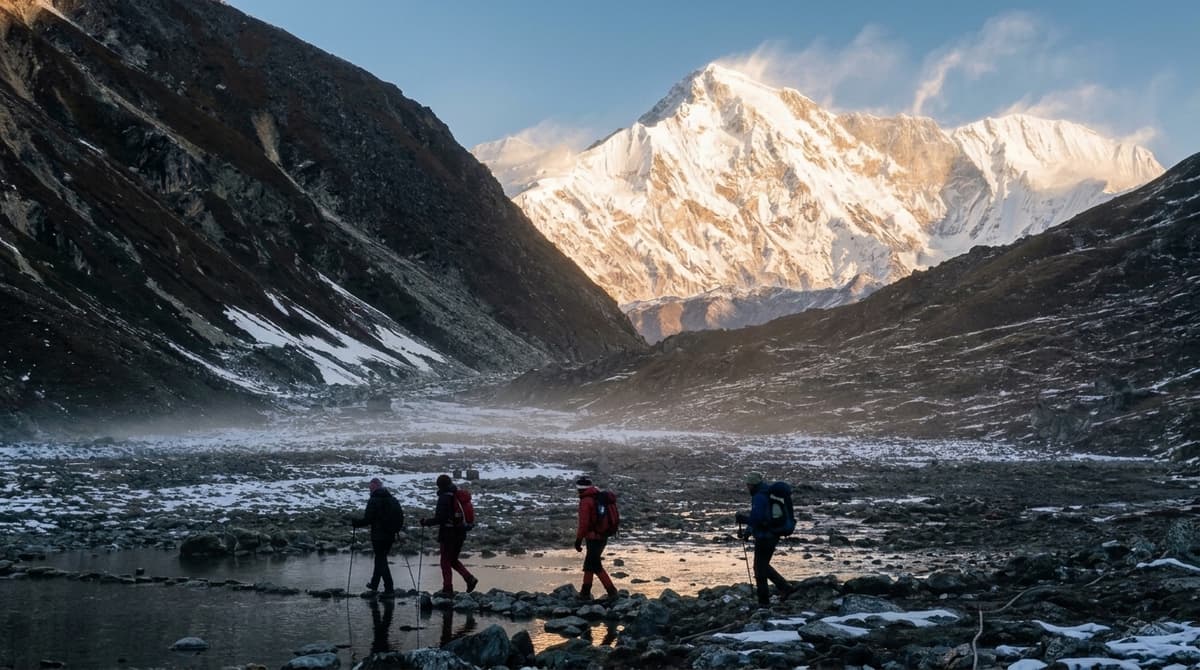
The northern half of the Annapurna Circuit sits in the rain shadow of the Himalayas, bordering the arid Tibetan plateau.
- High winds howling down the Marsyangdi and Kali Gandaki valleys cause severe wind chill.
- At Thorong Phedi and High Camp, night temperatures inside unheated rooms regularly plunge to -12°C to -18°C.
- On the pre-dawn pass crossing, windchill at 5,400 meters frequently dips to -20°C to -25°C.
At those temperatures, exposed skin can develop frostnip in minutes, water bladders freeze inside backpacks, and cell phone batteries drain instantly. Furthermore, an unexpected autumn blizzard (tail ends of cyclones pushing up from the Bay of Bengal) can dump waist-deep snow on Thorong La within six hours, closing the pass and forcing emergency evacuations. ABC rarely faces that level of acute meteorological danger.
5. Trail Exits and Emergency Bailouts
When evaluating trek difficulty, you must always look at the escape routes if things go wrong.
Exiting Annapurna Base Camp
Annapurna Base Camp has one way in and one way out. The trail is squeezed between vertical canyon walls along the roaring Modi Khola.
- There are zero motorable road connections between Siwai and Base Camp.
- If you twist an ankle at Dovan or suffer AMS at MBC, you cannot call a jeep. Your only options are walking down on foot with a porter carrying you on a basket/horse, or requesting an expensive emergency helicopter evacuation to Pokhara.
Exiting the Annapurna Circuit
Because rural road expansion has connected many lower villages in the Manang and Mustang valleys:
- On the eastern ascent, 4WD jeeps travel all the way up to Dharapani, Chame, and even the edge of Manang. If you get injured or fall sick anywhere below Manang, you can step into a scheduled local jeep and drive back to Besisahar.
- On the western descent, a continuous dirt road connects Muktinath and Jomsom to Pokhara.
- The Catch: The 25-kilometer high mountain wilderness between Yak Kharka, High Camp, Thorong La, and Muktinath has zero road access. If you break an ankle or collapse from HAPE on the pass, a helicopter rescue is your only rapid exit, and mountain pilots cannot fly if clouds or blizzards envelop the pass.
Fitness Self-Assessment: Which Trek Matches Your Body?
To decide which route is realistic for your current fitness level, use this practical physical benchmark test:
If Your Current Fitness Level Looks Like This: | You Are Ready For: | What You Must Work On: |
| Casual Walker: You walk 3 to 5 km a couple of times a week, do not do formal leg resistance training, and have never trekked above 2,500 meters. | Neither yet. Start with Ghorepani Poon Hill (4–5 days). | Dedicate 8 weeks to stair training and aerobic conditioning before attempting ABC. |
| Active Gym-Goer: You run 5km, take spin classes, or lift weights 3 times a week, but have zero high-altitude experience. | Annapurna Base Camp. You have the baseline engine to conquer ABC with modest preparation. | Focus on eccentric quad step-downs and weighted pack walking to protect your knees from stairs. |
| Experienced Hiker: You regularly hike 15 to 20 km on rugged outdoor trails with an 8kg pack, and have previously slept above 3,500m without major altitude issues. | Annapurna Circuit. You have the tendon resilience and aerobic base for the high pass. | Maintain Zone-2 endurance training and ensure your acclimatization schedule in Manang is disciplined. |
Frequently Asked Questions
Is the Annapurna Circuit harder than Annapurna Base Camp?
Yes, the Annapurna Circuit is significantly harder than Annapurna Base Camp overall. The Circuit reaches an extreme altitude of 5,416 meters at Thorong La Pass (versus 4,130m at ABC), lasts 14 to 16 days (versus 9 to 10 days for ABC), and involves severe sub-zero temperatures. ABC is physically demanding on the knees due to thousands of stone stairs, but the Circuit requires far higher cardiovascular endurance and altitude tolerance.
Which trek is worse for bad knees — ABC or the Circuit?
Annapurna Base Camp is worse for bad knees than the Annapurna Circuit. The ABC route features more than 6,000 continuous vertical stone steps carved into the Modi Khola canyon, forcing your quadriceps and patellar tendons to absorb intense downward shock for days. The Circuit follows gentler dirt trails and river valleys for most of its route, with only one steep scree descent after crossing Thorong La.
How common is altitude sickness on the Annapurna Circuit compared to ABC?
Acute Mountain Sickness (AMS) is significantly more common on the Annapurna Circuit than on the ABC trek. Trekkers on the Circuit spend five to six consecutive nights sleeping above 3,500 meters and must cross a 5,416-meter pass where atmospheric oxygen is reduced by roughly 50%. On ABC, you only spend one night sleeping above 4,000 meters, meaning hypoxic exposure is far shorter and less severe.
Can a beginner do the Annapurna Circuit?
A beginner can complete the Annapurna Circuit, but it is not recommended as a first high-altitude trek. While the route requires no technical mountaineering skills, crossing a 5,416-meter pass and walking for two consecutive weeks requires experience managing your body's hydration, energy pacing, and altitude acclimatization. Beginners are much better served completing Annapurna Base Camp or Langtang Valley first.
How cold does it get on Thorong La Pass compared to Annapurna Base Camp?
Thorong La Pass is vastly colder than Annapurna Base Camp. Pre-dawn temperatures on the pass during autumn and spring routinely drop to between -15°C and -25°C with severe windchill. By comparison, night temperatures at Annapurna Base Camp rarely drop below -8°C to -10°C during peak trekking season, and the lower valleys on the ABC route remain warm and subtropical.
Is the Annapurna Circuit more expensive than Annapurna Base Camp?
Yes, the Annapurna Circuit costs roughly 30% to 50% more than the Annapurna Base Camp trek. A standard 10-day ABC trek with a licensed local operator costs between $800 and $1,150 per person, while a 14-to-16-day Circuit trek ranges from $1,000 to $1,800. The cost difference comes entirely from additional days of guide wages, porter fees, meals, and teahouse lodging.
What should I do if I can't finish the Annapurna Circuit?
If you suffer from severe fatigue, knee failure, or early symptoms of altitude sickness on the eastern side of the Circuit, you can safely exit via scheduled 4WD local jeeps from Manang, Chame, or Dharapani back down to Besisahar. However, once you advance past Yak Kharka toward Thorong La Pass, there are no roads, and an emergency evacuation by horse or helicopter is your only rapid exit.
Still debating whether your fitness matches the stone stairs of Annapurna Base Camp or the high altitude of the Circuit? When you book with us, our licensed mountain leaders evaluate your hiking background, recommend the ideal route, and ensure proper acclimatization pacing every step of the way. Contact our team for honest, personalized trail advice.