How Many Days Do You Need in Nepal? A First-Time Visitor's Guide
If you are a first-time visitor, 7-10 days is the recommended time to see Nepal well; 10-14 days would be enough for a thorough visit without a sense of checking off items on a list. No single, correct answer because there is no one right way to travel to Nepal — there are many different experiences to discover (temples in the Kathmandu Valley, lakes and adventure sports in Pokhara, jungle safaris in Chitwan, and trekking trails in the Himalaya) and they're linked by roads and flights, much more unpredictable than they appear on a map.
You'll know you've got the right length of trip if it fits your expectations, rather than a standard thumb rule. The culture enthusiast can enjoy a fulfilling trip in less than a week in Kathmandu, visiting the Durbar Squares, and in Bhaktapur, enjoying the medieval streets. If someone is seeking a safari in the jungle and a sunset at the lake, more like ten days is required. If you're looking to walk the mountains—rather than simply view them from afar—you should plan for two weeks or more; don't expect a walk in the park, but a real one that will alter the course of your trip.
This is a breakdown of the number of days you'll need, what a realistic itinerary would be for each number of days, and what generally happens when you start booking flights and hotels. For more ideas and planning guidance, see our Nepal tour packages.
Quick Answer: How Long to Stay
Available time | Best for |
| 3–4 days | Kathmandu Valley highlights |
| 5 days | Kathmandu and Pokhara |
| 7 days | Kathmandu, Pokhara, plus a short trek or nearby experience |
| 8–10 days | Kathmandu, Pokhara, and Chitwan |
| 10–14 days | A balanced first trip with culture, nature, wildlife, and a short trek |
| 14+ days | Major treks such as Everest Base Camp or longer Annapurna routes |
The best time to stay, generally, is about 10-12 days, enough to experience the three major experiences that defined Nepal, but not so much that you can't afford to stay for a normal vacation length of time. The only reason for anything longer is one thing: A proper multi-day trek, which requires dedicated multi-days, and not sightseeing days that are not actually trek days.
Another interesting point to make is that a lot of time is consumed in travelling the road. On the road, short distances on a map (160 km between Pokhara and Chitwan, for instance) often take 4-6 hours. This is the root cause of most of the “how many days do I need” confusion: people start to plan based on a straight-line distance, and get to the end of the day only to find that they did not fit the plan.
Nepal Itineraries by Duration
Every trip to Nepal is a little different, and the number of days you have can shape the experience. A few days are enough to explore Kathmandu, discover Nepal’s culture, and get a taste of the mountains, while longer trips give you time to trek deeper into the Himalayas and explore places beyond the usual routes. Here, you’ll find Nepal itineraries for different travel durations, helping you choose a journey that suits your time and the kind of experience you are looking for.
Nepal in 3–4 Days: Kathmandu Valley Only
In 4 days, one can visit Kathmandu Valley well enough without going anywhere else in the country. That includes Kathmandu Durbar Square, Swayambhunath (Monkey Temple), Boudhanath Stupa, Pashupatinath Temple and a half-day visit each to Patan and Bhaktapur, both of which are so close to Kathmandu that they can be visited as day trips. The duration is ideal for a layover extension, a short business trip and a free weekend or for visitors returning to the valley after seeing the rest of the country. You can also explore a dedicated Kathmandu Valley tour.
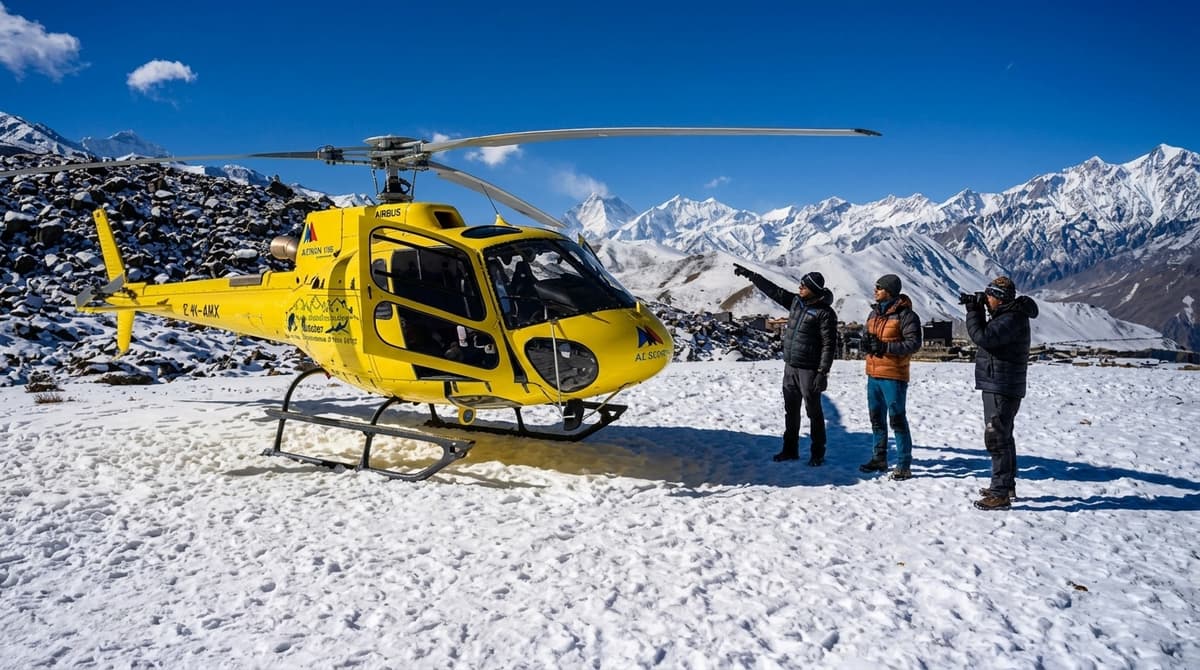
This length doesn't include the up close and personal Himalaya. If you are in the Kathmandu valley and want to see snow-capped peaks and cannot go to any other place for four days, then a one-hour scenic Mount Everest flight is the only option available for you, as it can be done out of Kathmandu.
Nepal in 5 Days: Kathmandu and Pokhara
Five days is what most imagine when they think of a trip to Nepal – about two days in Kathmandu and three in Pokhara. But if a flight gets delayed, there is hardly any buffer at all: a sunset at Sarangkot, a boat trip on Phewa Lake, and a rest at the World Peace Pagoda is all it takes, particularly during winter and monsoon season when flights are prone to delays on the Kathmandu–Pokhara route. You must make the commitment for five days: if you do, reserve the earliest flight time in each direction; flights that start in the afternoon are more likely to be cancelled when clouds accumulate over the hills. A Kathmandu–Pokhara tour is a suitable option for this duration.
5 days is a little short but acceptable. Be prepared to miss a full day in Bhaktapur or one of the optional activities in Pokhara, and do not make plans that have to happen on the final afternoon.
Nepal in 7 Days: Kathmandu, Pokhara, and a Short Extra
You get the same two cities as the five-day version, but with real breathing room, and an extra stop – a short trek, a night in Nagarkot for Himalayan sunrise views or a stopover in Bandipur, a preserved 18th-century Newari hill town about halfway between Kathmandu and Pokhara. Seven days in Pokhara is sufficient time to incorporate paragliding, hike the World Peace Pagoda or take a boat trip to Barahi Temple without haste. For travelers looking for a short trek near Kathmandu, the Chisapani–Nagarkot trek is another option.
If you only have 10+ days to spare, but you don't want to stop at the two main cities, this is a good choice. Chitwan is more than an outstretched arm's length — at least two days in the park is enough for it, as traveling to Chitwan usually requires omitting one of the three destinations of Kathmandu, Pokhara and Chitwan.
Nepal in 8–10 Days: Kathmandu, Pokhara, and Chitwan
This is the classic Golden Triangle route, and it is the most popular length for a reason, because it just so happens that it allows you to visit Kathmandu, Pokhara and a decent Chitwan safari without having to sacrifice an entire city. Stay in Chitwan for 2-3 days and get on a jeep safari, go for a canoe ride on the Rapti River, see a Tharu cultural village, and go for a few jungle walks, all of which make the trip well worth the flight cost. You can also explore more things to do in Chitwan.
This is usually when a guide begins to make sense of the money. The timing for safari, permits for the parks, and the Bandipur stopover between Pokhara and Chitwan are very easy to get wrong on the first attempt, and a wasted half day on this length of trip is a greater loss than it would be on a longer trip.
Nepal in 10–14 Days: The Balanced First Trip
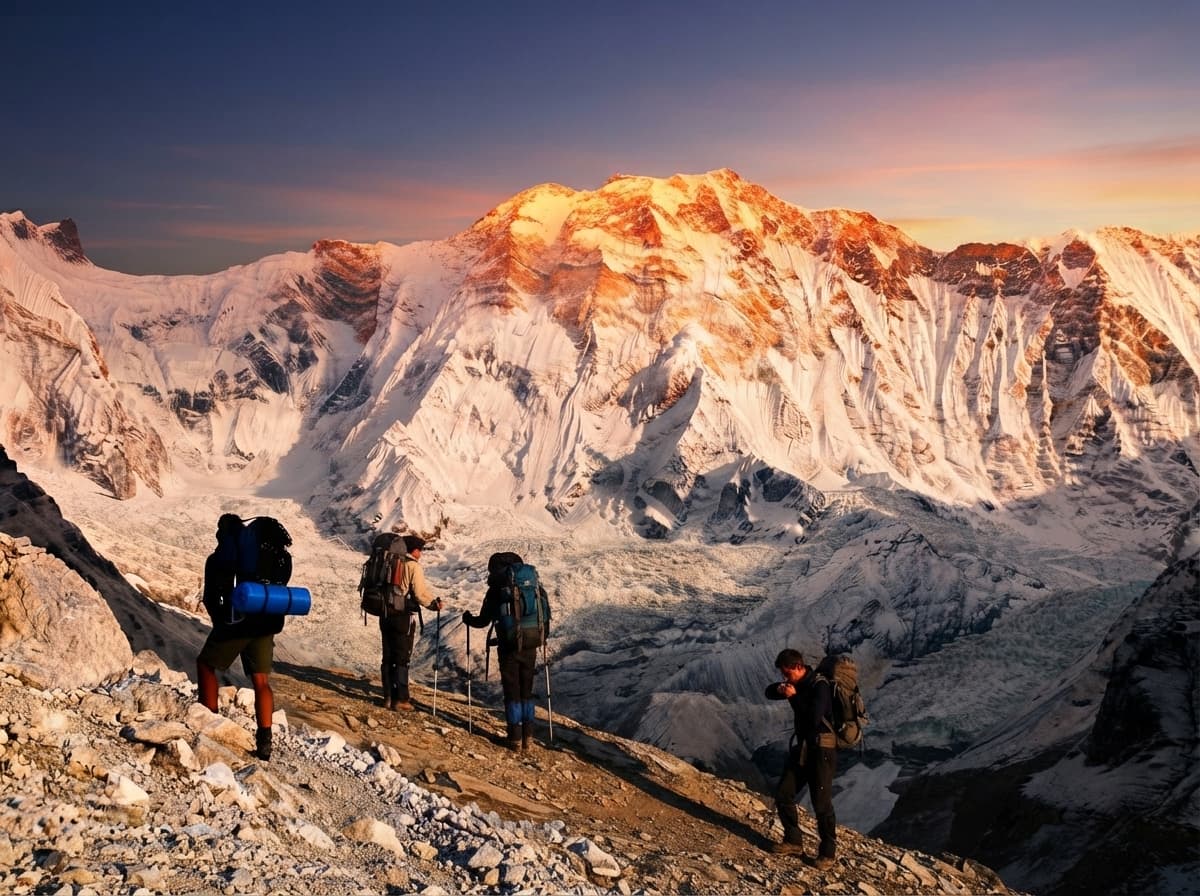
If you add a few days, then you really have some options like a side trip to Lumbini, Buddha's birthplace, or Janakpur, or a day of white water rafting, or more time to explore Pokhara, or most popularly, a short Himalayan trek. The route in question is the standard one, Ghorepani–Poon Hill trek: it requires only 4–5 days, doesn't require any prior experience of hiking, but provides an actual view of the sunrise on the Annapurna range from altitude, which is quite an experience.
We'd strongly recommend that people who are coming to see our website for the first time visit this section of our website if they have time. 10 to 12 days is enough to cover the core of Nepal's culture, the most photographed town of the lake, wildlife, savor the Himalaya and not feel rushed at any point.
Nepal in 14+ Days: Major Treks
After a serious trek starts into the plan, the length of time for the trek is determined by the trek and not by an individual. Everest Base Camp trek usually stands alone for 12-14 days, which includes the Lukla flight buffer, a crucial part of the trek due to the fact that Lukla is highly weather-dependent, making the Kathmandu-Pokhara segment another 15-17 days, depending on the amount of time spent there. This is actually 14-18 days of the Annapurna Circuit, in addition to Kathmandu and Pokhara, so an 18-21-day trek is feasible.
Both of these is a trip to plan tightly. Time is lost in hilly weather, and a 15-day itinerary for Everest Base Camp with no extra days is a regular recipe for missing home flights. Allow for at least 1 or 2 buffer days, preferably near the Lukla flight, the most vulnerable to delays.
What Changes Your Ideal Trip Length?
- Trekking: They require time, fitness and flexibility for the weather, and they can't be crammed into a spare afternoon like a city sight. When one decides to embark upon a trek, it becomes the pivot of an itinerary, and all that follows the trek is planned around it and not vice versa.
- Transport: Most of a day can be consumed before and after the trip, while travelling by road between main destinations in Nepal. Even on a map of the route, it takes 2 hours, but as soon as you start driving, the 2 hours become 4 to 6 hours, especially during landslide season or festivals. The most common way travelers get tired and fall behind on their travel schedule is to create itineraries based on straight-line miles rather than actual travel time.
- Travel pace: Some families and culture enthusiasts may opt for fewer transfers or stay a bit longer, while adventure tourists may be willing to spend more days trekking, rafting or paragliding instead of sightseeing. Pace shouldn't be an issue, but it's a good idea to choose a pace before committing to a day count if you are working with a Golden Triangle or a trekking-forth itinerary, since they do not fit into the same number of days.
- Season: The most valuable day of the year is during monsoon season (June-Sep) when mountain roads are at risk of landslides, and more flights are canceled between Kathmandu and Pokhara. Flights out of Kathmandu may be delayed in the morning during the winter season due to fog. If you can be flexible, October–December and March–May are the clearest and driest times of the year, and the dates we would make our first trek around Nepal. See our guide to the best time for trekking in Nepal.
Recommended First-Time Itinerary: 10 Days in Nepal
Ten days is the most popular booking period as it encompasses the Golden Triangle, Kathmandu, Chitwan and Pokhara without anyone having to book a stop short. For a ready-made option, see our Nepal 10-day tour package.
- Arrive in Kathmandu. Relax and acclimatize from jet lag and take a leisurely walk around the town of Thamel in the evening.
- Kathmandu Valley sightseeing. It is the Kathmandu Durbar Square, Swayambhunath and Pashupatinath Temple.
- Take a road trip to Chitwan (5–6 hours). If there is time, Boudhanath Stupa can be included in the morning prior to departure.
- Safari and cultural activities in Chitwan. Jeep safari, a visit to the Tharu village and a canoeing trip on the Rapti River.
- By road take a break in Bandipur and head to Pokhara (4-6 hours).
- Pokhara sightseeing. Sunrise at Sarangkot, Phewa Lake and World Peace Pagoda. More ideas are available in our guide to things to do in Pokhara.
- Pokhara adventure day. Paragliding, Davis Falls and Gupteshwor Cave or a short hike in the vicinity.
- Free day in Pokhara or a short hike. A buffer day that can compensate for a delay in the trip, or can be used for a half-day activity if the rest of the trip has been on schedule.
- Head back to Kathmandu (25 - 30 minutes by air or 6 - 8 hours by road).
- Free morning/arrival is included.
This tour is designed to provide Nepal's best first-time experiences – the culture of the Himalayas, an adventure town on the lake, and jungle wild animals – without attempting a trek as it's a sightseeing trip. If mountains are more important to you than the safari, the most common exchange is to remove Chitwan and substitute the Ghorepani–Poon Hill trek in for the same number of days, but for a vastly different trip: no wildlife, but a real sunrise at altitude above the Annapurna range.
Getting Around: Why Road Time Matters So Much
In Nepal, roads wind around hills instead of cutting through them, which means that the road distance is invariably greater in real time than on the map.
- Kathmandu to Pokhara: 25 to 30 minutes by flight or about 6 to 8 hours drive (approximately 200 km), taking into account the possibility of landslides during the months of June to September.
- Pokhara to Chitwan: 4-6 hours by road (160 km), usually stopping in Bandipur.
- Chitwan to Kathmandu: 5–6 hours by road (150–165 km).
Flying the Kathmandu–Pokhara leg is worthwhile if the total trip is 10 days or less, as the flight cost is more than compensated by the fact that it saves 25–30 minutes from driving both ways.
One way to do this is to drive one way and fly the other, with a 12 + days trip, as the Kathmandu-to-Pokhara road is through some scenery worth seeing at least once. Note also that the time of departure is also significant; if you depart Kathmandu at 7 a.m. rather than 9 a.m., you'll arrive in Pokhara before the haze sets over the lake, greatly enhancing the quality of the mountain views upon arrival.
Conclusion
Choose 7 days for a short, focused introduction to Kathmandu and Pokhara. Choose 10 days for the best first-time balance of culture, wildlife, and mountain scenery, without needing any trekking experience. Choose 14+ days if a real trek — Everest Base Camp, Annapurna Base Camp, or the Annapurna Circuit — is the actual priority, since those routes set the length of the trip rather than fitting around it. Whatever length you land on, build in at least one buffer day if any part of the plan depends on a mountain flight or falls during monsoon season — it's the single most common reason a well-planned Nepal itinerary goes sideways.
FAQs
Is 7 days enough for Nepal?
Yes, for a focused trip. Seven days comfortably covers Kathmandu and Pokhara, with room for one extra stop like a short trek, Nagarkot, or Bandipur. It's not quite enough to add a proper Chitwan safari without rushing one of the three destinations.
Is 10 days enough for Kathmandu, Pokhara, and Chitwan?
Yes — this is the classic Golden Triangle length, and it's the number of days most tour operators build their standard itineraries around. Ten days gives each destination 2–3 days, which is enough time to see the highlights without feeling rushed.
How many days do I need for trekking in Nepal?
It depends entirely on the trek. Ghorepani–Poon Hill needs just 4–5 days and requires no prior experience. Annapurna Base Camp runs 9–13 days depending on the route. Everest Base Camp typically takes 12–14 days including the Lukla flight buffer, and the full Annapurna Circuit runs 14–18 days. Add these on top of however long you want in Kathmandu and Pokhara.
Should I add a buffer day before flying home?
Strongly recommended, especially if any part of your trip depends on a mountain flight (Kathmandu–Pokhara or the Lukla route) or falls during monsoon season (June–September). Flight delays of a day or more aren't rare on these routes, and a buffer day is far cheaper than missing an international connection. It's also worth choosing a 30-day tourist visa rather than the 15-day option even for a shorter planned trip — the extra cost is small, and it removes visa length as a constraint if your plans shift.
What is the best Nepal itinerary for first-time visitors?
For most people, a 10-day Golden Triangle itinerary covering Kathmandu, Chitwan, and Pokhara offers the best balance of culture, wildlife, and Himalayan scenery without requiring trekking experience. Travelers who'd rather trade the safari for an actual mountain sunrise can swap Chitwan for the Ghorepani–Poon Hill trek and keep the same ten-day total.