Shared vs Private Jeep for Mardi Himal Trek: Which Is Better?
Once you've booked your Mardi Himal Trek, there's a second decision waiting that most people don't think about until the last minute: how do you actually get to the trailhead and back? Every itinerary needs a ride from Pokhara to Kande or Phedi, and then a ride back from Sidhing (or Lwang) once you've descended. At that point you're given two options — cram into a shared jeep or local bus with other travelers, or pay more for your own private jeep.
It seems like a small logistical detail, but it ends up shaping your schedule, your comfort, and your budget more than you'd expect. So this guide lays out what a private jeep for Mardi Himal actually costs, how it stacks up against shared transport, and when the extra money is genuinely worth spending.
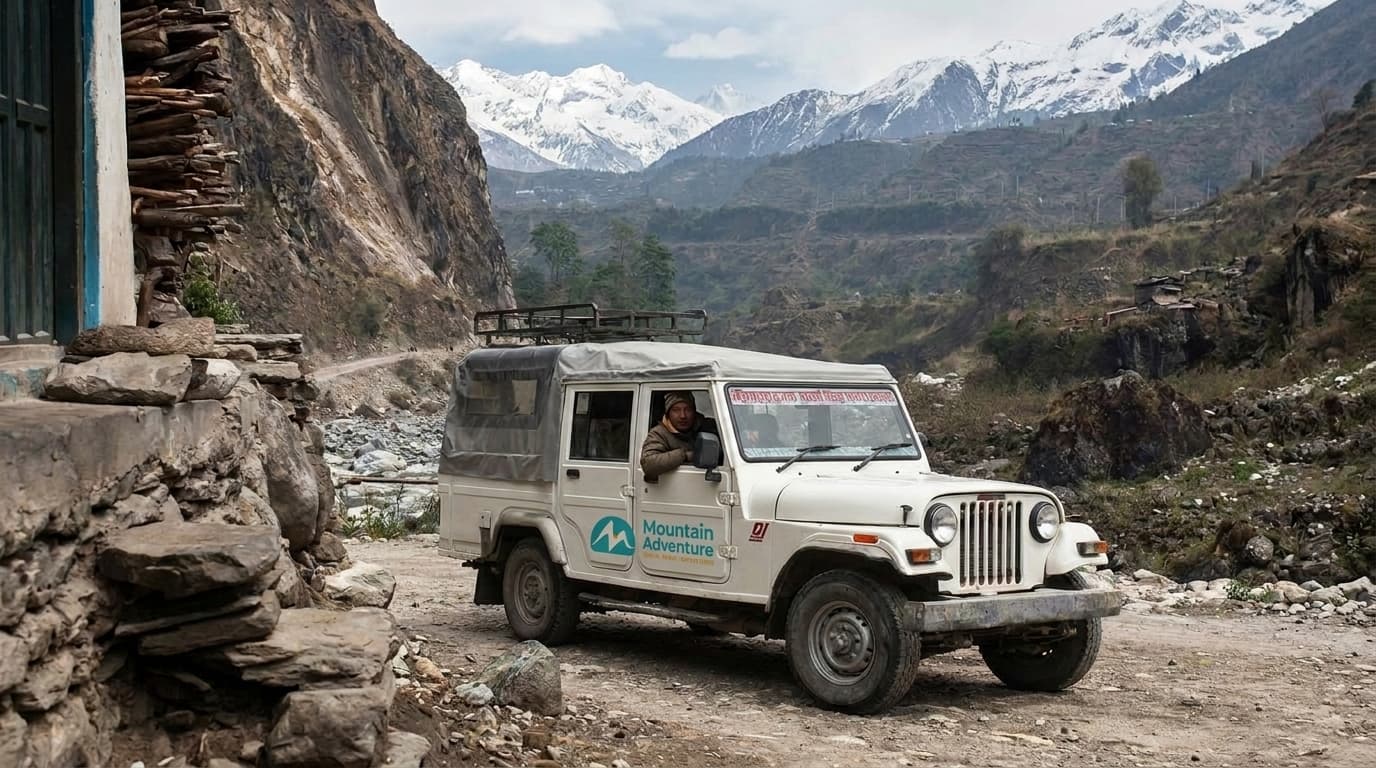
Nepal's mountain roads don't behave the way highways do. A route that runs $30 in the dry season can jump to $50 after monsoon damage, and "private jeep" itself is a loose term — it might mean a battered old Bolero taxi or a newer Scorpio with working air conditioning, depending on who you book with. Knowing these variables ahead of time is really what determines whether paying extra makes sense for your particular trip.
The Short Answer
If you'd rather pay a bit more for control over your schedule and comfort, get a private jeep. If you're solo, budget-conscious, or simply not in a rush, shared transport gets you to the same place safely for a fraction of the cost. Most people fall somewhere in between, which is why it's worth understanding the actual numbers rather than just picking a side.
What Transport Are We Even Talking About?
The Mardi Himal Trek involves two transport legs that sit outside the walking itinerary itself:
- Pokhara to the trailhead — usually Kande or Phedi
- The exit point back to Pokhara — usually Sidhing, sometimes Lwang or Landruk
Both can be done by local bus, shared jeep, or private jeep. None of this affects the actual trek. You'll still walk through Forest Camp, Low Camp, and High Camp on your way to the Upper Viewpoint or Base Camp no matter which vehicle drops you off. The jeep decision only touches the first and last day of the trip.
What a Private Jeep Actually Costs
Rates shift depending on the operator, the season, and how many people are splitting the bill, but current pricing tends to fall into fairly consistent bands.
Pokhara to Kande by private jeep or taxi runs about $20 to $70 per vehicle. Some travelers report paying as little as NPR 1,000–3,000 (roughly $7–$22) for a basic private taxi, while agency-arranged 4WD jeeps built for the rougher stretches charge closer to the top end.
Pokhara to Phedi is usually cheaper and quicker — somewhere around $15 to $30 per vehicle, since the road is shorter and in better shape. The drive itself takes about 40–45 minutes, compared to closer to an hour for Kande.
Sidhing back to Pokhara is where the price jumps. Expect $70 to $120 per jeep on this leg, which reflects the rougher, partly off-road conditions coming down. Like the others, it's quoted per vehicle and meant to be split among your group.
Lwang and Landruk exit routes land in a similar range to Sidhing, generally $70–$100 per jeep depending on how the road is holding up that season.
Since these prices are per vehicle rather than per person, and most jeeps seat four to seven people, the real cost drops quickly once you're not traveling alone.
Why the Prices Swing So Much
If those ranges look inconsistent, that's not sloppy research — it reflects what's actually happening on the ground.
Season matters first. Prices climb during the peak trekking months, March through May and September through November, simply because demand for jeeps outpaces supply. Book in the shoulder or off-season and drivers are often willing to come down 20–30% from the high end.
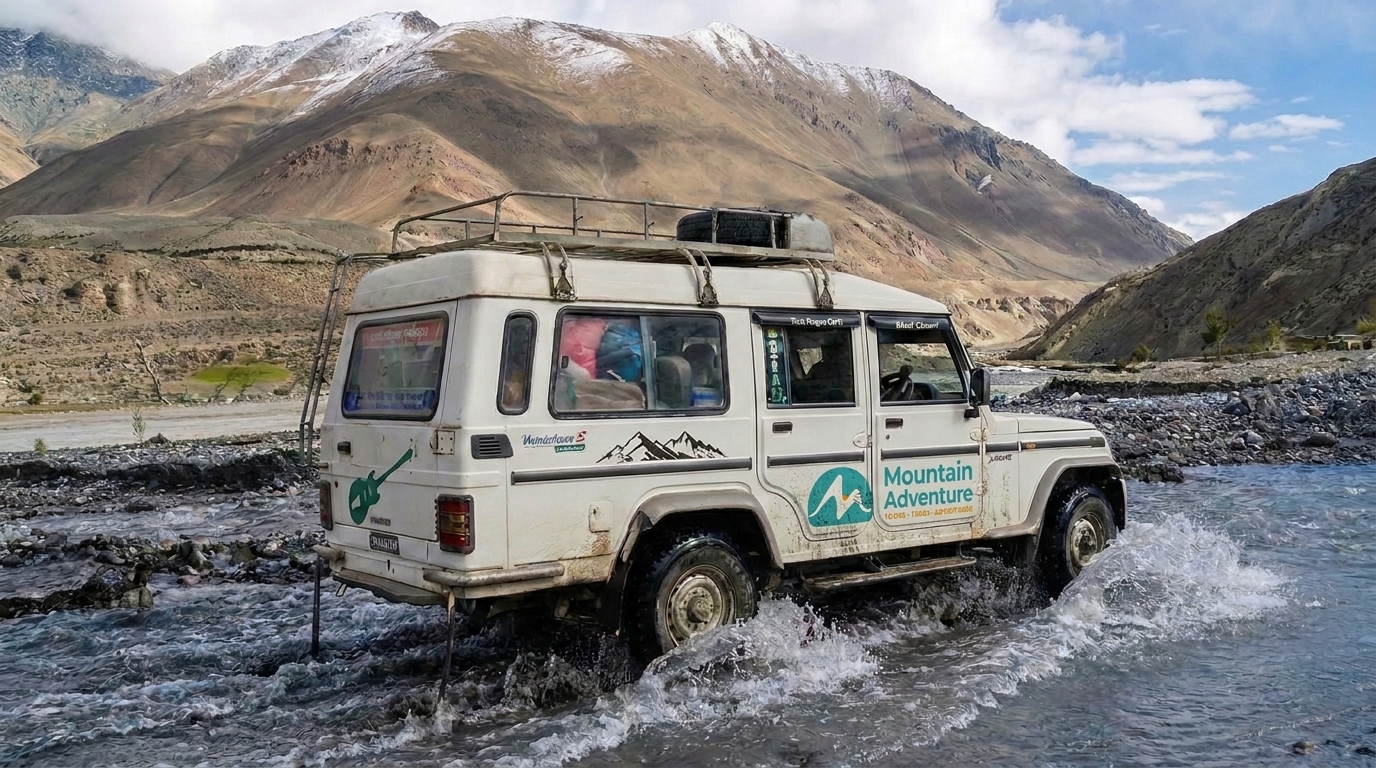
Road condition matters just as much. The stretches near Kande and Sidhing are partially unpaved and get noticeably rougher after the monsoon rains from June to August. It's common to see higher quotes in early autumn, before the road has been graded back into shape.
Vehicle type plays a role too. A standard sedan taxi is cheaper than a proper 4WD jeep, but sedans often can't handle the rougher Sidhing stretch at all once it's wet, which forces a switch to a jeep mid-trip anyway.
And where you book changes things. A hotel pickup or a street-side driver in Pokhara is usually cheaper than the same route booked through a trekking agency — though the agency rate typically buys you a reliability guarantee the informal option doesn't offer.
Shared Transport: The Budget Route
If a private jeep feels like more than you want to spend, shared options run on every leg of the route.
Pokhara to Kande or Phedi by shared jeep or local bus costs somewhere around $2 to $10 per person. The bus is the cheapest option at $1.50–$2.50, while a shared jeep costs a little more for fewer stops and slightly better comfort.
Sidhing to Pokhara by shared jeep runs roughly $15 to $25 per person — still noticeably cheaper than chartering the whole vehicle, though the gap narrows a bit here since fewer vehicles run this route and seats don't always fill predictably.
The real trade-off with shared transport isn't the money, though. It's the waiting. Shared jeeps generally leave once they're full, not on a set schedule, which can mean sitting at a trailhead or roadside for half an hour to ninety minutes, especially outside the busy season.
Private vs. Shared, Side by Side
Factor | Private Jeep | Shared Jeep / Bus |
| Cost (Pokhara–Kande) | ~$20–$70 per vehicle | ~$2–$10 per person |
| Cost (Sidhing–Pokhara) | ~$70–$120 per vehicle | ~$15–$25 per person |
| Departure time | Whenever you're ready | Waits until full |
| Comfort | More space, no strangers | Crowded, variable comfort |
| Flexibility | Can stop for photos or changes | Fixed route and stops |
| Best for | Small groups, families, tight schedules | Solo trekkers, budget travelers |
Working Out the Real Cost Per Person
Numbers on their own don't tell you much until you run them against your actual group size, so here's how it plays out for a few common scenarios.
A solo trekker doing the full round trip — Pokhara to Kande, then Sidhing back to Pokhara — would pay roughly $90–$190 total for a private jeep versus $17–$35 total for shared transport. That's a gap of $70–$155 for one person to cover alone, which is a lot to justify for comfort alone.
A couple splitting a private jeep the same round trip pays around $45–$95 each, against $17–$35 each for shared transport. The gap shrinks to $25–$65 per person — still real money, but often worth it if flexibility matters to you.
A group of four splitting the same private jeep drops to roughly $22–$48 per person, compared to $17–$35 for shared. At that point the difference is often under $15 a head. Honestly, once you're a group of four, the private jeep barely counts as an upgrade in price — it's close to free relative to what you gain in comfort.
That's the part most cost guides skip entirely: the private jeep "premium" isn't fixed. It shrinks fast as the group grows, to the point where groups of four or more often come out ahead going private as a default, not an indulgence.
Road Conditions and a Word on Safety
Setting cost aside for a moment, there's a practical safety angle worth mentioning. The road between Sidhing and Pokhara, along with the upper stretch toward Kande, is unpaved in sections, narrow in places, and can be prone to landslip damage during and just after monsoon. Drivers who run these routes daily know which sections need slowing down for and which shortcuts to avoid, and that's true whether you're in a shared vehicle or a private one — both typically pull from the same pool of experienced local drivers.
Where private transport does give you a real edge is timing. Shared jeeps sometimes leave later than expected while waiting to fill up, which can push your arrival on the Sidhing–Pokhara leg into early evening. That's not dangerous exactly, but it's not ideal on a road with limited lighting and uneven surfaces. If you're trekking in the shoulder season, say early March or late November, when daylight hours are shorter to begin with, that timing control matters more than it sounds like on paper.
If You're Arranging It Yourself
Booking transport independently rather than through an agency is doable, and a few habits will save you money and hassle.
Settle the price before you get in the vehicle, not after — fares for tourists can vary depending on who's asking, and agreeing on a number upfront avoids arguments at the destination. Ask specifically about one-way versus round-trip pricing too, since some drivers quote a lower one-way fare assuming you'll book the return separately later at a higher, last-minute rate. Locking in both directions ahead of time is usually the better deal.
For the Sidhing exit in particular, confirm you're getting an actual 4WD jeep and not a standard taxi. A sedan may simply not make it through that stretch in wet conditions, which means a mid-route swap and a frustrating delay. And it's worth budgeting a small tip for the driver — a few hundred rupees isn't expected everywhere, but it's appreciated and rarely included in the quoted fare.
When Paying for a Private Jeep Makes Sense
There are a handful of situations where the extra cost clearly pays for itself. Traveling in a group of three or more is one — split enough ways, the per-person cost lands close to what you'd pay for a shared seat anyway, minus the wait and the crowding. A tight flight or bus connection right after the trek is another; if you need to leave Sidhing or Lwang the moment you're ready rather than whenever a shared jeep fills up, a private one removes that uncertainty completely.
It's also worth the money if you're trekking with kids, older travelers, or anyone prone to motion sickness, since the Sidhing–Pokhara road is rough enough that being able to stop when needed matters. The same goes if your itinerary needs an unusually early or late departure — shared transport runs on informal, demand-driven timing that doesn't bend easily. And if you're carrying extra gear on top of a porter's load, the additional space in a private jeep means you're not negotiating for room with other people's bags.
When You Can Comfortably Skip It
On the flip side, a solo trekker on a budget gains very little from paying $70–$120 alone when a $15–$25 shared seat covers the identical route in the same amount of time. If you've built buffer time into your schedule and don't mind a short wait, there's genuinely no downside to going shared beyond that wait itself. Anyone trekking with an organized group tour is probably covered already, since most packages include shared or semi-private transport as part of the price — paying extra on top is usually redundant unless you specifically want to break off from the group's timing.
There's also a case to be made that shared transport is the better experience for some people, not just the cheaper one. A fair number of trail friendships start on a crowded jeep ride, and if meeting other trekkers is part of why you came, the shared option delivers something a private jeep can't.
The Middle Option: Semi-Private Jeeps
A growing number of trekking agencies now offer a semi-private arrangement — a jeep booked just for your group of two to four people, rather than an open shared vehicle. It typically costs somewhere between the fully private and fully shared rates, and it solves the two biggest complaints about shared transport (unpredictable departure and sitting with strangers) without the full private-charter price tag. If your agency offers this, it's often the best value for couples or small groups of friends who don't need a whole jeep to themselves but don't want to wait around either.
Deciding for Your Own Trip
Three questions tend to settle it. How many people are you traveling with — solo or pairs lean toward shared or semi-private, groups of three or more lean toward private. How tight is your schedule immediately after the trek — flights and onward connections push you toward private. And what's your overall trip budget — on a $300–$500 trek, an extra $50–$100 each way is a meaningful chunk of the total, but on a $600–$1,000+ trip, it barely registers.
There's no single right answer here. It really comes down to what your time and comfort are worth to you against the money saved.
Book Your Mardi Himal Trek With Transport Sorted
Talk to our team today and get a Mardi Himal Trek quote that includes transport options built around your group size and schedule.
FAQ
Is the road to Kande safe for a private jeep?
Yes. It's a well-established route for a popular trek, and the drivers who work it do so daily. The road is bumpy and unpaved in stretches, but both shared and private vehicles travel it routinely throughout the trekking seasons.
Can I book a private jeep the same day I arrive in Pokhara?
Usually, yes — through a hotel or trekking agency this is rarely a problem. Booking a day ahead during peak season (October–November, March–April) still helps with availability and pricing.
Do private jeep prices cover the driver's food and lodging on longer arrangements?
Not for the standard Pokhara-to-trailhead and exit-point transfers, since these are short, same-day trips. Multi-day private vehicle arrangements, which are less common for Mardi Himal specifically, would typically add driver expenses on top.
Is it cheaper to arrange transport myself instead of through my agency?
Often, by around 10–20%. But agency-arranged transport usually comes with more reliability, an English-speaking driver, and no need to haggle on unfamiliar ground. For first-time visitors to Nepal, that small premium tends to be worth the reduced hassle.
What happens if the Sidhing road is damaged or closed after heavy rain?
Drivers and agencies typically reroute through Lwang or another nearby exit point. It's one more reason booking through an established operator helps — they'll usually know the current road status before you're stuck figuring it out at the trailhead.