Can You Actually See Chitwan in 2 Days? A Complete 2-Day Itinerary
Chitwan covers almost 950 square kilometers of forest, grassland, and riverbank, and that scale scares a lot of travelers off. The usual advice is to give it three or four days minimum, so people end up dropping it from the itinerary entirely because Kathmandu, Pokhara, and maybe a trek are already eating up the calendar. Which raises the real question: is two days actually worth the bus ride, or does it just leave you standing at the park gate wishing you'd budgeted more time?
Here's the short version before we get into the details:
- Two days is enough for a proper jeep safari, a canoe float, a jungle walk, and a Tharu cultural experience
- You won't get a guaranteed tiger sighting — but that's true even on longer trips
- The key is planning the schedule in advance rather than figuring it out after arrival
- Most travelers combining Chitwan with Kathmandu and Pokhara find two days is the right amount of time
Why Two Days Holds Up
Chitwan doesn't demand you tick off every possible activity to feel like the trip paid off. The core experiences that draw people here — a decent shot at a rhino, time on the water, a forest walk — all fit into one night and two days if the schedule is planned with any care. The bigger question isn't really "is two days enough," it's "what am I actually trying to get out of this park."
- A jeep safari, a canoe ride, a jungle walk, and a cultural show all fit comfortably into 48 hours
- Longer stays mostly add more attempts at wildlife, not new categories of experience
- Tigers stay elusive even after four or five days, since the sal forest limits visibility regardless of time spent
- A two-day trip covers the same ground as a longer one — it just leaves less room for a redo if the weather or timing doesn't cooperate
Who Two Days Actually Works Best For
Not every traveler has the same goals in Chitwan, and that matters when deciding how many days to set aside.
- Travelers fitting Chitwan into a busier Nepal circuit — Kathmandu, Pokhara, a short trek — tend to get the most value out of a tight, well-planned two-day visit
- Photographers hoping for multiple long sessions in different light and terrain will feel the two-day limit more
- Anyone specifically chasing a tiger sighting should plan for three days or more, since more time modestly improves the odds
- Families or first-time visitors who want a taste of the park without a heavy time commitment are well served by two days
Getting There Without Burning Your Whole Trip on Transit
How much you actually get to do in Chitwan depends heavily on how the journey there and back is handled, since every hour spent in transit is an hour that isn't spent in the park. This matters more on a two-day trip than a longer one, because there's no slack to absorb a late bus or a missed connection.
- Travel time eats directly into available park time on a short trip
- The choice between road and air changes how much of day one is usable
- Where you base yourself affects how quickly you can reach the park gate each morning
By Road From Kathmandu or Pokhara
- A tourist bus or private vehicle from Kathmandu to Sauraha takes roughly five to six hours along the Prithvi Highway, depending on traffic
- The same trip from Pokhara takes around five hours
- Most tourist buses depart early in the morning, landing travelers in Chitwan by early afternoon on day one
- That timing still leaves room for one activity before dark, as long as the bus isn't delayed
By Air
- Flying from Kathmandu to Bharatpur Airport takes about 25 minutes
- A short drive of 30 minutes to an hour follows, connecting to Sauraha or Meghauli
- This option costs more but frees up almost half a day compared to driving
- For a trip capped at two days, that extra half-day can be the difference between fitting in an extra activity or not
Choosing Where to Base the Trip
- Sauraha, on the eastern side of the park, is the most popular base, with the widest range of lodges, restaurants, and tour operators
- Sauraha also has a lively, social evening atmosphere, which suits travelers wanting a bit of nightlife after a day outdoors
- Meghauli and Barauli, on the western side, offer quieter lodges and sit closer to known tiger corridors
- Transfers to Meghauli and Barauli typically cost more and take longer, which cuts into an already tight schedule
- For efficiency on a two-day trip, Sauraha's proximity to the park gate usually makes it the more practical choice
A Two-Day Plan That Actually Works
Fitting the highlights of Chitwan into two days works best with a plan that front-loads arrival-day activities and makes full use of the second day before departure. Here's roughly how it breaks down.
- Day one is about arrival, one solid activity, and an evening wind-down
- Day two is the main event, built around an early safari
- Departure timing on day two determines whether there's room for one more activity before heading out
Day One: Arrival and First Activities
- Arriving by early afternoon leaves enough daylight for one solid activity before evening
- A canoe ride along the Rapti River is a popular first-afternoon choice — roughly a 40-minute float
- The canoe ride offers a good chance of spotting gharial and marsh mugger crocodiles, along with a wide variety of river birds
- Many trips pair the canoe ride with a short jungle walk back toward the lodge
- The jungle walk gives a guide the chance to point out tracks, plants, and smaller wildlife along the way
- Many lodges and tour packages include a Tharu cultural program in the evening — a traditional stick dance performed by the local Tharu community
- The Tharu community has lived in this region for generations, and the show is a good way to close out day one without needing an early start
Day Two: The Main Safari Day
- The second day is where most of the wildlife viewing happens, and it's worth starting early
- A morning jeep safari usually begins around sunrise, when temperatures are still cool and animals are more active near watering holes and grasslands
- The morning safari offers the best chance of spotting a one-horned rhino, several species of deer, and possibly a sloth bear
- Birdwatching happens naturally along the way, since Chitwan is home to over 500 recorded bird species
- Depending on departure time, an afternoon activity like a visit to the Elephant Breeding Center or more birdwatching around the community forest can round out the trip
- The day typically ends with a return to Kathmandu or Pokhara, either by evening bus or afternoon flight
What Realistically Doesn't Fit in Two Days
- A dedicated night stay inside a jungle tower usually doesn't fit into a two-day window
- A second full safari attempt, in case the first has poor visibility, isn't realistic on this timeline
- A deep exploration of the quieter Meghauli side of the park requires more time than two days allows
- Travelers specifically hoping for these experiences should plan on at least one additional day
Setting Realistic Wildlife Expectations
Going in with the right expectations makes for a much better experience than hoping for a guaranteed tiger encounter. Some animals are almost a sure thing in Chitwan; others stay rare no matter how many days get added to the trip.
- Rhino sightings are genuinely likely on almost any safari
- Tiger sightings stay rare even with significantly more time in the park
- Elephant interactions come with an ethical dimension worth knowing about before booking
Rhino Sightings Are Genuinely Likely
- Decades of conservation work have pushed Chitwan's one-horned rhino population from under 100 in the late 1960s to around 750 today
- A jeep safari has a strong shot — often quoted around 90 percent or better — at a rhino sighting
- This makes the rhino one of the more reliable wildlife experiences anywhere in South Asia
Tiger Sightings Stay Rare, Even With More Time
- Chitwan holds an estimated 120 or so Bengal tigers
- The dense sal forest makes spotting one genuinely difficult regardless of how many days are spent looking
- Even a three-day visit tends to land somewhere around a 10 to 15 percent chance of a tiger sighting
- Anyone booking specifically to see a tiger should adjust those expectations no matter how the itinerary is extended
Elephants: A Note Worth Reading Before Booking
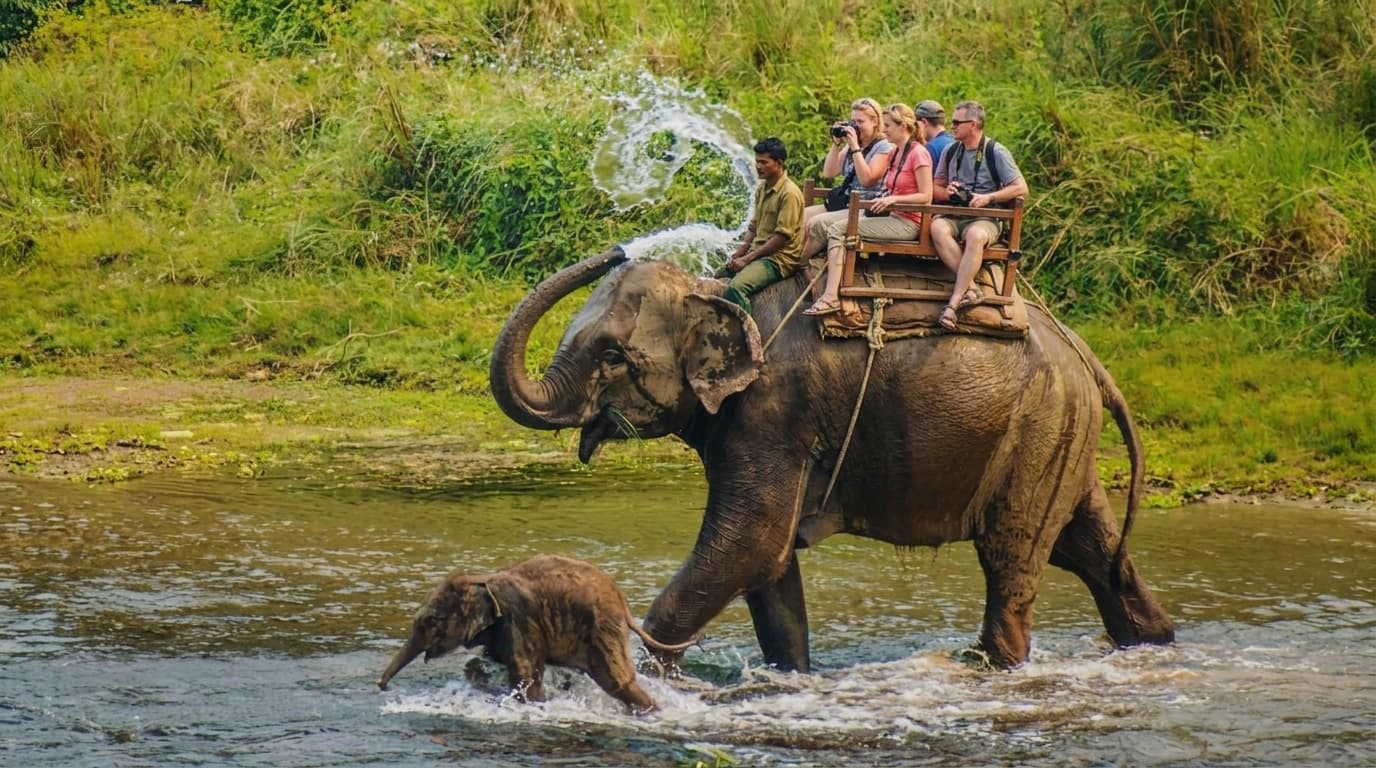
- Elephant rides used to be a standard part of Chitwan tour packages
- Welfare concerns around how captive elephants are trained and kept have led many responsible travelers and operators to skip this activity entirely
- Ethical elephant-viewing or feeding programs, where animals aren't ridden and are observed from a respectful distance, are a better alternative
- These programs let travelers include elephants in the itinerary without contributing to practices that raise animal welfare concerns
Entry Fees and Permits Worth Knowing About
Permit costs and rules are easy to overlook while planning activities, but they affect the budget and sometimes the schedule, so it's worth understanding them ahead of time.
- Foreign visitors pay a park entry permit of around NPR 2,000 per day
- SAARC nationals pay roughly half that rate
- Nepali citizens pay a significantly reduced local rate
- The permit covers one day inside the core zone, from sunrise to sunset
- It needs to be repurchased for each additional day spent inside the park itself
- Sauraha's lodges and buffer-zone activities don't require this permit — only the actual safaris and jungle walks inside the core park do
- Most tour packages already include this fee in the quoted price, but it's worth confirming directly, since it sometimes appears as a separate line item
Making the Most of a Short Trip
A few practical choices make a noticeable difference when there's no room for a wasted activity or a scheduling mistake.
- Planning ahead of arrival matters more on a two-day trip than a longer one
- Small logistical missteps — a missed booking, the wrong clothing — cost proportionally more time when the whole visit is only 48 hours
Book Activities in Advance
- Popular activities like the jeep safari and canoe ride can fill up, particularly during the peak October-to-March season
- Booking ahead, ideally through a lodge or operator with a fixed itinerary already planned, avoids losing time to last-minute scheduling on arrival
- A pre-arranged itinerary also removes the need to negotiate or compare operators once on the ground
Pack Light but Specifically
- Neutral-colored, lightweight clothing works better than bright colors for both safaris and jungle walks
- Closed shoes, a hat, sunscreen, and insect repellent matter more in Chitwan's humid lowland climate than elsewhere in Nepal
- A light rain jacket is worth packing outside the driest winter months
Choose the Right Season
- October through March offers the coolest, clearest conditions and the best overall visibility
- February through April is often considered particularly good once tall grasses have been cut back
- A two-day trip scheduled during this window gets noticeably better wildlife viewing odds than one squeezed into the hot, humid months of April through June
So, Is Two Days Enough?
For most travelers fitting Chitwan into a bigger Nepal itinerary, two days is genuinely enough to get what the park is actually known for.
- A real shot at a rhino sighting
- Time out on the water watching birds and crocodiles
- A walk through the sal forest with a knowledgeable guide
- A look at Tharu culture through an evening performance
- All of this without giving up several extra days that could go toward Kathmandu, Pokhara, or a trek elsewhere in the country
It works best when the schedule gets planned ahead of time rather than figured out after arriving, since a two-day window really doesn't leave room for winging it.
Plan a Chitwan Tour That Fits Your Schedule With Mountain Adventure Treks
Mountain Adventure Treks puts together Chitwan safari packages built around how much time is actually available.
- Packages range from a focused two-day tour to longer trips for anyone hoping for a wider range of wildlife sightings
- Every itinerary comes with transport, permits, guided activities, and accommodation already sorted out in advance
- No time gets wasted figuring out logistics after landing in Sauraha
Reach out to Mountain Adventure Treks to book a Chitwan 2 Day Tour around your travel dates, or to fold it into a longer Nepal trip alongside Kathmandu, Pokhara, and the trails beyond.